 listicle
Hidden Gems Isle of Skye 2026: Discover Remote Treasures
Table of Contents
- What Makes These Hidden Gems Worth Finding
- Remote Coastal Walks and Secluded Bays
- Ancient Ruins and Archaeological Sites
- Isle of Skye Itinerary: 3 Days Exploring Off-the-Beaten-Path
- Sustainable Tourism and Responsible Travel on the Island
- Wildlife and Nature Spotting in Remote Locations
- Timing Your Visit: Best Seasons and Avoiding Peak Crowds
- Conclusion
- Frequently Asked Questions
Last Updated: August 12, 2026
What Makes These Hidden Gems Worth Finding
The Isle of Skye attracts millions of visitors annually, yet most never venture beyond postcard locations like Dunvegan Castle, the Old Man of Storr, and Fairy Pools. The real hidden gems lie in places requiring effort to reach: remote coastal walks with dramatic geological formations, secluded bays with crystal-clear pools, and archaeological sites predating recorded history.
What separates these gems from famous spots is authenticity. They showcase the island's genuine character, rugged terrain, unspoiled beauty, and wilderness that shaped the Hebridean landscape for millennia. You'll hear only wind and waves, spot white-tailed sea eagles without crowds, and earn panoramic views rather than photograph them from a car park.
At Skye Lodge, we've spent years guiding guests to these treasures. The difference between a rushed tour and a transformative experience comes down to knowing where to go and understanding how to get there responsibly. This guide covers the hidden gems worth finding, how to reach them, and how to experience them while respecting the island's fragile ecosystems.
Remote Coastal Walks and Secluded Bays
The Isle of Skye's coastline stretches across dramatic, often inaccessible terrain. While most visitors stick to established paths, the real coastal scenery reveals itself to those willing to walk further.
Camasunary Bay: Crystal-Clear Pools and Black Sand
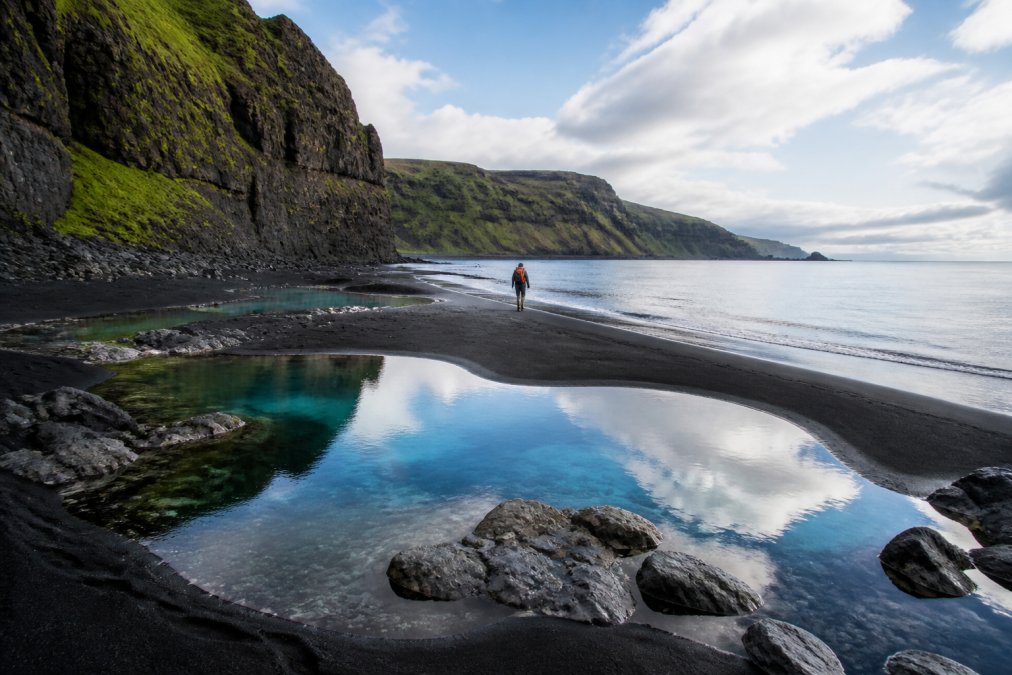
Camasunary Bay sits on the south coast, accessible only by foot across rough moorland. The two-hour walk from the nearest road ensures you'll likely have the beach to yourself. The bay features black sand beaches, dramatic cliffs rising steeply from the shore, and natural pools of crystal-clear water formed in the rocks, some warm enough for swimming on calm days.
The black sand is magnetite, iron oxide accumulated as the island's ancient lava flows eroded. The pools, carved by centuries of wave action, create an untouched landscape.
Getting there requires proper preparation. The path crosses boggy moorland with no marked route in places. Allow three to four hours for the round trip, bring waterproof boots, and check tide tables before you go, the final stretch crosses tidal zones. The effort keeps crowds away.
Rubha Hunish: Dramatic Cliffs and Panoramic Views
Rubha Hunish occupies the northernmost tip of the Trotternish Peninsula, where 300-metre sea cliffs drop away to the ocean. The straightforward four-kilometre walk from Flodigarry village offers extraordinary views. From the clifftop, you can see the Outer Hebrides, the dramatic peninsula landscape, and on clear days, the Scottish mainland mountains.
The cliff itself is sheer columnar basalt formed from ancient lava flows. Hexagonal rock columns create natural architecture few visitors witness. Below, caves and sea stacks shelter seabirds and marine life.
This well-maintained walk takes about two hours round trip and works in any season. Moody skies and dramatic lighting often produce the best photographs.
Ancient Ruins and Archaeological Sites
The Isle of Skye's history stretches back thousands of years, leaving archaeological sites scattered across the island that most visitors miss.
Duntulm Castle, on the northern coast, stands as medieval fortress ruins overlooking the sea. Dating to the 13th century, it served as a MacDonald clan stronghold. The short walk involves scrambling over rough terrain, rewarding you with genuine historical immersion, standing in ruins that have watched over the Hebridean Sea for nearly 800 years with only waves and seabirds around you.
Boreraig, on the west coast, consists of stone house remains from a village abandoned during the 19th-century Highland Clearances. Walking through these ruins, you're walking through homes of people who lived here for generations. The archaeological site tells a story of displacement more immediate than any museum exhibit.
These sites require no formal access or payment. Bring a good map, allow extra time, and respect their fragile nature.
Isle of Skye Itinerary: 3 Days Exploring Off-the-Beaten-Path
A three-day itinerary should prioritise depth over breadth. Most visitors try to see everything in two days, seeing nothing properly. Three days allows you to base yourself in one location, explore thoroughly, and actually experience the island.
The best approach is staying at a single location offering both comfort and proximity to diverse attractions. Skye Lodge provides exactly this, a sophisticated base on the westerly coastline with access to the island's northern gems, gourmet breakfasts, and local knowledge from owners Claire and Douglas. This eliminates daily accommodation stress and gives you time to linger in places worth lingering.
Day 1: Dunvegan to Neist Point and Local Crafts
Start by visiting Dunvegan Castle in the morning. The 13th-century castle remains the MacLeod clan seat. Allow two hours.
Spend your afternoon at Neist Point, roughly 20 minutes' drive away. The straightforward 1.5-kilometre walk to the lighthouse offers magnificent views across the sea toward the Outer Hebrides. Time your visit for late afternoon to catch sunset light on the cliffs.
Before returning to Skye Lodge, visit a local artisan studio. The Skye Art directory lists galleries and craft makers across the island. Supporting these artists directly, purchasing handmade ceramics, textiles, or paintings, connects you to the island's creative community.
Evening: Book dinner at a local restaurant. The Stein Inn, Skye's oldest pub, is within 15 minutes of Skye Lodge and offers atmosphere and reliable food. The Three Chimneys offers fine dining if you prefer something more formal. Book in advance; these restaurants fill quickly, especially in summer.
Day 2: Trotternish Ridge and Secluded Viewpoints
Dedicate your second day to the Trotternish Ridge, the dramatic geological feature dominating the north-central island. This landslip landscape creates a maze of peaks, valleys, and plateaus.
Start early at the Old Man of Storr at dawn to arrive before crowds and experience better light. The straightforward 2.5-kilometre walk reaches the pinnacle.
Skip the Fairy Pools (too crowded) and explore lesser-known viewpoints along the ridge. Drive small roads around Trotternish and stop at unmarked pullouts. Walk up to viewpoints not appearing in guidebooks. This is where hidden gems reveal themselves, panoramic views with no crowds.
Spend your afternoon at Rubha Hunish if weather is clear. If poor, explore Portree's villages and cafes or visit smaller craft studios.
Day 3: Elgol, Loch Coruisk, and Wilderness Experience
Your final day should focus on the Cuillin mountains and Loch Coruisk. Elgol, a small south coast village, serves as the gateway.
Take a boat trip from Elgol with Bella Jane Boat Trips (March to October). The journey across Loch Scavaig to Loch Coruisk is one of Scotland's most spectacular boat rides. You'll see the Cuillin mountains from the sea, witness dramatic coastal scenery, and potentially spot dolphins, seals, and sea eagles.
Alternatively, the walk from Elgol to Camasunary Bay provides equally dramatic scenery in roughly four hours round trip, crossing genuine wilderness with complete solitude.
Return to Skye Lodge for your final evening to reflect on your experience and appreciate the difference three days of genuine exploration makes.
Sustainable Tourism and Responsible Travel on the Island
The hidden gems of the Isle of Skye face genuine pressure from increased visitor numbers. Sustainable tourism is essential for preserving these places.
Stay on established paths. Off-trail wandering damages fragile vegetation and contributes to erosion. Moorland and alpine plants grow slowly; footfall damage takes years to recover.
Respect wild camping regulations. Wild camping is permitted under the Scottish Outdoor Access Code, but comes with responsibilities. Leave no trace, remove all rubbish, use established fire sites only, and camp only where genuinely remote (at least 100 metres from roads and buildings). Never camp on private land without permission. Consider formal campsites like Kinloch Campsite instead, which operates responsibly.
Support local businesses directly. Eat at locally-owned restaurants rather than chains. Buy from local artisans. Stay at independent accommodation like Skye Lodge rather than large hotel chains. This money stays in the community and incentivises locals to protect the island's character.
Minimise transport impact. Add 20 minutes to every hour of travel on highland roads, this isn't just practical, it's an opportunity to slow down and appreciate the landscape. Avoid driving to every location; some best experiences come from walking and spending time in one place.
Visit during shoulder seasons (April-May or September-October) rather than peak summer. Weather is still reasonable, midges less severe, and crowds dramatically lower. This spreads visitor load across more of the year, reducing pressure on fragile sites.
Wildlife and Nature Spotting in Remote Locations
The Isle of Skye's remote locations host wildlife you won't see elsewhere. White-tailed sea eagles, reintroduced in the 1970s, now breed on the island. Otters inhabit coastal waters. Seals haul out on rocky outcrops. Golden eagles soar over mountains.
Spotting wildlife requires patience, good binoculars, and knowledge of where to look. The sea cliffs of Rubha Hunish offer excellent chances of seeing sea eagles in spring and summer. Early morning is always best.
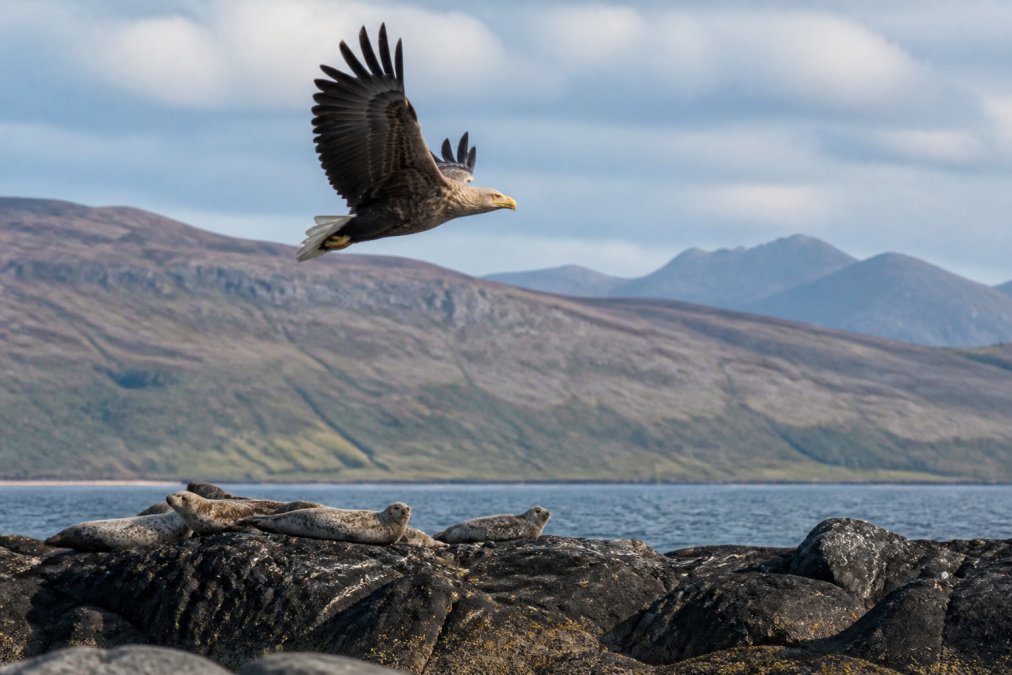
The coastal waters around Elgol and Loch Coruisk host seals, dolphins, and occasionally whales. Bella Jane boat trips offer the best chance of spotting marine wildlife without requiring hiking skills.
Birdwatching is excellent year-round. Puffins arrive in spring and breed on sea cliffs. Razorbills, guillemots, and kittiwakes nest on the same cliffs. Red-throated divers breed on inland lochs. The variety of habitats means different species in different locations.
Bring a good field guide and binoculars. Move slowly and quietly. Respect nesting sites by maintaining distance and never approaching birds during breeding season.
Timing Your Visit: Best Seasons and Avoiding Peak Crowds
The Isle of Skye's weather is notoriously changeable, but each season offers distinct advantages.
Spring (April-May) brings longer daylight hours and the return of breeding birds and marine mammals. The landscape is green and flowers bloom. Crowds are moderate and accommodation more readily available than summer. This is an excellent time to spot wildlife and avoid peak crowds.
Summer (June-August) offers the best weather and longest daylight hours. Midges, tiny biting insects, are worst in July and August, particularly in calm, damp conditions. Crowds are heaviest in July and August. Accommodation books out weeks in advance. If visiting summer, go in June when midges are less severe and crowds slightly lower.
Autumn (September-October) brings cooler temperatures and shorter daylight but excellent photography light. Midges decline significantly. Crowds drop sharply after school holidays end in early September. Weather becomes more unpredictable with increased wind and rain, but this often produces dramatic skies and lighting.
Winter (November-March) offers fewest crowds and lowest accommodation prices. Daylight hours are short, with sunrise around 8:30 AM and sunset by 4 PM in December. Weather is cold and wet with frequent wind and occasional snow at higher elevations. Many accommodation options close for winter. Hiking is more challenging due to shorter daylight and potentially hazardous conditions. However, winter offers genuine solitude.
For most visitors, shoulder seasons (April-May and September-October) offer the best balance of weather, crowds, and wildlife activity.
Conclusion
The hidden gems of the Isle of Skye reward those willing to venture beyond famous landmarks and invest time in genuine exploration. Whether drawn to dramatic coastal scenery, ancient archaeological sites, or remote wilderness experiences, these places offer authenticity that mass-market tourism destinations cannot match.
Planning a trip that captures these hidden gems requires the right base of operations and local knowledge. Skye Lodge provides both, a sophisticated retreat on the westerly coastline with handmade beds, gourmet breakfasts prepared with locally sourced ingredients, and direct access to the island's northern treasures. Owners Claire and Douglas offer genuine local knowledge about where to go, how to get there responsibly, and how to experience the island while respecting its fragile ecosystems.
Make A Reservation at Skye Lodge and discover the hidden gems that make the Isle of Skye extraordinary.
| Season | Best For | Crowd Level | Weather | Wildlife Activity |
|---|---|---|---|---|
| Spring (April-May) | Bird watching, moderate crowds | Low-moderate | Unpredictable, improving | High (breeding season) |
| Summer (June-August) | Long days, photography | Very high | Best, warmest | Moderate (midge season) |
| Autumn (Sept-Oct) | Photography, solitude | Low-moderate | Unpredictable, dramatic | Moderate-high |
| Winter (Nov-March) | Genuine solitude, locals' experience | Very low | Cold, wet, short days | Low |
Frequently Asked Questions
What are the best hidden gems on the Isle of Skye that most visitors miss?
The most rewarding hidden gems include Camasunary Bay with its crystal-clear pools and black sand beach, Rubha Hunish for dramatic cliffs and panoramic views, and Loch Coruisk accessible via boat from Elgol. These locations offer geological formations and natural beauty that rival famous landmarks but with far fewer crowds. Accessing them requires planning, add 20 minutes to every hour of travel on highland roads, and book boat trips in advance during peak season.
How should I plan a 3-day Isle of Skye itinerary to see hidden gems responsibly?
A sustainable 3-day itinerary balances iconic sights with off-the-beaten-path exploration. Day 1 focuses on Dunvegan's castle and local art crafters. Day 2 explores Trotternish Ridge's geological features and secluded viewpoints. Day 3 includes a boat trip to Loch Coruisk for wilderness immersion. This pace allows time to absorb each location's natural beauty without rushing, reduces visitor impact on fragile landscapes, and gives you genuine local knowledge from lodge owners who understand the island's quieter corners.
What does sustainable tourism mean when visiting remote locations on the Isle?
Responsible travel on Skye means respecting fragile ecosystems and local communities. Use established paths to prevent erosion of geological formations, book restaurants and activities in advance to manage visitor impact, support local artisans through Skye Art studios, and consider off-season visits to reduce pressure on peak-season destinations. Wild camping requires Leave No Trace principles: pack out all waste, use designated spots, and avoid disturbing wildlife. Slow travel, staying 3-5 nights rather than rushing through, reduces carbon footprint and allows deeper cultural engagement with the island.
What's the best time to visit hidden gems on the Isle to avoid crowds?
April to May and September to October offer the ideal balance: milder weather, longer daylight, and significantly fewer visitors than June-August peak season. Winter visits (November-February) suit experienced hikers seeking dramatic landscapes and solitude, though weather is unpredictable and some boat trips close. Midge season (June-August) peaks in July, making coastal and forested areas uncomfortable despite good weather. Plan your sunrise and sunset viewing locations in advance, these moments define the island's unspoiled character and are best experienced with minimal crowds.