 listicle
Luxury Pet-Friendly Cottages Isle of Skye
Table of Contents
- What Makes Pet-Friendly Luxury Cottages Special
- Best Practices for Travelling with Pets to the Scottish Highlands
- What to Pack for Your Dog's Holiday
- Defining Luxury in a Pet-Friendly Setting
- Secure Gardens and Outdoor Spaces
- Coastal Escapes with Beach Access
- Personalised Hospitality and Local Knowledge
- Frequently Asked Questions
Last Updated: September 28, 2026
What Makes Pet-Friendly Luxury Cottages Special
Pet-friendly luxury cottages combine high-end comfort with genuine welcome for dogs. Unlike standard pet-friendly rentals that merely tolerate animals, they integrate thoughtful amenities, spacious grounds, and hospitality that acknowledges your dog's needs as seriously as your own.
At Skye Lodge, we understand that travelling with your dog shouldn't mean sacrificing comfort or convenience. The difference lies in the details: handmade beds in every room, gourmet breakfasts prepared with locally sourced ingredients, and personalised hospitality from owners who recognise that your pet is part of your family.
Pet-friendly luxury cottages typically sit on properties with secure gardens, direct access to walking routes, and proximity to dog-friendly beaches and trails, offering peace of mind whilst you enjoy sophisticated amenities.
Best Practices for Travelling with Pets to the Scottish Highlands
Travelling to the Scottish Highlands with your dog requires preparation beyond standard holiday planning, including regulatory, safety, and veterinary considerations.
Local Regulations and Sheep-Worrying Laws
The single most important regulation relates to sheep. Under the Dogs (Protection of Livestock) Act 1953, a dog that chases, attacks, or worries sheep can be shot by a farmer without warning or liability.
A dog does not need to make contact with sheep to breach this law. Chasing, barking at, or running towards sheep counts, even on a lead.
Keep your dog on a lead when sheep are visible. If your dog has a history of chasing livestock, inform the accommodation owner immediately; they can recommend sheep-free walking routes, particularly during lambing season (March to May).
Veterinary Access and Emergency Care
The Isle has limited veterinary services. The nearest practice is in Portree, approximately 20-40 minutes' drive. There is no 24-hour emergency service; out-of-hours emergencies require transport to the mainland or consultation with an emergency clinic in Inverness.
Ensure you have adequate medication supplies for your entire stay. If your dog has a chronic condition, discuss management strategies with your vet before travel and request a written medical summary.
Before booking, ask the accommodation owner for contact details of the nearest veterinary practice and their out-of-hours protocol.
Minor injuries can be managed at the cottage with a basic first-aid kit. Serious issues require immediate veterinary attention. Travel insurance covering veterinary emergencies is strongly recommended.
Tick Prevention and Loch Water Safety
Tick populations are significant in moorland and woodland. Check your dog after every walk, particularly around ears, neck, and paws. Ensure tick prevention treatment is current before travel.
Loch water can harbour parasites and bacteria including Leptospirosis. Discourage your dog from drinking from lochs or streams; carry fresh water instead. Rinse your dog after swimming.
Terrain Hazards and Weather Preparation
The terrain, rocky, boggy, and uneven, increases injury risk. Bring a basic first-aid kit. If your dog has arthritis or is elderly, choose firmer routes and limit distance.
Weather changes rapidly. Highland rain is frequent; a waterproof coat for your dog is essential. If your dog has sensitive paws, consider protective booties. Ensure shelter and shade access during sunny periods.
What to Pack for Your Dog's Holiday
Bring familiar possessions to reduce stress; many accommodations provide essentials but familiar items offer comfort.
Essential items to pack:
- Food and water bowls (even if the cottage provides them)
- Your dog's regular food (sudden diet changes cause digestive upset)
- Medications and supplements your dog takes regularly
- Lead, collar, and ID tag with current contact information
- Dog bed or blanket with familiar scent from home
- Toys and chews to provide mental stimulation
- Grooming supplies including brush, nail clippers, and dog shampoo
- First-aid kit with bandages, antiseptic, and any prescription medications
- Recent photograph of your dog (useful if your dog goes missing)
- Vaccination records and microchip documentation
Defining Luxury in a Pet-Friendly Setting
Luxury in pet-friendly accommodation is thoughtfully designed to enhance your experience whilst respecting your dog's needs.
True luxury includes secure outdoor spaces where your dog can move freely. A properly fenced garden allows your dog to explore safely whilst you relax, improving wellbeing and reducing stress.
Personalised hospitality distinguishes luxury from comfort. Owners who understand your dog's personality, offer local knowledge, and anticipate needs create genuinely tailored experiences.
Handmade beds, quality linens, and thoughtful décor create an environment that feels like a retreat.
Secure Gardens and Outdoor Spaces
A secure garden transforms a holiday from constant vigilance into genuine relaxation.
A secure garden should have fencing at least 1.5 metres high with no gaps. Check for loose posts, broken sections, or gaps beneath gates.
Well-maintained gardens provide enrichment with varied terrain, trees for shade, and space to move.
The best pet-friendly luxury cottages combine secure outdoor space with easy access to diverse walking environments: woodland paths, moorland trails, and beach walks.
Coastal Escapes with Beach Access
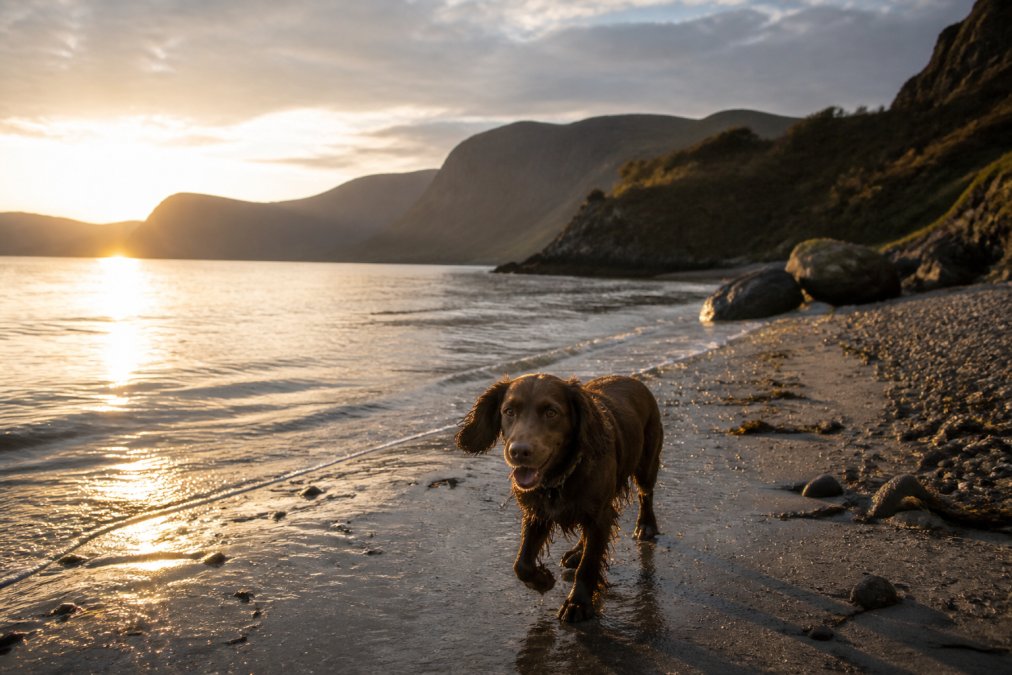
Coastal locations offer particular appeal for dog owners. Many Scottish beaches allow dogs year-round, but access varies by location and season.
Dog-Friendly Beaches and Seasonal Restrictions
Talisker Beach and Coral Beach are reliably dog-friendly year-round. Staffin Beach allows dogs outside summer (May-September) when restrictions protect nesting birds. Uig Beach is dog-friendly but challenging in poor weather.
Confirm current restrictions with the accommodation owner. Ask about designated dog areas, peak times, and local bylaws about dogs on leads.
Respect other users: keep your dog under control near swimmers and families, and clean up after your dog.
A Dog-Friendly Coastal Day: Practical Itinerary
Here is a realistic day structure that balances your dog's needs with your own desire for relaxation:
Morning (8:00-11:00): Early beach walk at Talisker or Coral Beach. Arrive before 9:00 to avoid crowds. Allow 90 minutes for a 3-4 km walk. Bring fresh water; do not let your dog drink seawater.
Mid-morning (11:00-13:00): Return to the cottage. Rinse your dog's paws and coat with fresh water to remove salt. Provide a rest period; your dog will be tired from the beach walk.
Afternoon (13:00-16:00): Lunch at the accommodation or a dog-friendly establishment. Several restaurants on the Isle have outdoor seating where dogs are welcome: The Three Chimneys (near Dunvegan) has a covered outdoor area; Stein Inn (Waternish) welcomes dogs on the terrace. Call ahead to confirm current dog policies. After lunch, a gentler walk, moorland trail or woodland path, provides variety without the intensity of a beach walk. Moorland walks near Dunvegan offer views without the physical demands of beach terrain.
Evening (16:00 onwards): Return to the accommodation for rest and relaxation.
Coastal Properties: Exposure and Comfort Considerations
Coastal accommodations face wind and salt spray. Ensure your dog has shelter, a covered porch, enclosed garden area, or interior space, where it can rest without exposure. Salt exposure can irritate skin and eyes; rinse your dog after beach walks, particularly between the paws where salt accumulates and can cause soreness.
Personalised Hospitality and Local Knowledge
The difference between a pet-friendly cottage and a truly exceptional one often comes down to hospitality. Owners who provide personalised service create experiences that guests remember years later.
| Accommodation Type | Best For | Key Feature |
|---|---|---|
| Luxury lodge | Exclusive groups and couples seeking bespoke service | Personalised hospitality from owner-operators |
| Self-catering cottage | Independent travellers preferring flexibility | Secure garden and dog-specific amenities |
| Boutique retreat | Romantic getaways with coastal settings | Scenic views combined with pet welcome |
| Specialist pet cottage | Dog owners prioritising pet comfort | Dog beds, bowls, and thoughtful pet features |
Frequently Asked Questions
Are there luxury lodges in Scotland that are pet friendly?
Yes. Several luxury retreats across Scotland welcome dogs, particularly on the Isle of Skye. Look for accommodations offering ensuite rooms, handcrafted furnishings, and gourmet breakfasts alongside verified pet policies. Owners who specialise in pet-friendly retreats typically provide detailed guidance on local dog-friendly beaches, walks, and dining options for a seamless stay.
What should I look for in a luxury pet-friendly cottage?
Prioritise properties with secure, fenced gardens where your dog can roam safely. Examine room sizes carefully, luxury shouldn't mean cramped quarters. Verify ensuite bathrooms, quality furnishings like handmade beds, and gourmet breakfast offerings. Read guest reviews specifically mentioning pet experiences. Confirm cancellation policies are fully refundable in case your dog becomes unwell. Ask whether owners provide local knowledge about dog-friendly restaurants, beaches, and walking routes.
Can I take my dog to the Isle of Skye?
Absolutely. Many self-catering holiday rentals and luxury lodges welcome dogs. The island offers excellent dog-friendly beaches, coastal paths, and moorland walks. Most restaurants have outdoor seating where dogs are welcome alongside their owners. When booking, confirm the property's pet policy in advance and check any breed or size restrictions. The island's quiet, scenic environment makes it ideal for dogs, though travel times are longer than on the mainland, add 20 minutes to every hour of journey time on Highland roads.
How do I ensure my dog is comfortable in a holiday cottage?
Request properties with secure gardens so your dog can exercise safely without constant supervision. Bring familiar items: their bed, toys, and food bowls reduce anxiety in new spaces. Confirm the accommodation has shade, fresh water access, and a safe area away from kitchen hazards. Ask the owner about heating, ventilation, and whether the property is suitable for your dog's age or mobility needs. Establish a routine quickly, morning walks, meal times, and rest periods help dogs settle. If your dog is anxious, discuss this with the owner beforehand; they may offer advice specific to their property's layout and local environment.