 listicle
Best Sunset Spots on the Isle of Skye
Table of Contents
- Why the Isle of Skye Offers Exceptional Sunsets
- Neist Point: The Westerly Tip's Iconic Lighthouse Sunset
- Sunset Times by Month and Planning Your Visit
- Golden Hour Photography Tips for Capturing Skye's Light
- West-Facing Viewpoints: Talisker Bay and Coral Beach
- Accessibility, Parking, and Safety for Coastal Walks
- Post-Sunset Logistics and Local Dining Recommendations
- Planning Your Sunset Experience on the Isle of Skye
- Frequently Asked Questions
Last Updated: August 11, 2026
Why the Isle of Skye Offers Exceptional Sunsets
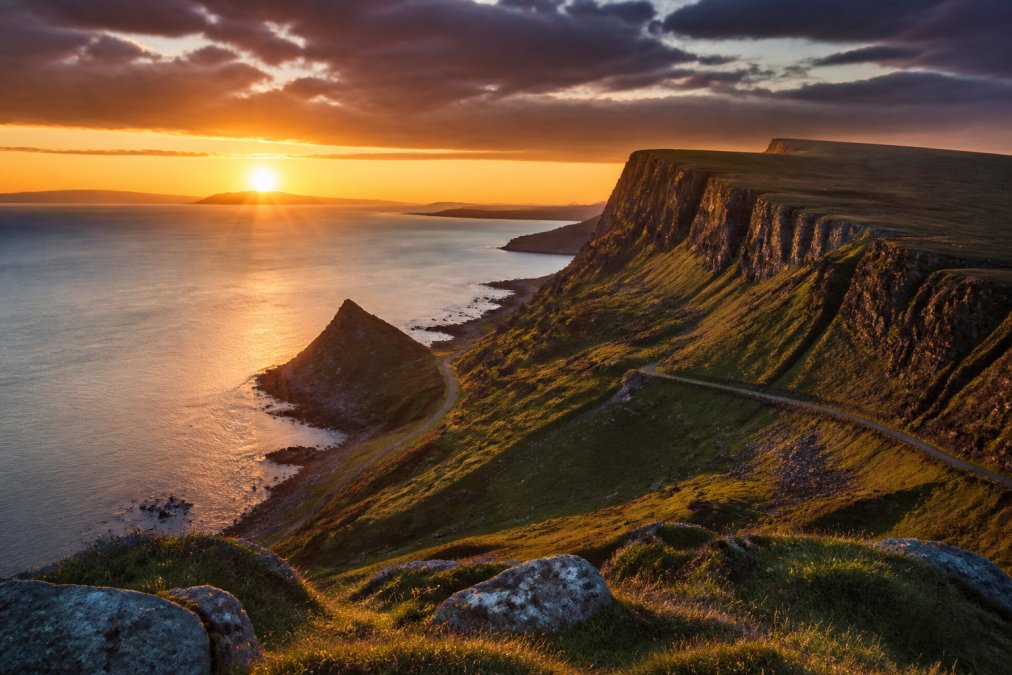
The Isle of Skye delivers some of Britain's most dramatic sunsets due to genuine geography. The island's westerly position means the sun descends directly over the Atlantic, painting the sky in colours most inland locations never see. The peninsula's rugged topography, sheer cliffs, isolated headlands, and mountains frame the horizon perfectly for sunset photography.
What makes Skye different is the combination of accessibility and drama. You can reach world-class viewpoints within minutes of a car park, yet the landscape feels genuinely remote. This balance, easy access to spectacular, isolated locations, is rare.
At Skye Lodge, guests often ask which sunset spots are worth the drive. The answer depends on your priorities: whether you want lighthouse silhouettes, beach reflections, or mountain backdrops. Below, we'll walk you through the best sunset locations on the Isle of Skye, plus practical details most guides skip: parking, timing, safety, and how to get there.
Neist Point: The Westerly Tip's Iconic Lighthouse Sunset
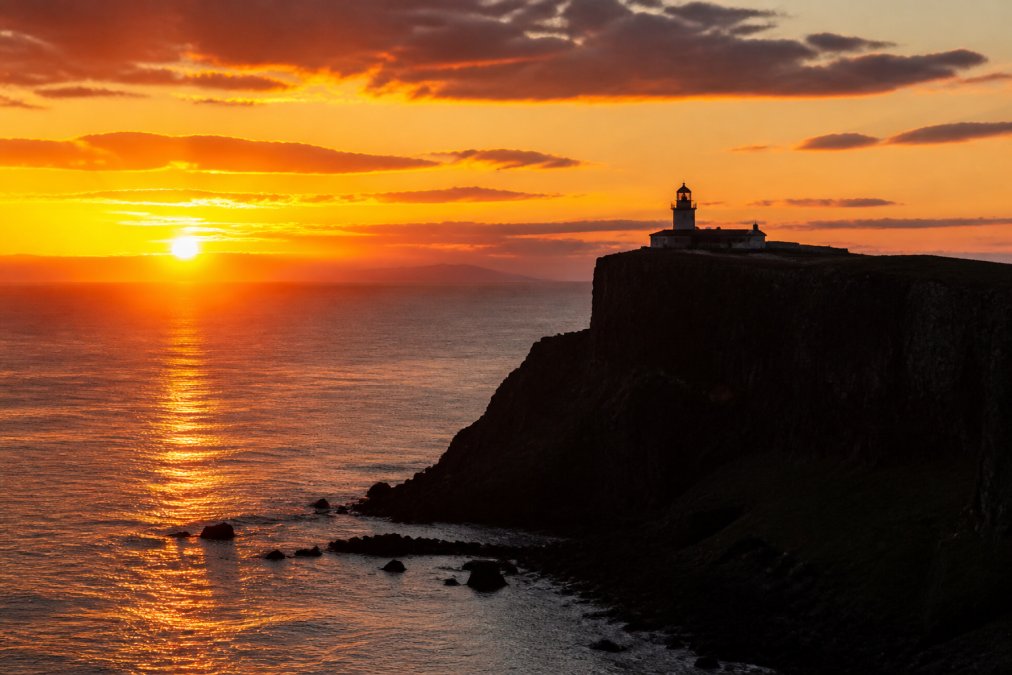
Neist Point is the westernmost point of the Trotternish peninsula and the sunset location most photographers come for. The lighthouse, an unmanned beacon built in 1909, sits 60 metres above the sea on a dramatic headland. When the sun drops toward the horizon, the structure silhouettes against golden and orange light, with the Atlantic stretching endlessly behind it.
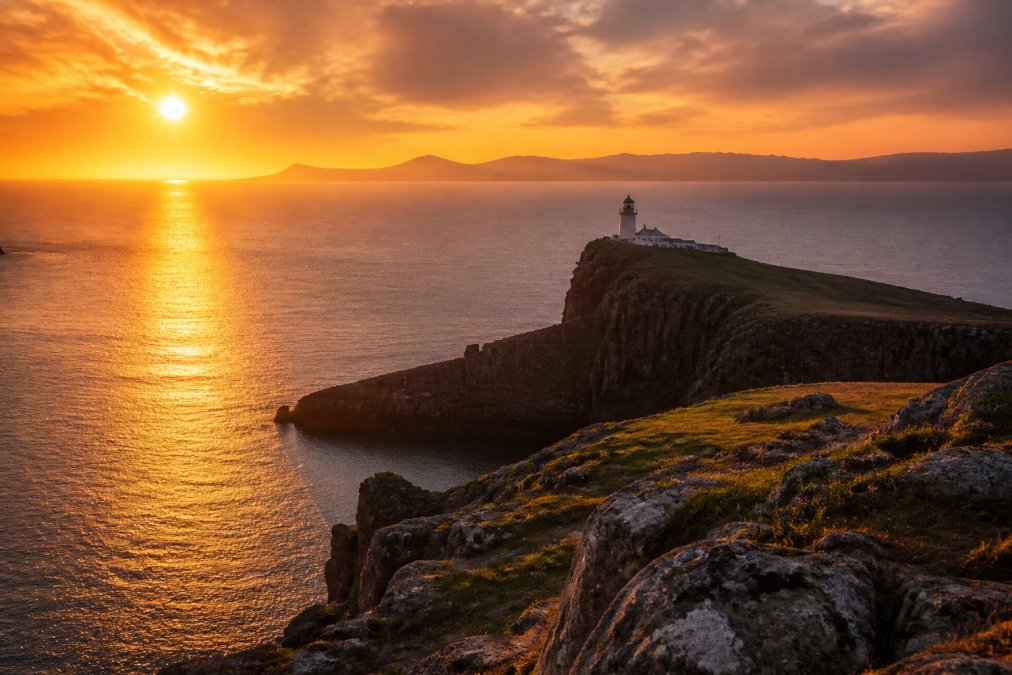
Getting there requires a 10-minute walk from the car park on an uneven path. The final approach drops steeply toward the lighthouse, and the cliffs are genuine hazards. Mobile signal is unreliable, so navigation apps may not help on the way back. Wear proper footwear and assume visibility will worsen as dusk approaches.
Parking at Neist Point is tight. The car park holds perhaps 20 vehicles and fills during peak season (July and August). Arrive at least 90 minutes before sunset to guarantee a space. There's no public transport to Neist Point, so a car or organised tour is essential.
The best light at Neist Point lasts roughly 20-30 minutes. The golden hour begins 60 minutes before sunset, but the lighthouse silhouettes most dramatically in the final 15 minutes as the sky deepens from gold to orange to pink. Blue hour, the period just after sunset when the sky glows deep blue, offers equally striking compositions.
Sunset Times by Month and Planning Your Visit
Sunset times on the Isle of Skye shift dramatically across the year, affecting everything from parking pressure to how much daylight you have for the walk to a viewpoint.
Summer solstice and extended twilight
In June, sunset occurs around 10:15 PM, but twilight persists until nearly midnight. Golden hour begins around 8:45 PM, meaning you have the entire evening to position yourself. The trade-off is crowds. Summer brings peak tourism, and popular viewpoints are packed. Arrive at a viewpoint by 7:30 PM to secure parking and avoid the rush.
The extended daylight in summer is a gift for photographers. You can shoot golden hour light, transition into blue hour, and still have enough visibility to navigate back safely. Bring a torch anyway, the path back from Neist Point becomes treacherous in low light.
Winter variations and shorter daylight
In December, sunset happens around 3:45 PM, and twilight ends by 5:30 PM. Golden hour is compressed into the final 60-90 minutes of daylight. You must arrive at a viewpoint well before sunset to have time to set up and compose shots. Winter brings far fewer visitors, so car parks are rarely full.
Winter light is unpredictable. Cloud cover thickens in winter, and clear skies are rare. Check a weather forecast before committing to a drive. When the sky clears, winter sunsets often deliver richer colours because the lower sun angle intensifies the light's passage through the atmosphere.
For most visitors, spring (April-May) and autumn (September-October) offer the best balance: sunset times between 7:30 PM and 8:30 PM, moderate crowds, and generally clearer skies than winter.
Golden Hour Photography Tips for Capturing Skye's Light
Golden hour is the window when the sun sits low enough to cast warm, directional light across the landscape. On Skye, this period begins roughly 60 minutes before sunset and ends at sunset itself.
Aperture, shutter speed, and tripod essentials
You need a tripod for serious sunset photography. Position it on stable, level ground, away from cliff edges. For aperture, start at f/8 to f/16 for landscape work to keep the foreground and horizon both sharp. Wider apertures (f/2.8 to f/5.6) are better suited to subjects like the lighthouse at Neist Point.
Shutter speed depends on light levels. Early in golden hour, you might shoot at 1/125th of a second at ISO 100. As light fades, slow your shutter to 1/30th or longer, raising ISO to 400-800 as needed. Use a remote shutter release or the camera's self-timer to avoid vibration.
A graduated neutral density filter helps balance exposure between the bright sky and darker foreground. A polariser reduces glare off water and deepens sky colour. Both give you more control in post-processing.
Golden hour versus blue hour: timing and technique
Blue hour is the period after sunset when the sky glows deep indigo or blue, and artificial lights like the Neist Point lighthouse beam become visible. This period lasts 20-40 minutes depending on the season and latitude.
For blue hour work, you'll need longer exposures, often 2-10 seconds depending on ambient light. Increase ISO to 800-1600 or use a wider aperture (f/4 to f/8). Many photographers shoot both: golden hour for vibrant colours, blue hour for atmosphere. Plan to stay at a viewpoint for 45-60 minutes to capture both phases.
West-Facing Viewpoints: Talisker Bay and Coral Beach
Beyond Neist Point, several west-facing locations offer excellent sunset viewing with less crowding.
Talisker Bay, on the south-west coast, features a black sand beach backed by dramatic cliffs. The beach faces west directly into the sunset, and the dark sand reflects golden light beautifully. Parking is available at the small car park near the Talisker whisky distillery. The walk to the beach takes 15-20 minutes and is straightforward. Talisker Bay draws fewer visitors than Neist Point, making it ideal if you prefer solitude. The beach is exposed to Atlantic wind and swell, so keep distance from the waterline. Arrive 90 minutes before sunset to secure parking.
Coral Beach, near Claigan on the north-west coast, is a hidden gem. The beach features pale sand and shallow turquoise water, unusual for Skye, backed by low cliffs. Parking is limited; a small lay-by accommodates perhaps 6-8 vehicles. The walk from the road is 10 minutes across moorland. Coral Beach is less crowded than Neist Point and offers softer light and reflective water. The moorland path is boggy in wet weather, so check the forecast before committing to the walk.
Both locations require a car to reach. Public transport doesn't serve these locations.
Accessibility, Parking, and Safety for Coastal Walks
Single-track roads and navigation after dusk
Most roads on Skye are single-track with passing places. If you're unfamiliar with driving them, add 20 minutes to every hour of travel time. Single-track roads require you to pull into a passing place when meeting oncoming traffic.
Navigation after dusk is challenging. Sat nav systems work, but signal can be patchy. Download offline maps before you leave your accommodation. Headlights become essential once dusk falls. Coastal roads lack street lighting, and potholes are common. Drive slowly and assume visibility is worse than your headlights suggest.
Public transport options and non-driver access
Public transport on Skye is limited. Stagecoach buses serve the main routes between Portree, Dunvegan, and Broadford, with journey times around 45 minutes to an hour. No buses serve Neist Point, Talisker Bay, or Coral Beach directly.
If you don't drive, your options are:
- Organised sunset tours: Companies like Seaflower Skye offer evening boat cruises from Portree Harbour, departing at 5 PM with Prosecco and canapés included. The cruise lasts 2 hours and costs around £70 per person.
- Private car hire: Morrison Car Rental and DriveSkye offer daily rentals at £40-60 per day.
- Taxi services: Local taxis can drive you to a viewpoint and wait, then drive you back. Expect £80-120 for a round trip.
- Walking and hiking: If you're based near a viewpoint, walking is free. Skye Lodge is ideally positioned near Dunvegan Castle and several viewpoints.
Accommodation choice matters. Staying on the west coast near Dunvegan puts you within 15-20 minutes of Neist Point and Talisker Bay, rather than an hour's drive away.
Post-Sunset Logistics and Local Dining Recommendations
After watching the sunset, you'll need to navigate back in darkness and find somewhere to eat. Plan this before you leave your accommodation.
Restaurants on Skye are excellent but book in advance. The Three Chimneys, near Dunvegan, is one of Scotland's most acclaimed restaurants, offering modern Scottish cuisine and a three-course meal around £65-80 per person. The Stein Inn, near Waternish, is Skye's oldest pub (1790s) and serves traditional food in a cosy setting. The Old School Restaurant & Rooms in Dunvegan offers relaxed dining with local ingredients.
All three are within 15 minutes of Skye Lodge. The lodge's owners, Claire and Douglas, can advise on current availability and help with reservations.
After dinner, you'll likely be driving back in darkness. Single-track roads are treacherous at night. Drive slowly, use full beam headlights, and assume other drivers may not see you.
Planning Your Sunset Experience on the Isle of Skye
The best sunset experience on Skye isn't about rushing to one location and leaving. It's about positioning yourself with enough time to watch the light change, photograph if you wish, and absorb the landscape's drama.
Pick one or two viewpoints. Arrive 90 minutes before sunset. Set up your camera or find a comfortable spot to sit. Watch the golden hour light transform the landscape. Stay through blue hour if conditions allow. Then drive to dinner unhurried.
Neist Point is iconic and worth visiting, but expect crowds in summer. Talisker Bay and Coral Beach offer equally striking light with fewer visitors. Check the forecast before committing to a drive; cloud cover ruins the experience.
If you're not driving, organised tours and car hire are your best options. Staying at accommodation near the west coast, like Skye Lodge, means you're minutes away from multiple viewpoints rather than an hour's drive away.
The Isle of Skye's sunsets are exceptional because of geography: the westerly position, the dramatic topography, and the water's reflectivity. But they're memorable because you've given yourself time to experience them properly. Plan ahead, book your restaurant, check the weather, and position yourself early. The light will do the rest.
Watching the sunset on the Isle of Skye justifies the journey to Scotland. The challenge is logistics: getting to the right spot at the right time, navigating in darkness, and finding a good meal afterwards. At Skye Lodge, guests have the advantage of local expertise. The owners, Claire and Douglas, know which viewpoints are worth the drive based on current weather, which restaurants have availability, and how to navigate the single-track roads safely. Their gourmet breakfasts with locally sourced ingredients mean you can reflect on the previous evening's light over proper coffee. For your next trip to watch the sunset on the Isle of Skye, consider a base that puts you close to the viewpoints and connected to local knowledge. Make A Reservation at Skye Lodge and spend less time driving, more time watching the light change.
Frequently Asked Questions
What is the best time of year to watch the sunset on the Isle of Skye?
Summer months offer extended twilight and longer golden hour periods, with the summer solstice (around 21 June) providing the latest sunset around 22:30. Winter sunsets occur much earlier, around 15:30-16:00, but the lower sun angle often creates more dramatic colours. Spring and autumn offer a balance: moderate sunset times (19:00-20:30) with clearer skies and fewer midges. Most photographers prefer May through September for consistent conditions.
What golden hour photography tips should I follow for sunset on the Isle of Skye?
Use a tripod to stabilise your camera during the golden hour's lower light. Start with an aperture of f/8-f/11 for landscape depth, adjust shutter speed to 1-4 seconds depending on light, and use ISO 100-400. Shoot in RAW format for greater editing flexibility. Arrive 30-45 minutes before sunset to scout composition and capture the full colour progression from golden light through twilight. A neutral density filter extends the golden hour effect.
Can I reach sunset viewpoints on the Isle of Skye without a car?
Public transport is limited but available. Stagecoach buses serve major settlements like Portree and Dunvegan, though routes are infrequent and schedules don't align well with sunset times. Seaflower Skye offers a sunset cruise departing from Portree Harbour, departing at 5 pm with Prosecco and canapés included. Booking a guided photography tour, such as those offered by Skye Photo Academy or Chasing Light Tours, provides transport and expert guidance. Taxis and ride services are available but book ahead.
What safety precautions should I take when watching the sunset on coastal cliffs?
Check weather forecasts and wind speed before visiting. Coastal cliffs are exposed and conditions can change rapidly. Stay behind barriers and avoid standing at cliff edges, especially in darkness. Wear high-visibility gear and bring a torch with spare batteries. Tell someone your location and expected return time. Wear sturdy footwear with good grip, and allow extra travel time on single-track roads, add 20 minutes to every hour of estimated journey time. Check tide times if visiting beaches, as some locations become inaccessible at high tide.