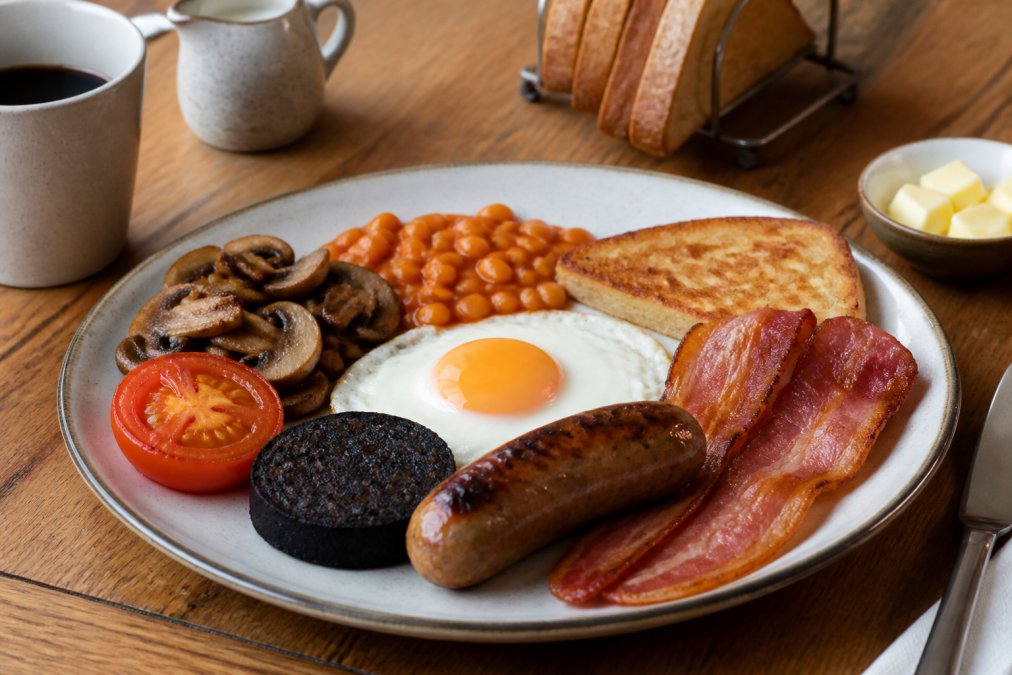
 listicle
Why a Traditional Scottish Breakfast Is a Must in Skye
Table of Contents
- What Makes a Full Scottish Breakfast Ingredients List So Distinct
- The Cultural 'Why' Behind a Traditional Scottish Breakfast
- Locally Sourced Breakfast Ingredients on the Island
- Dietary Inclusivity Beyond Vegetarianism
- Breakfast Etiquette and Timing: How to Eat Like a Local
- Why a Traditional Scottish Breakfast Is a Must Before Hiking the Cuillin
- Where to Find the Best Breakfast on the Island
- Frequently Asked Questions
Last Updated: September 14, 2026
What Makes a Full Scottish Breakfast Ingredients List So Distinct
A full Scottish breakfast ingredients list is distinct because it replaces the English bacon-and-beans formula with heavier, savoury, meat-based components: Lorne sausage, black pudding, haggis, tattie scones and Scottish oats.
The differences are not cosmetic. Each element carries centuries of Highland food culture, and together they form a morning meal built for cold climates, long walks and slow enjoyment.
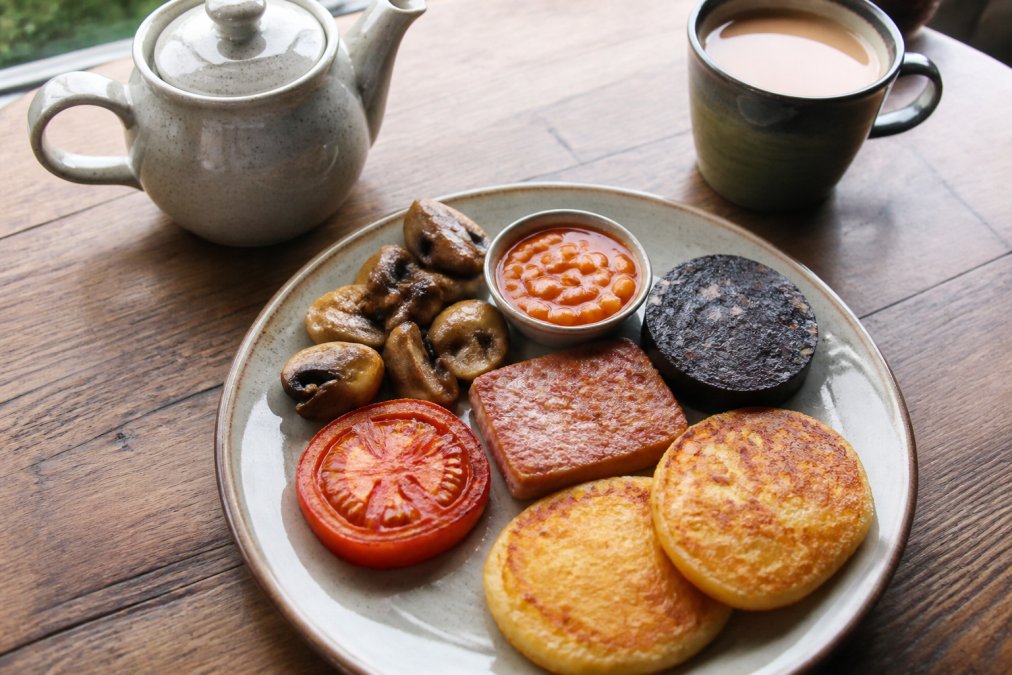
The core components you will find on a proper plate:
- Lorne sausage: a flat, square sausage made from seasoned beef or pork, sometimes called square sausage
- Black pudding: a rich blood sausage, often oat-based, sliced and fried
- Haggis: Scotland's national dish, served in slices alongside eggs
- Tattie scones: potato flatbreads cooked on a griddle
- Scottish oats: porridge or oatcakes, a staple of the Highland larder
What most guides miss is that tattie scones are the true marker of authenticity. A plate without them is a fry-up with Scottish branding.
The Cultural 'Why' Behind a Traditional Scottish Breakfast
The traditional Scottish breakfast exists because of scarcity, climate and hard physical labour, and the plate is a direct record of how Highland households solved a specific problem: how to get enough calories into a body before a day of manual work in cold, wet conditions, using only what could be grown, reared, caught or preserved locally.
Start with the calorie maths. A working day on a croft or a fishing boat in the eighteenth and nineteenth centuries could easily run to several thousand calories of output, and much of it happened before the weather warmed up. A bowl of porridge made from Scottish oats, cheap, shelf-stable and grown in poor soil where wheat struggled, delivered slow-release energy for a fraction of the cost of bread. That is why porridge became a daily ritual rather than a novelty, and why it was often eaten standing up, with a wooden spurtle to stir it, and sometimes cooled in a drawer and sliced for later.
Then look at the rest of the plate through the same lens. Curing, smoking and drying were preservation methods before they were flavour choices. Black pudding turned a slaughtered animal's blood and oatmeal into a filling, iron-rich food that would keep. Haggis did the same for offal, suet and oats, encased in a stomach so nothing was wasted. Lorne sausage, minced meat pressed into a flat square and cooked on a griddle, was a way to stretch a small amount of beef or pork across a whole family's breakfast. Tattie scones used up leftover boiled potatoes. Every element on the plate is a solution to a problem: how to feed people well when there is not much, and how to make what there is last.
The climate reinforced all of this. Long, dark winters and short growing seasons pushed Highland cooking towards oats, root vegetables, preserved meat and dairy rather than the fresh produce and light breads that shaped southern English breakfasts. The heavier, savoury, meat-led character of the Scottish plate is not a stylistic preference, it is a climate adaptation.
Porridge sits at the centre of that story. Scottish oats were cheap, shelf-stable and sustaining, which is why porridge became a daily ritual rather than a novelty. The Scottish Government's food and drink guidance continues to promote regional specialties as part of the country's culinary heritage, and that heritage is exactly what you taste on a good plate.
What changed is the purpose. The meal that once fuelled crofters and fishermen is now eaten for pleasure, but the logic survives in the way it is served: slowly, in quantity, and built around ingredients that come from within a short distance of the table. When you sit down to a full plate on the island, you are eating a working breakfast that has been reinterpreted as a leisure one, and that is precisely why it feels different from a hotel buffet anywhere else.
Locally Sourced Breakfast Ingredients on the Island
Locally sourced breakfast ingredients are the single biggest difference between an average plate and a memorable one. On Skye, that means meat from Highland producers, eggs from nearby crofts, and seafood or smoked fish where the menu allows.
Farm-to-table cooking is not a marketing phrase here. It is a necessity. Island supply chains are short, and the best kitchens build their morning menu around what is available that week. VisitScotland's food and drink guide highlights local producers and food trails as a core part of the visitor experience, and the island's breakfast tables reflect that directly.
A common mistake visitors make is choosing a venue purely on convenience. The twenty-minute detour to a kitchen that sources properly is almost always worth it.
Dietary Inclusivity Beyond Vegetarianism
Dietary inclusivity on the island now goes well beyond a vegetarian option, but the practical detail matters more than the menu label. Vegetarian and vegan alternatives are widely available, and the better kitchens handle gluten-free requests without fuss, but the traditional plate is built from items that are, by their nature, difficult to substitute cleanly, and understanding why helps you order well.
Take the two problem items first. Black pudding and Lorne sausage are the components most likely to contain gluten, and the reason is structural rather than careless. Black pudding is traditionally bound with oatmeal or barley, and Lorne sausage is bulked out with rusk or breadcrumb, both of which introduce wheat (the NHS). Haggis is usually oat-based and therefore often naturally gluten-free, but recipes vary and some producers add barley. Tattie scones are made from potato and flour, so a standard version contains wheat unless the kitchen uses a gluten-free blend. Porridge made from certified gluten-free oats is the safest traditional item on the plate, but even plain oats can be contaminated during milling unless they are labelled gluten-free.
That gives you a simple ordering framework:
- Vegetarian: veggie haggis, meat-free Lorne-style sausage, extra tattie scones, grilled tomato and mushrooms. Ask whether the vegetarian items are cooked in the same fat as the meat.
- Vegan: plant-based spreads, oat milk porridge, no butter on the griddle, and check that the tattie scones are not finished with butter. Veggie haggis is often vegan, but not always.
- Gluten-free: porridge from certified gluten-free oats, oatcakes, eggs, grilled tomato and mushrooms are usually safe. Treat black pudding, Lorne sausage and standard tattie scones as items to confirm rather than assume. Some producers now make gluten-free black pudding using rice or maize instead of barley, so it is worth asking.
The thing nobody tells you is that cross-contamination is the bigger risk than the ingredients list. Many island kitchens cook everything on the same griddle and in the same fat, so a vegetarian sausage can pick up meat residue, and a gluten-free item can pick up flour from a tattie scone cooked moments earlier. If you avoid meat entirely or have coeliac disease, say so clearly when you order rather than when the plate arrives, staff can usually cook items separately, use a clean pan, or swap in a safe alternative, but only if they know before service starts.
A useful habit is to ask two specific questions rather than one general one: 'Is this cooked separately?' and 'What is in the black pudding and the Lorne sausage?' Those two answers cover most of the risk on a traditional plate. Kitchens that source locally often know their producers by name and can answer immediately; if they cannot, that is your signal to choose the porridge, eggs and oatcakes instead.
Breakfast Etiquette and Timing: How to Eat Like a Local
Breakfast etiquette in the Highlands is relaxed, but timing is not. Most lodges and cafés serve between roughly 7:30am and 9:30am, and kitchens that double as lunch venues close the morning service sharply.
A few local habits worth adopting:
- Arrive within the serving window rather than at the last minute
- Say yes to the pot of tea; it is part of the ritual, not an afterthought
- Take your time. This is a slow meal, not a grab-and-go stop
- Ask what is local that day. Staff will tell you honestly
If you are heading out for a long drive or a walk, the local rule of thumb is to add twenty minutes to every hour of travel on Highland roads. A proper breakfast is the buffer that makes that realistic.
Why a Traditional Scottish Breakfast Is a Must Before Hiking the Cuillin
A traditional Scottish breakfast is a must before hiking the Cuillin because the terrain demands sustained energy, and the weather rarely cooperates. The Cuillin ridge is rough, exposed and slow going, and a protein-rich morning meal keeps you steady for hours.
The logic is straightforward. Oats release energy slowly, meat and eggs provide protein, and the whole plate is designed to fuel physical work in cold, wet conditions. Skipping it and relying on a cereal bar is a decision most walkers regret by mid-morning. Skye Lodge prepares a freshly cooked gourmet breakfast using premium local ingredients for guests.
Where to Find the Best Breakfast on the Island
The best breakfast on the island depends on whether you want a hotel dining room, a casual café or a pub setting. Each delivers a different version of the same tradition.
| Venue type | What it does well | Best for | Watch out for |
|---|---|---|---|
| Hotel dining room | Full traditional plate, scenic setting | Walkers and Cuillin access | Busy in peak season |
| Local café | Artisan coffee, casual atmosphere | Couples and solo travellers | Limited seating |
| Traditional pub | Hearty portions, rustic setting | Groups wanting a slow start | Shorter serving hours |
| Luxury lodge | Bespoke, locally sourced cooking | Exclusive and private stays | Guests only |
For a refined, private version of the meal, Skye Lodge serves a gourmet breakfast prepared with locally sourced ingredients as part of the stay, with handmade beds and loch views on the westerly coastline. If you would rather eat out, the island's restaurants are excellent, but it is advisable to book ahead before you arrive, as tables can fill quickly in season.
Frequently Asked Questions
What is a true Scottish breakfast?
A true Scottish breakfast is a hearty cooked meal that typically includes Lorne sausage, black pudding, tattie scones, bacon, eggs, grilled tomato, mushrooms, and baked beans. Many versions also feature haggis and a slice of fruit pudding. It is traditionally served with toast, butter, and a pot of strong tea. The combination is designed to be filling and warming, using ingredients that have been part of Scottish cuisine for generations.
What's the difference between an English breakfast and a Scottish breakfast?
The key differences lie in the meats and accompaniments. A Scottish breakfast includes Lorne sausage (a flat, square sausage), black pudding, and often haggis and tattie scones. An English breakfast typically features link sausages, back bacon, and may include fried bread or hash browns. Both share eggs, beans, and grilled tomatoes, but the Scottish version leans more on oats and distinct regional specialities.
Where can I find locally sourced breakfast ingredients on the island?
Many cafes, hotels, and restaurants on the island pride themselves on using local produce. Look for menus that mention local butcher meats, free-range eggs, and artisan bakery items. Farm shops and delis often stock oatcakes, preserves, and smoked fish from nearby smokehouses. For a guaranteed taste of the best, stay at a lodge like Skye Lodge, where the breakfast is prepared with premium, locally sourced ingredients and served fresh each morning.
Are there vegetarian alternatives for a traditional breakfast in this region?
Yes, many establishments offer vegetarian versions of the traditional breakfast. These typically swap meat items for vegetarian sausages, meat-free black pudding, grilled halloumi, or extra eggs and beans. Some also include sauteed mushrooms, spinach, and roasted tomatoes. Vegan options are increasingly available, with plant-based spreads and dairy-free milk for porridge. It is always best to ask ahead, as smaller cafes may have limited choices.