 how-to
Avoiding Crowds at Skye Landmarks 2026: A Practical Guide
Table of Contents
- Why Avoiding Crowds at Skye Landmarks Matters in 2026
- Best Time to Visit Isle of Skye for Fewer Visitors
- Timing Your Visit: Peak Hours and Seasonal Patterns
- Isle of Skye Off the Beaten Path: Hidden Gems and Remote Locations
- Isle of Skye Transport Tips: Navigating Access and Parking
- Planning Your Itinerary to Avoid Over-Tourism
- Real-Time Crowd Monitoring and Visitor Management Tools
- Frequently Asked Questions
Last Updated: August 9, 2026
Why Avoiding Crowds at Skye Landmarks Matters in 2026
Record visitor numbers in 2025 transformed honey-pot sites like the Fairy Pools, Old Man of Storr, and Neist Point into congested destinations. Peak-season day-trippers clog narrow Highland roads, overwhelm limited parking, and degrade the environments they've come to photograph. The solution requires understanding visitor patterns deeply enough to build an itinerary that works around them.
At Skye Lodge, owners Claire and Douglas have refined strategies that go beyond surface-level advice. They understand that spending three nights rather than rushing through in one day separates an overcrowded photo collection from genuine connection with the island.
Best Time to Visit Isle of Skye for Fewer Visitors
The best time to visit for fewer visitors is shoulder season: late April through May and September through early October. These windows offer genuine escape from peak-season chaos while maintaining reasonable weather and daylight. You'll encounter perhaps 30-40% of summer crowds, yet the island remains fully operational.
Winter (November through February) delivers the fewest visitors but comes with trade-offs. Daylight contracts to six or seven hours, weather turns unpredictable, and some attractions close seasonally. But if you prioritize solitude, winter transforms Skye into something moody, dramatic, and genuinely remote.
Shoulder Season Strategy
Late spring and early autumn represent the sweet spot. May offers warming temperatures, emerging wildflowers, and stable weather before midges peak. September delivers similar conditions in reverse: fading midge season, mild temperatures, and golden light.
Booking accommodation during shoulder season is straightforward. Skye Lodge operates year-round and welcomes guests during quieter periods. The bespoke hospitality from Claire and Douglas becomes even more valuable when the island's pace slows. You're not competing with hundreds of others for restaurant reservations or parking spaces.
Off-Season Advantages and Trade-offs
Off-season travel requires a different mindset. You're trading comfort for genuine solitude. The Cuillin mountains become shrouded in cloud more often, daylight ends by 3:30 PM in December, and weather shifts rapidly.
What you gain is profound. Hiking trails that hosted fifty people per hour in summer now see perhaps five. Parking at Neist Point, which fills by 9 AM in July, has spaces available all day. The trade-off is practical: some restaurants and attractions operate reduced hours, weather becomes genuinely challenging, and off-season demands different preparation with waterproof gear essential.
Timing Your Visit: Peak Hours and Seasonal Patterns
The Fairy Pools experience heaviest traffic between 10 AM and 2 PM, particularly on clear-weather days. The Old Man of Storr peaks around 11 AM to 3 PM. Neist Point reaches capacity by 9 AM on good-weather days.
July and August are unambiguous peak months, avoid them if avoiding crowds is your priority. June and September sit in a middle ground: noticeably busier than shoulder season but manageable with careful timing.
Honey-pot Sites and When to Avoid Them
Honey-pot sites, the Fairy Pools, Old Man of Storr, Neist Point, Talisker Beach, draw disproportionate traffic. The strategic approach is not to skip them but to visit at off-peak times. The Fairy Pools at 7 AM on a weekday in May offers a completely different experience than noon in July: perhaps five other people instead of five hundred.
Weekdays universally see fewer visitors than weekends. Weather also shapes visitor patterns. Rainy forecasts deter casual visitors but don't stop committed hikers, creating counterintuitive advantages: poor-weather days often deliver the quietest experiences at major sites.
Early Morning and Late Evening Strategies
Early morning visits represent the most reliable crowd-avoidance tactic. Arriving by 7 or 7:30 AM, before most visitors finish breakfast, delivers near-solitude even at famous locations. This requires accommodation close enough to major sites that travel time doesn't consume your early-morning window. Skye Lodge's westerly coastline positioning near Dunvegan offers quick access to numerous sites.
Late evening offers a secondary advantage. Visiting between 5 PM and dusk delivers emptying car parks and departing crowds. The light quality transforms, golden hour photography becomes possible, and the landscape takes on different character.
Isle of Skye Off the Beaten Path: Hidden Gems and Remote Locations
The most effective crowd-avoidance strategy isn't visiting famous sites at unusual times, it's discovering sites that aren't famous at all. Skye contains dozens of genuinely stunning locations that receive a fraction of traffic at honey-pot sites yet rival them in beauty.
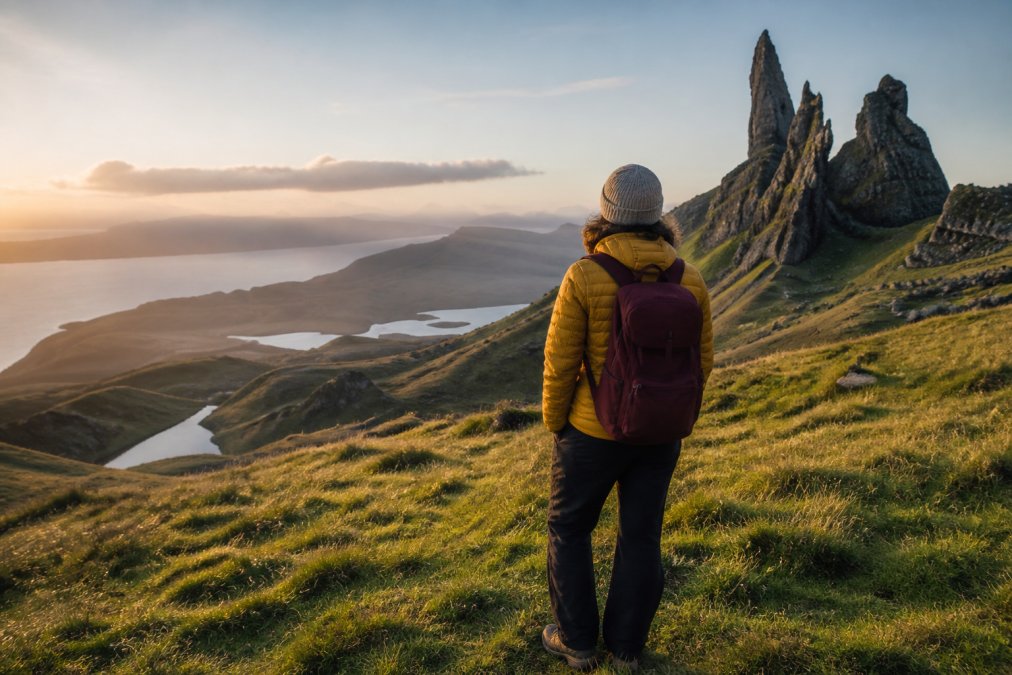
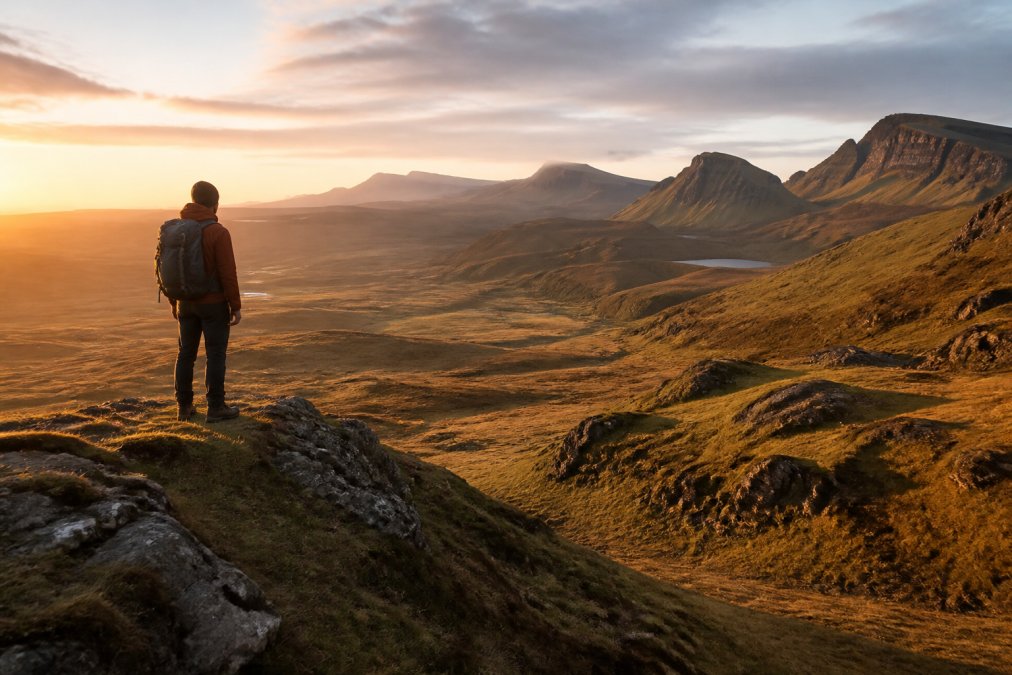
Trotternish offers dramatic geological formations and excellent hiking without Storr's congestion. Rubh' an Dùnain, a remote headland on the island's northwest coast, delivers coastal scenery as striking as any famous viewpoint but with virtually no visitor infrastructure. The Quiraing receives perhaps one-fifth the traffic of Storr because its car park is smaller and less obvious.
Lesser-Known Hiking Trails and Scenic Viewpoints
Ben Edra offers dramatic views across Loch Snizort without significant crowds. The Trotternish Ridge provides one of Skye's finest walks with geological formations rivaling any famous site, yet remains far quieter than Storr. Rubh' an Dùnain delivers coastal scenery and birdwatching with minimal visitor pressure. Waterstein Head offers clifftop views and coastal drama with virtually no infrastructure.
These trails require navigation skills or local knowledge and aren't signposted with car parks and visitor facilities. This self-selection mechanism keeps visitor numbers manageable. Skye Lodge's owners maintain knowledge of quieter trails and provide guidance tailored to your fitness level and interests.
Non-Hiking Alternatives for All Abilities
Dunvegan Castle attracts visitors but never experiences congestion of natural honey-pot sites. Visiting on a weekday in shoulder season means exploring with only a handful of others present.
Talisker Distillery offers guided tours and tastings in a controlled environment. Visitor numbers are naturally limited by tour scheduling. Skye's craft community offers another avenue: visiting local studios, workshops, and galleries connects you with the island's creative culture while supporting the local economy.
Scenic drives themselves constitute valid experience. The road from Dunvegan to Neist Point or the coastal drive toward Trotternish delivers landscape immersion without leaving your vehicle.
Isle of Skye Transport Tips: Navigating Access and Parking
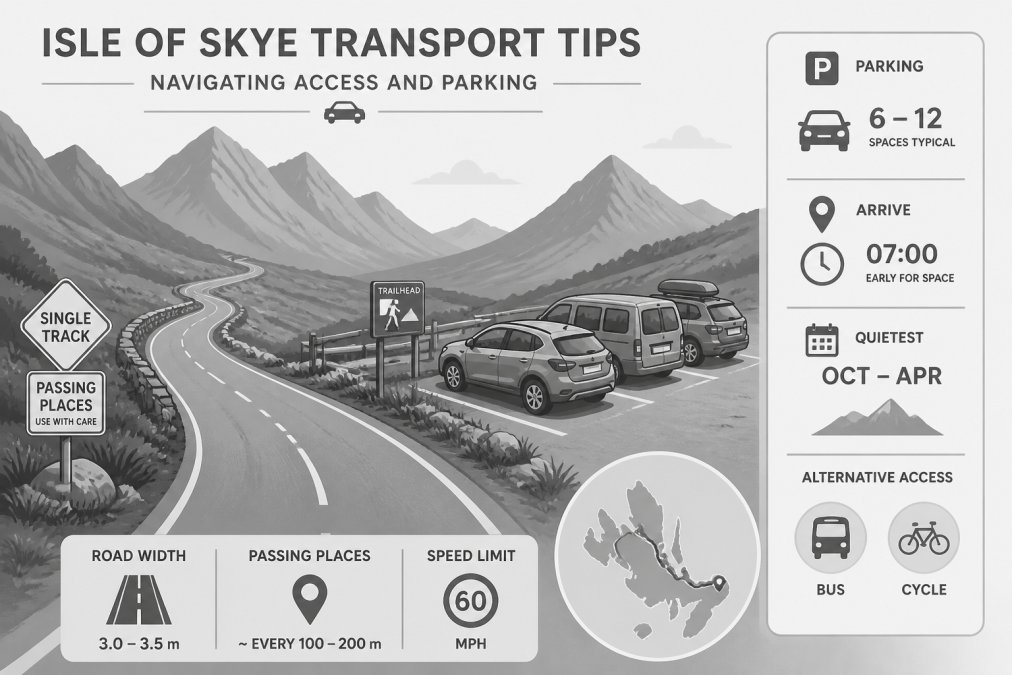
Skye's infrastructure was designed for a fraction of current visitor volumes. The single most important principle: narrow Highland roads with single-track passing places create genuine bottlenecks. Parking capacity is the hard constraint. Popular sites have fixed parking areas; the Fairy Pools car park holds perhaps 150 vehicles, Storr around 200. Once full, they're full.
Public Transport vs. Car Rental Strategy
Public transport on Skye operates within significant constraints. Bus services connect major towns and some attractions, but frequency is limited and routes don't cover all significant sites. Car rental offers flexibility but requires caution on single-track Highland roads. The strategic choice depends on priorities: organized tours solve parking and navigation challenges but concentrate you with other tourists. Car rental provides flexibility to visit quiet locations at unusual times.
Parking Capacity and Road Access Limitations
Parking at popular sites fills predictably. The Fairy Pools car park reaches capacity by 9 AM on good-weather days in summer. Storr fills slightly later, around 10 AM. Neist Point fills earliest, sometimes by 8:30 AM. If you want to visit a famous site during peak season, you must arrive before it fills.
Road access limitations are equally important. Some roads become genuinely difficult during winter weather. The road to Neist Point can close temporarily during severe conditions. Planning flexibility into your itinerary prevents disappointment.
Planning Your Itinerary to Avoid Over-Tourism
The fundamental insight is this: itinerary structure matters more than individual timing decisions. Instead of maximizing site visits, minimize the number and invest time in each. Instead of sprinting through Skye in two days, spend three or four. Claire and Douglas actively recommend guests spend a minimum of three nights, ideally five days, to experience Skye as intended.
The 3-Night Minimum: Why Slower Travel Works
Three nights represents the threshold where travel rhythm fundamentally shifts. One night means you're still adjusting; two nights means you're beginning to understand; three nights means you can actually relax into the experience instead of perpetually rushing.
Practically, three nights allows you to visit two major sites without pressure. You can spend a full day at one location, experiencing it across different light conditions. Five days, the duration Skye Lodge recommends, elevates this further. You can visit three or four significant sites, explore quieter locations, engage with local culture, and still have time to simply be present.
Respecting Local Communities and Sustainable Tourism
Avoiding crowds isn't merely about personal comfort, it's about respecting the island's infrastructure and communities. Skye's local population is roughly 10,000 people. During peak season, the island hosts hundreds of thousands of visitors annually. Responsible tourism means respecting private property and access rights, leaving no trace at natural sites, and supporting local businesses genuinely.
Real-Time Crowd Monitoring and Visitor Management Tools
Real-time crowd monitoring tools now provide data that was impossible to access five years ago. Several platforms track visitor density at popular sites using parking-capacity data, mobile-phone location signals, or combined data sources. Before driving to a popular site, check real-time density data. If the car park is full, you have immediate alternatives: visit a different site, visit at a different time, or visit an off-the-beaten-path alternative.
Google Maps provides parking-availability predictions for some Skye sites. Specialized hiking and tourism apps offer real-time updates on trail congestion. The limitation is coverage: remote sites and lesser-known locations rarely have monitoring infrastructure.
Avoiding crowds at Skye landmarks requires abandoning the assumption that you can see everything quickly. The island's beauty demands time, and that time is precisely what separates overwhelming tourism from genuine travel. Whether you visit in shoulder season, arrive at sites before dawn, or discover quieter alternatives entirely, the principle remains constant: intentional planning transforms the experience.
Skye Lodge embodies this philosophy. By offering accommodation designed for slower travel, with bespoke hospitality from owners Claire and Douglas, gourmet locally sourced breakfasts, and personalized guidance on avoiding over-tourism, the lodge positions itself as the ideal base for visitors seeking authentic engagement with the island.
| Strategy | Best For | Crowd Level | Logistics |
|---|---|---|---|
| Early morning visits (7-8 AM) | Famous sites in any season | Minimal | Requires early planning |
| Shoulder season (May, Sept-Oct) | Balance of quiet and comfort | Low-moderate | Full infrastructure available |
| Off-season (Nov-Mar) | Maximum solitude | Minimal | Requires weather flexibility |
| Lesser-known trails | Authentic experience | Very low | Demands navigation skills |
| Weekday visits | Any site | Noticeably lower | Requires schedule flexibility |
| Real-time monitoring tools | Data-driven decisions | Variable | Requires smartphone access |
Frequently Asked Questions
What is the best time of year to visit Skye to avoid crowds?
The shoulder seasons of April-May and September-October offer the best balance of favourable weather and fewer visitors. Peak season runs July-August when day-trippers flood iconic landmarks like Neist Point and the Cuillin mountains. Off-season (November-March) has the fewest visitors but expect shorter daylight hours and unpredictable weather. Many travellers find May and September ideal for avoiding over-tourism whilst maintaining reasonable travel conditions.
Which Skye landmarks are the most crowded, and when should I avoid them?
Honey-pot sites like Neist Point, the Old Man of Storr, and Dunvegan Castle see peak crowds between 10am-4pm, especially on weekends and during school holidays. Midweek visits and early morning arrivals (before 9am) significantly reduce visitor density. Alternative viewpoints and lesser-known trails on the same routes offer comparable scenery with a fraction of the crowd. Planning your itinerary around quieter trailheads and remote locations makes a measurable difference to your experience.
How can I travel sustainably on the Isle of Skye whilst avoiding crowds?
Public transport options, including local bus services, reduce pressure on narrow Highland roads and parking capacity constraints. Staying longer (3+ nights) rather than day-tripping allows you to spread your visits across quieter times. Choosing off-peak seasons and supporting local businesses through advance restaurant bookings and engagement with Skye artisans helps distribute visitor impact fairly. Respecting wild camping restrictions and sticking to designated trails protects the local environment and infrastructure.
Are midges bad on the Isle of Skye, and does this affect crowd avoidance timing?
Midges are most active in calm, warm conditions from June to September, particularly in early morning and evening. Visiting during shoulder seasons (April-May or September-October) reduces midge exposure whilst also avoiding peak summer crowds. If visiting during midge season, plan outdoor activities for windier days or later in the day. Midge pressure is one reason many experienced travellers prefer spring and autumn visits to Skye landmarks.