 how-to
Hiring a Private Chef for Self-Catering Accommodation
Table of Contents
- What a Private Chef Brings to Self-Catering Accommodation
- Understanding Private Chef Services for Holiday Lets
- Private Chef Booking Questions: What to Ask Before You Commit
- Private Chef Menu Planning for Your Group Stay
- Accommodating Private Chef Dietary Requirements and Allergies
- Hiring a Private Chef for Group Accommodation: Size, Space, and Logistics
- Booking Timeline and Practical Checklist
- Frequently Asked Questions
Last Updated: October 10, 2026
What a Private Chef Brings to Self-Catering Accommodation
Hiring a private chef for self catering accommodation transforms a holiday let into a fully catered experience without the formality of a hotel dining room. Rather than cooking for yourselves or eating out every evening, a private chef handles all meal preparation, shopping, and service within your rental property. This service model suits groups seeking restaurant-quality dining in a relaxed, intimate setting.
The appeal lies in flexibility. A private chef adapts menus to dietary preferences, sources local ingredients, and works around your schedule. Whether you're celebrating a milestone or simply want to enjoy time together without kitchen duties, this arrangement removes the logistical burden while keeping the experience personal.
Understanding Private Chef Services for Holiday Lets
Private chef services operate in two primary models, each suited to different group needs and accommodation types.
On-site dining versus restaurant-style experience
An on-site private chef prepares and serves meals within your holiday home's kitchen and dining space. This differs fundamentally from restaurant dining: the chef works in YOUR kitchen, adapts to YOUR preferences in real time, and creates an intimate dining atmosphere tailored to your group.
The experience feels personal because it is. A chef preparing meals steps away from where you're relaxing creates continuity between courses. Dietary tweaks happen instantly, no explaining requirements to waitstaff, no worrying about cross-contamination. For groups with mixed preferences or allergies, this responsiveness is invaluable.
Restaurant-style service, by contrast, brings formal plating and table service to your dining room. The chef may prepare multiple courses with precision timing, presenting each course as you finish the previous one. This works beautifully for special occasions or when you want the theatre of fine dining without leaving your accommodation.
Fully catered versus guest services model
A fully catered private chef handles everything: menu planning, shopping, preparation, cooking, plating, service, and cleanup. Your group arrives to find meals ready, the table set, and minimal disruption to your holiday experience. This model suits groups prioritising relaxation and celebration over involvement.
The guest services model involves the chef less intensively. The chef may prepare ingredients, teach cooking techniques, or handle the more complex elements of a meal while you participate in preparation. Some groups prefer this collaborative approach, it becomes part of the holiday experience rather than a service you observe passively.
Cost and accommodation setup determine which model suits you. Fully catered requires adequate kitchen space and clear boundaries between chef workspace and guest areas. Guest services works in smaller kitchens where collaboration feels natural rather than cramped.
Private Chef Booking Questions: What to Ask Before You Commit
Before hiring a private chef for self catering accommodation, clarify these essential points with the chef or agency:
Availability and dates. Confirm the chef is available for your exact travel dates. Peak holiday seasons fill quickly. Ask about minimum booking requirements, some chefs require multi-day commitments or have seasonal minimums.
Kitchen assessment. Discuss your accommodation's kitchen setup. Does it have adequate counter space, refrigeration, and cooking equipment for the chef's needs? A chef accustomed to professional kitchens may struggle in a cottage with a single oven and limited storage.
Menu planning process. How does the chef approach menus? Do they propose options, or do you request specific meals? Can they accommodate dietary restrictions, allergies, and food preferences? Ask for examples of past menus to gauge their style and flexibility.
Shopping and sourcing. Will the chef shop locally using funds you provide, or do they source ingredients in advance? For remote holiday lets, this distinction matters significantly.
Service and cleanup. Does the quoted price include table service, or is it preparation only? Who clears plates and washes up? These details affect the experience and your relaxation level.
Contingencies. What happens if a guest develops an unexpected allergy or requests a last-minute menu change? How does the chef handle ingredient shortages in remote areas? Understanding their problem-solving approach prevents frustration mid-stay.
References and reviews. Ask for contact details of previous clients or check independent reviews on platforms like Google, Freetobook, and TripAdvisor. Real guest feedback reveals whether a chef delivers on promises and handles challenges gracefully.
Private Chef Menu Planning for Your Group Stay
Menu planning shapes the entire private chef experience. A thoughtful approach balances ambition with practicality.
Bespoke dining and tailored menus
A bespoke menu reflects your group's tastes, dietary needs, and the occasion. Rather than following a template, the chef designs meals specifically for you. This might mean featuring local Isle of Skye ingredients, incorporating family recipes, or building around a theme.
Discuss the occasion with your chef. A romantic anniversary dinner differs dramatically from a casual family gathering or a celebration with friends. The chef uses this context to propose appropriate courses, plating styles, and pacing.
Ask the chef about their sourcing philosophy. Do they prioritise local producers? Can they work with foraged ingredients or speciality items from the region? For groups visiting specific areas, a chef's local knowledge becomes part of the value, they know which suppliers deliver quality and reliability.
Multi-course meals and special occasions
Multi-course dining creates structure and anticipation. A typical fine-dining experience spans three to five courses: an amuse-bouche or appetiser, a first course, a main course, and dessert, often with a palate cleanser between courses.
The pacing matters as much as the food. Courses arrive with enough time between them for conversation and digestion. A skilled private chef judges this rhythm, adjusting based on how quickly your group eats and how engaged they seem in conversation.
For special occasions, anniversaries, milestone birthdays, retirements, the chef can create a narrative through the menu. Each course might reference a shared memory, incorporate meaningful ingredients, or build toward a dramatic finale. This personalisation transforms a meal into an event.
Discuss timing with the chef. What time should the first course arrive? How long should the entire experience take? For some groups, a leisurely three-hour dinner is the point; for others, a more efficient pace suits the schedule better.
Accommodating Private Chef Dietary Requirements and Allergies
Dietary accommodation is non-negotiable when hiring a private chef for self catering accommodation. Clear communication prevents serious problems.
Provide the chef with a detailed list of all dietary requirements, allergies, and preferences well before the stay. Include severity, an allergy requiring complete avoidance differs from a strong dislike. Specify whether cross-contamination concerns apply (critical for severe allergies) or whether separate preparation is sufficient.
Discuss how the chef sources and prepares food. If someone in your group has a severe nut allergy, does the chef use separate utensils and cutting boards? Can they guarantee no cross-contamination? Some chefs have specific protocols for allergen management; others may not be equipped to handle severe restrictions safely.
Mention any religious or ethical dietary practices. Vegetarian, vegan, kosher, halal, and other dietary frameworks require knowledge and respect (About your stay at hospital). A chef experienced with these practices can create menus that feel celebratory rather than restrictive.
Ask about flexibility. What if someone's dietary needs shift during the stay, perhaps due to illness or a change of mind? A chef who can adapt mid-week demonstrates genuine hospitality rather than rigid adherence to a pre-planned menu.
Hiring a Private Chef for Group Accommodation: Size, Space, and Logistics
Group size and accommodation layout directly influence whether a private chef arrangement works practically.
Kitchen facilities and on-site preparation
A private chef needs functional kitchen space. Assess your holiday home honestly: Is there adequate counter space for prep work? Does the cooker have enough burners and oven capacity? Is refrigeration sufficient for ingredients and prepared dishes?
Remote or rural holiday lets sometimes have limitations. A cottage might have a single oven and limited counter space. A chef experienced with holiday accommodation knows how to work within these constraints, they plan menus that don't require simultaneous use of multiple burners or excessive prep space.
Discuss these limitations upfront. A chef can suggest menu adjustments or bring portable equipment if needed. Transparency prevents disappointment when the chef arrives to find conditions don't match expectations.
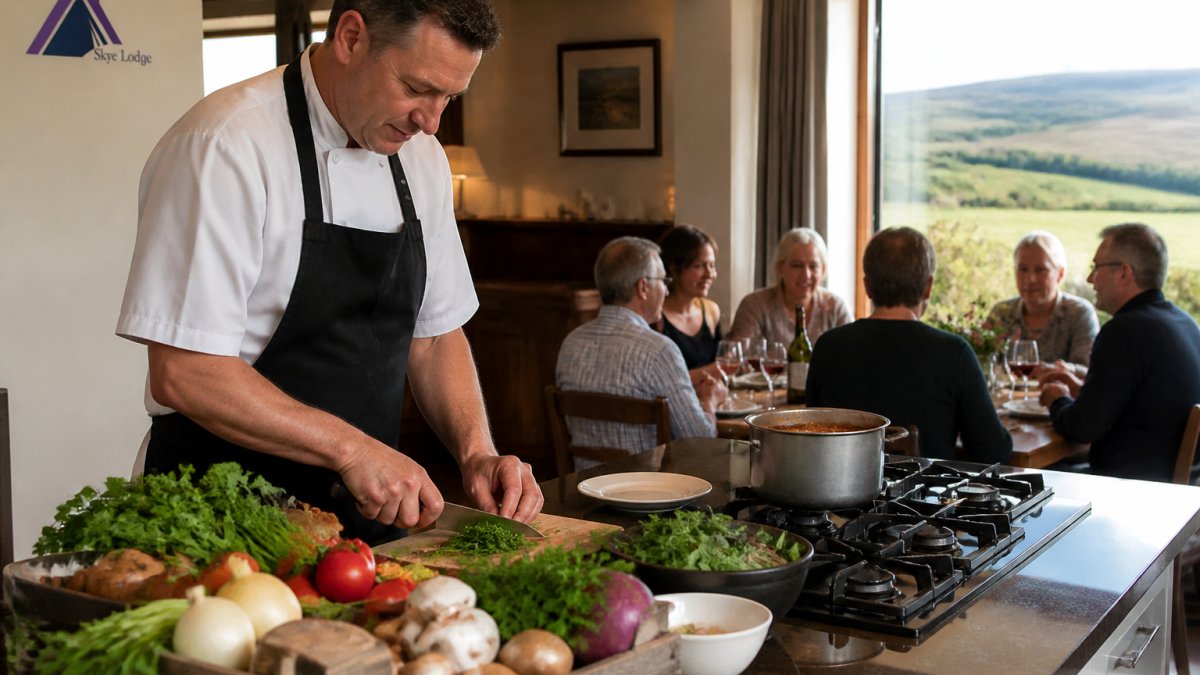
Group size affects both menu complexity and service logistics. A chef preparing for four people operates differently than one catering for ten. Larger groups sometimes require two chefs or a chef with serving assistance. Discuss staffing needs based on your group size and the experience you want.
Chef shopping and ingredient sourcing
How does your chef source ingredients? In urban areas, this is straightforward. In remote locations like the Isle of Skye, it requires local knowledge and planning.
Some chefs source ingredients in advance, arriving with everything they need. Others prefer to shop locally, supporting regional producers and ensuring freshness. For holiday lets in rural areas, local shopping often means better quality and more authentic meals, a chef who knows which fishmonger, butcher, or farm shop delivers reliability adds genuine value.
Discuss budget for shopping. Will you provide funds, or does the chef include ingredient costs in their fee? For remote locations, ingredient costs may be higher than in cities. Clarify this upfront to avoid surprises.
Ask about seasonal availability. What grows or is produced locally during your visit? A chef who designs menus around seasonal availability creates more interesting meals and supports local food systems.
Booking Timeline and Practical Checklist
Planning ahead ensures everything runs smoothly when your private chef arrives.
8-12 weeks before arrival: Research chefs or agencies. Read reviews on Google, Freetobook, and TripAdvisor. Narrow your options based on experience, style, and availability.
6-8 weeks before: Contact preferred chefs. Discuss your group, accommodation, occasion, and budget. Ask about their approach to menu planning and dietary accommodation. Request references.
4-6 weeks before: Confirm booking and payment terms. Discuss cancellation policies. Exchange contact details and confirm the chef has your accommodation address and access instructions.
2-4 weeks before: Begin detailed menu planning. Share dietary requirements, allergies, and preferences. Discuss ingredient sourcing and shopping logistics. Confirm final group size and any last-minute changes.
1 week before: Confirm all details with the chef. Provide final headcount, any additional dietary information, and emergency contact details. Ensure the accommodation's kitchen is clean and functional.
Day of arrival: Ensure someone is available to welcome the chef. Show them the kitchen layout, explain any appliance quirks, and confirm wifi access if needed.
| Milestone | Timeframe | Key Actions |
|---|---|---|
| Research and selection | 8-12 weeks | Review profiles, read reviews, shortlist options |
| Initial contact | 6-8 weeks | Discuss needs, request references, assess fit |
| Booking confirmation | 4-6 weeks | Confirm dates, payment, cancellation terms |
| Menu planning | 2-4 weeks | Share dietary needs, finalise menus, discuss sourcing |
| Final preparation | 1 week | Confirm details, prepare kitchen, brief accommodation |
| Service | Day of arrival | Welcome chef, orient to kitchen, confirm timing |
Hiring a private chef for self catering accommodation elevates a group holiday from pleasant to memorable. The right chef brings not just culinary skill but local knowledge, flexibility, and genuine hospitality.
Frequently Asked Questions
How far in advance should I book a private chef for self-catering accommodation?
Book a private chef 6-12 weeks ahead for peak season or special occasions, and 4-8 weeks for off-peak dates. Early booking gives chefs time to source quality, locally sourced ingredients and plan tailored menus that suit your group's preferences and dietary requirements. Last-minute bookings may be possible but reduce flexibility and availability.
What kitchen facilities does a private chef need in a self-catering holiday home?
A private chef requires a fully equipped kitchen with a functional oven, hob, refrigerator, freezer, and essential cookware. Check that worktop space is adequate for food preparation, and confirm availability of serving dishes, cutlery, and glassware. Discuss any limitations with your chef before booking; they can adapt their menu and preparation approach to your accommodation's setup.
Can a private chef accommodate allergies and special dietary requirements for a group?
Yes. Provide your chef with a complete list of allergies, intolerances, and dietary preferences (vegetarian, vegan, gluten-free, etc.) at least 4 weeks before arrival. Professional chefs plan bespoke menus around these requirements and source appropriate ingredients. Clear communication ensures safe, enjoyable meals for every guest throughout your stay.
Is hiring a private chef worthwhile for a self-catering group stay?
A private chef transforms a self-catering holiday by removing meal planning, shopping, and cooking responsibilities. Your group enjoys restaurant-style dining without leaving the accommodation, allowing more time to explore and relax. For celebrations, special occasions, or guests with diverse dietary needs, the convenience and personalised service often justify the investment.