 ultimate-guide
How to Plan a Luxury Trip to the Isle of Skye
Table of Contents
- Start With the Right Number of Days: How Many Days for Isle of Skye
- When to Go: The Best Time to Visit Isle of Skye
- Luxury Accommodation Isle of Skye: What Separates Good From Exceptional
- Private Tours, Chauffeurs and Luxury Transport on the Island
- Bespoke Dining: Fine Dining and Local Food Experiences
- How to Plan a Luxury Trip to the Isle of Skye: A Step-by-Step Guide
- Wellness, Heritage and Quiet Corners: The Angles Most Guides Miss
- Frequently Asked Questions
Last Updated: September 10, 2026
Start With the Right Number of Days: How Many Days for Isle of Skye
The honest answer to how many days for Isle of Skye is three nights minimum, with five days the sweet spot for a luxury pace. A rushed day trip covers two landmarks and leaves you exhausted.
Most first-time visitors underestimate the scale. Skye is roughly 50 miles long, but single-track roads and Highland terrain stretch journey times (britannica.com). Local advice: add 20 minutes to every hour of travel.
For a genuinely luxurious trip, plan around these durations:
- 2 nights: one region only, either Trotternish or the west coast
- 3 nights: the classic minimum, covering the main landmarks comfortably
- 5 days: the ideal, allowing quiet corners, wellness time, and proper dining
Owners Claire and Douglas argue that seeing everything in a day or two misses the point.
When to Go: The Best Time to Visit Isle of Skye
The best time to visit Isle of Skye for a luxury trip is May, June, or September. These months offer the most reliable weather, the longest daylight hours, and thinner crowds than the July and August peak.
May and June bring wildflowers and daylight past 10pm; September delivers softer light and a calmer island (metoffice.gov.uk). Both suit travellers who want scenic photography without fighting for a viewpoint.
July and August are warmest but busiest. Popular car parks fill by mid-morning, and restaurant tables vanish without a booking.
Winter offers dramatic skies, empty roads and lower rates, but many attractions and eateries close and daylight shrinks to around seven hours.
Check the Met Office seasonal climate averages for the Highlands before locking dates. Scottish weather patterns shift quickly, and even summer can deliver four seasons in an afternoon.
In peak season, premium accommodation and private guides must be reserved far ahead; in shoulder season you get more flexibility and better attention from local providers.
Luxury Accommodation Isle of Skye: What Separates Good From Exceptional
Luxury accommodation Isle of Skye comes down to three things: genuine space, personalised service, and location that shortens your travel time. A beautiful room in the wrong corner of the island costs you hours in the car every day.
Room size is the first test. Many properties marketed as luxury on Skye are converted crofts with compact rooms.
The second marker is service. Every lodge claims bespoke hospitality.
Location is the third. Staying near Dunvegan puts you within roughly 15 minutes of several standout restaurants and close to Dunvegan Castle, Neist Point, and the Cuillin mountains.
Private Tours, Chauffeurs and Luxury Transport on the Island
Private tours and chauffeur services solve Skye's biggest logistical problem: driving single-track roads while trying to enjoy the scenery. For a genuinely luxury trip, transport planning extends beyond a car and driver to private aviation, helicopter transfers and a concierge who coordinates every leg.
For visitors unfamiliar with Highland roads, a chauffeur is money well spent. Passing places, blind summits and sheep demand attention; handing the wheel to a local guide turns a stressful drive into a sightseeing excursion.
The luxury transport tiers
- Self-drive with a premium vehicle. The most flexible option, but the least luxurious in practice. Choose a mid-size estate or crossover rather than a large SUV, full-size 4x4s feel unwieldy on single-track sections and are awkward in passing places. Book through a Highland-based hire firm that permits ferry travel, and confirm the excess and breakdown cover in writing.
- Chauffeur-driven transfers. A local driver-guide collects you from Inverness, Glasgow or Edinburgh airport and handles the whole journey, including the Skye Bridge or the Mallaig-Armadale ferry. This is the standard choice for travellers who want to arrive relaxed.
- Full-day private tours. A knowledgeable local guide builds the day around your interests, photography, clan heritage, geology or hiking, and times stops to avoid the coach crowds at the Quiraing, Old Man of Storr and Neist Point.
- Private aviation and helicopter transfers. For the shortest possible journey, a private charter into a Highland airfield, or a helicopter transfer from the central belt, removes the long drive entirely. These are arranged through specialist charter brokers rather than booked directly, and require advance coordination with your accommodation.
Booking mechanics that matter
Ferry crossings on the Mallaig-Armadale route and the Skye Bridge are the pinch points. Peak-season ferry spaces sell out days ahead, so reserve as soon as dates are fixed. Chauffeur operators normally handle this, confirm in writing.
For helicopter and private charter, brokers need several weeks' notice, and west-coast weather can ground flights at short notice, build a buffer day rather than flying on your departure morning.
The concierge layer
This is where luxury planning on Skye diverges from standard guides. A private concierge or well-connected lodge can coordinate the entire transport chain, airport pickup, ferry booking, chauffeur hours, restaurant transfers and weather contingency, so you never touch a booking app.
Bespoke Dining: Fine Dining and Local Food Experiences
Fine dining on Skye requires forward planning more than deep pockets. The island's best restaurants are small, and tables disappear weeks ahead in summer. But the luxury angle most guides ignore is that the best meals on Skye are often not in a restaurant at all, they are arranged privately.
The restaurant layer
The local food scene leans on what the landscape provides: langoustines, scallops, venison and Highland beef. Several acclaimed restaurants sit within a short drive of Dunvegan, making a west-coast base practical for dinner reservations. The island's best-known tables operate with very limited covers, so the booking window is the real constraint, not the price.
Book every evening meal before you arrive. Ignoring this means settling for whatever is left; in July and August, a short-notice table for two at the top end is effectively impossible.
The private dining layer
This is the bespoke option competitors miss. A private chef, hired for an evening or for the duration of your stay, turns a self-catering estate or a lodge kitchen into the best restaurant on the island. The model works like this:
- The chef sources the day's catch, local shellfish, venison and island produce, often from the same suppliers the restaurants use.
- They cook in your accommodation, so there is no drive home on single-track roads after wine.
- Menus are built around dietary requirements and preferences in advance, not negotiated at the table.
Most luxury lodges and estate rentals can recommend a private chef, and some include it in a fully catered stay.
Producer experiences
For a slower experience, seek out local craft and artisan producers. Skye's smokehouses, shellfish producers and small-batch distilleries and gin makers welcome visits by arrangement, and a guided producer tour can be built into a day between landmark stops.
Practical sequencing
Fix your dates, then book restaurants immediately. If your accommodation has a kitchen, decide early whether you want a private chef for one night or every night, good chefs book out in peak season just like the restaurants.
How to Plan a Luxury Trip to the Isle of Skye: A Step-by-Step Guide
Planning a luxury trip to the Isle of Skye follows a clear sequence: choose your dates, secure your accommodation, then build everything else around it. Getting the order wrong costs you money and choice.
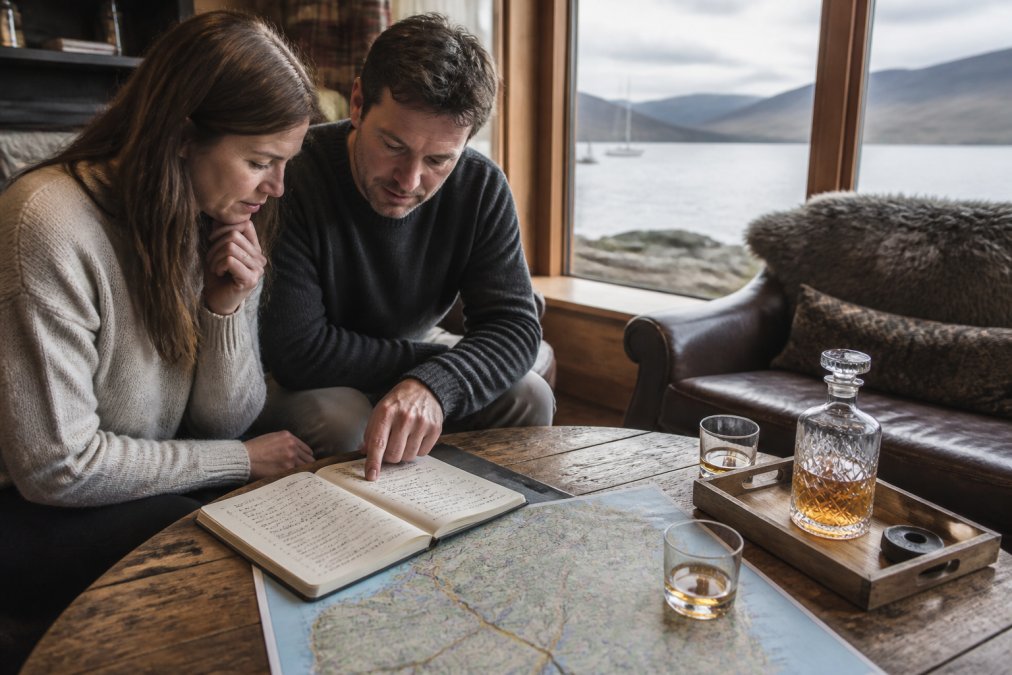
Here is the process that works:
- Pick your season. Aim for May, June, or September for the best balance of weather and space.
- Book accommodation first. Premium rooms on the west coast go early. Confirm your base before anything else.
- Reserve restaurants immediately. Once your dates are fixed, book every dinner. Local tables are limited.
- Arrange transport. Decide between self-drive and a private chauffeur, then book accordingly.
- Build a loose daily itinerary. Two or three stops per day, not five. Add 20 minutes to every hour of driving.
- Plan sunrise and sunset. Choose specific viewpoints for these hours. They are the island's best free show.
- Leave room for spontaneity. Weather will reshape at least one day. That is normal.
How to plan a luxury trip to the Isle of Skye well comes down to sequencing. Accommodation and dining drive everything else.
Wellness, Heritage and Quiet Corners: The Angles Most Guides Miss
Wellness and heritage are the most underserved angles in Skye travel planning. Most guides chase the same landmarks and ignore the island's slower, richer experiences.
High-end wellness retreats are emerging across the island, pairing spa treatments with the landscape's natural quiet.
Heritage runs deeper still: the island's craft traditions, Gaelic culture and clan history reward those who seek them out, revealing a side of Skye day-trippers never see.
The quiet corners matter most. While crowds queue at famous viewpoints, lesser-known lochs, coastal paths and remote glens sit empty, this is where a slow-paced itinerary pays off.
Frequently Asked Questions
How many days are enough for a luxury trip to the Isle of Skye?
Three nights and five days gives you room to slow down, enjoy long breakfasts and still see the headline sights without rushing. Two nights works if you have private transport and pre-booked dining, but you will spend more time in the car. For a genuine luxury Isle of Skye experience, plan at least three nights and add a fourth if you want a full day for the Cuillin or a boat excursion.
What is the best month to visit the Isle of Skye for a luxury trip?
May, June and September offer the best balance of long daylight hours, drier weather and smaller crowds. July and August are busiest, so book accommodation and restaurants months ahead. October brings autumn colour and lower rates, while winter suits travellers who want wilderness and are comfortable with short days and changeable weather patterns. For quiet luxury, aim for the shoulder months.
How can I arrange private transport or a chauffeur for a bespoke tour of the island?
Book a local chauffeur or private tour operator well in advance, especially between May and September. Your accommodation can often recommend trusted drivers who know the single-track roads and the best photography stops. Add 20 minutes to every hour of travel on Highland roads, and plan your days around sunrise and sunset rather than a fixed schedule so the itinerary stays relaxed.
What should I do if the restaurants I want are fully booked?
Reserve your preferred tables at the same time you book your accommodation, particularly for fine dining venues near Dunvegan and Edinbane.