 comparison
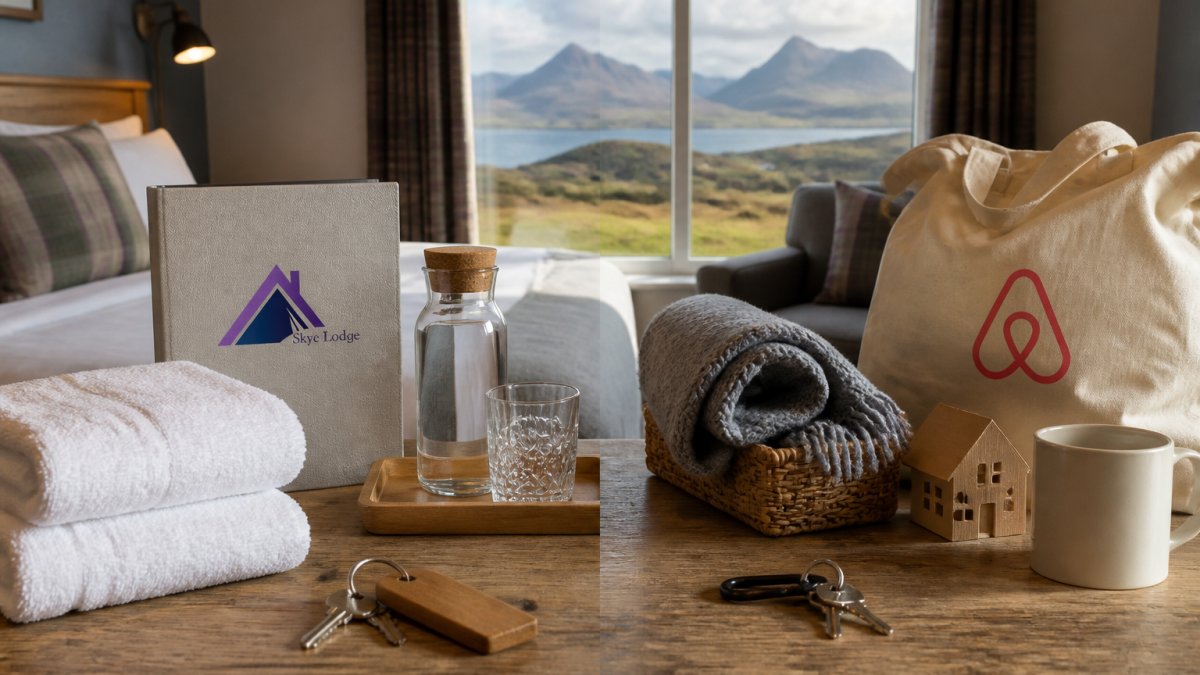
Isle of Skye Hotels vs Airbnb: Which Suits You?
Table of Contents
- Isle of Skye Hotels vs Airbnb: The Quick Comparison
- Cost Comparison and Budget Considerations
- Amenities: Breakfast, Parking and Kitchen Access
- Luxury Accommodation Isle of Skye: What It Really Means
- Self-Catering vs Full-Service Hospitality
- Location, Transport and Rural Access
- Availability, Booking Lead Times and Peak Season
- Over-Tourism, Short-Term Lets and the Local Economy
- Frequently Asked Questions
Last Updated: October 2, 2026
Isle of Skye Hotels vs Airbnb: The Quick Comparison
Choosing between Isle of Skye hotels vs Airbnb comes down to what you want your holiday to feel like. Hotels and lodges offer full-service hospitality, breakfast, and local knowledge; self-catering gives you independence and a kitchen, but you handle the logistics.
The island rewards slow travel. Many visitors try to see everything in a day or two and miss the quieter corners that make a trip memorable.
| Factor | Hotels and Lodges | Airbnb / Self-Catering |
|---|---|---|
| Service | Breakfast, daily hosting, local advice | Self-managed, no on-site host |
| Space | Rooms plus shared areas | Whole property, kitchen, laundry |
| Cost pattern | Rate covers service and food | Lower nightly rate, added fees |
| Best for | Couples, short breaks, groups wanting ease | Families, longer stays, independent travellers |
Cost Comparison and Budget Considerations
The nightly rate is rarely the full story. Self-catering listings usually show a lower headline rate, then add a cleaning charge per booking, a platform service charge, and the cost of buying every meal. A serviced stay bundles breakfast, hosting and local advice into one figure. The two only become comparable once you spread the fixed charges across your nights.
How Fixed Fees Behave Over Trip Length
The mechanism is simple arithmetic. A cleaning charge is levied once per booking, so its effect on the per-night figure shrinks as the stay lengthens. On a two-night break it lands heavily on each night; on a five-night stay it becomes background noise.
Build a like-for-like total before you compare anything:
- Multiply the self-catering nightly rate by your number of nights.
- Add the one-off cleaning charge and the platform service charge.
- Add an estimate for the grocery shop, breakfasts and meals you cook in.
- Compare that against a serviced rate for the same nights, remembering breakfast is already inside it.
Most guests find the gap narrows sharply at two nights and widens in favour of self-catering at four or five.
The Cost Nobody Puts in the Spreadsheet
Transport is the line item that changes the comparison most, and the one standard guides leave out. Rural self-catering almost always assumes a car.
There is a second, quieter saving in a serviced stay: time. A cooked breakfast before an early start removes a shop, a decision and a delay, worth more than the nightly rate difference on a short break where every daylight hour counts.
What a Serviced Rate Actually Contains
A lodge rate typically bundles what you would otherwise buy separately: a freshly prepared breakfast, on-site hosting, and local knowledge you cannot price online. At Skye Lodge, breakfast uses premium locally sourced ingredients, and owners Claire and Douglas are on hand with advice on routes, restaurants and timing, real value that never appears on a booking screen.
Fuel, Ferries and the Bridge
If you are driving, budget for fuel and the crossing onto the island. The Skye Bridge at Kyle of Lochalsh has been toll-free since 2004, so the road route carries no crossing charge, but the CalMac ferry from Mallaig to Armadale is a paid sailing and should be booked ahead in summer. Fuel is limited to a small number of filling stations, so plan refuelling around your route.
Amenities: Breakfast, Parking and Kitchen Access
Breakfast, parking, and kitchen access are the three amenities that separate a serviced stay from a self-catering one. Hotels and lodges provide breakfast and usually parking; self-catering gives you a kitchen and laundry but no morning meal.
For guests out early with a flask and a plan, a cooked breakfast removes a decision and a delay. For families who prefer to cook at their own pace, a kitchen is the bigger draw.
- Breakfast: included at lodges, self-made at rentals
- Parking: typically on site at rural properties
- Kitchen: full access in self-catering, none in a serviced room
- Housekeeping: daily or on request at lodges, usually none at rentals
Luxury Accommodation Isle of Skye: What It Really Means
Luxury accommodation Isle of Skye is less about chandeliers and more about space, sleep quality, and personalised service.
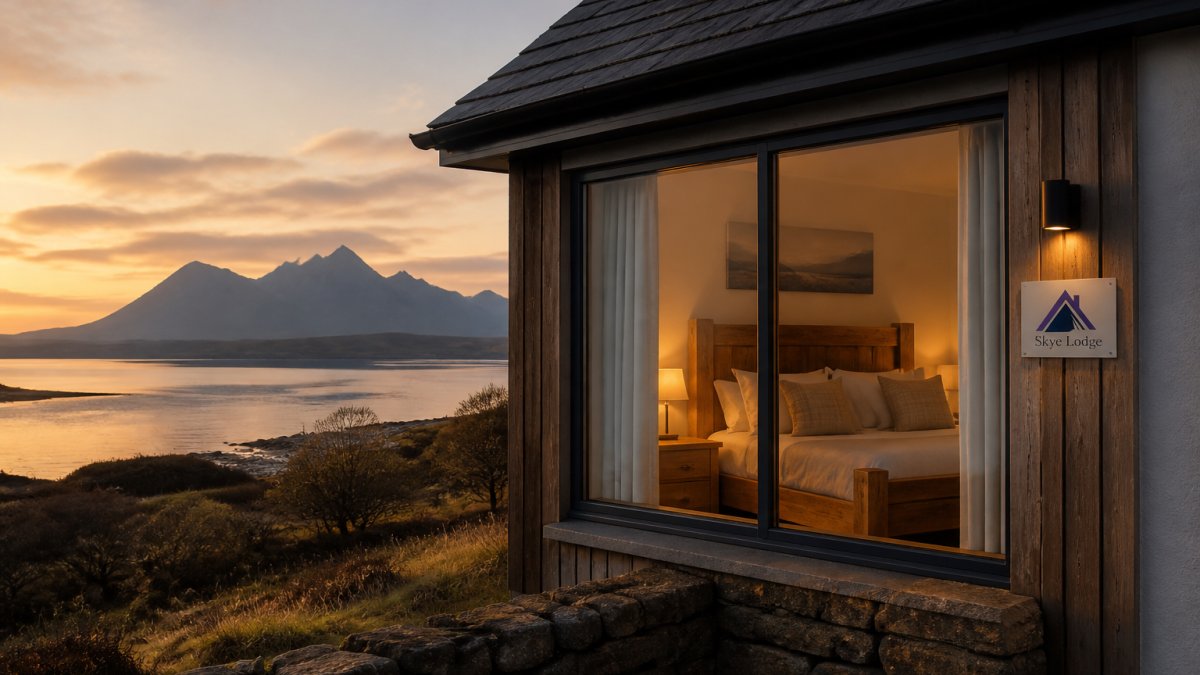
A common mistake is booking on photos alone. Room size and bed quality vary enormously, even at similar rates.
At Skye Lodge, rooms are ensuite, beds are handmade, and the lodge accommodates individuals or exclusive group bookings for 4 to 10 people with loch views.
Self-Catering vs Full-Service Hospitality
The self-catering vs full-service hospitality choice comes down to how much you want to organise. Full-service means someone else handles breakfast, advice, and the small problems; self-catering means you handle them, in exchange for space and flexibility.
Who Self-Catering Suits
Self-catering suits families with young children, guests staying four nights or more, and anyone who values a kitchen and laundry over daily service, or wants a secluded location and does not mind driving for meals and supplies.
Who Full-Service Suits
Full-service suits couples on a short break, small groups wanting an exclusive base, and international visitors who would rather lean on local knowledge than research every detail. It also suits anyone arriving after a long drive who wants dinner booked and a bed made.
Location, Transport and Rural Access
Location decides how much of your holiday you spend driving.
That habit changes an itinerary: a 40-minute drive becomes an hour, and a day with four stops becomes two done well.
Dunvegan works well as a base because it puts you within easy reach of the west coast landmarks while keeping you away from the busiest visitor bottlenecks.
Availability, Booking Lead Times and Peak Season
Peak season on Skye runs through the summer months, and both hotels and rentals sell out early.
For July and August, booking months ahead is normal for the most sought-after properties.
Restaurants need the same treatment. The local dining scene is excellent, so book your preferred tables before you arrive rather than hoping to walk in.
- Book accommodation months ahead for July and August
- Reserve restaurants before you travel, not on the day
- Choose shoulder seasons for easier availability
- Plan sunrise and sunset viewing points in advance
Over-Tourism, Short-Term Lets and the Local Economy
Over-tourism is a genuine tension on the island, and short-term lets sit at the centre of it. When housing shifts from long-term residential use to holiday letting, local communities feel the squeeze, and visitors notice it in staffing and services. What most guides omit is the mechanism that now governs this, and how to read it before you book.
What the Licensing Rules Changed
Short-term lets in Scotland now require a licence from the local authority, and hosts must apply to the relevant council before operating (Short-term lets: regulation information). The Scottish Government introduced the licensing scheme to give councils a way to track and manage the number of short-term lets in their area, and to address concerns about housing availability. For a visitor, the practical effect is straightforward: a legitimate short-term let should be able to tell you its licence status. If a listing is vague about it, treat that as a signal. Scottish Government information on short-term lets licensing sets out how the rules work for landlords.
This matters to you as a guest for two reasons. First, licensed properties have been through a safety and standards check. Second, the licensing debate is the clearest expression of the housing pressure locals talk about, and understanding it helps you choose a stay that does not add to the problem.
Spending That Stays on the Island
The counterweight to over-tourism is spending that stays local. Guests who eat at independent restaurants, book local guides, and buy from Skye Art crafters and artisans put money directly into the local economy. Choosing a hosted stay rather than a key-safe rental keeps hospitality jobs and local knowledge in the community, because the people looking after you are invested in the place.
A simple test before you book: does the property employ local people, source locally, and belong to someone who lives on or near the island? If the answer is yes on all three, your stay is part of the solution rather than the pressure. VisitScotland guidance on responsible tourism sets out how visitors can travel considerately, and the same principles apply to where you sleep.
Connectivity and Remote Work: The Question Nobody Asks
If remote work is part of your trip, connectivity is the gap in almost every guide to the island. Rural coverage varies considerably, and two properties a few miles apart can perform very differently.
Ask specifically before you book:
- What is the actual wi-fi speed, and is it fibre or satellite?
- Which mobile networks get a usable signal at the property?
- Is there a desk or a quiet space to take calls?
- What happens if the connection drops during your stay?
A hosted property can usually answer these questions precisely, because the host lives with the same connection. A key-safe rental often cannot.
Choosing a Stay That Fits the Island
The honest position is that both models can be responsible or irresponsible. A well-run self-catering cottage that employs local cleaners and buys from island suppliers does good. A hosted lodge that keeps money and knowledge in the community does good. What matters is that you ask the question at all, and spend some of your budget with island businesses rather than routing all of it through a platform.
Frequently Asked Questions
Is it cheaper to stay in a hotel or an Airbnb on the Isle of Skye?
It depends on your group size and length of stay. Self-catering holiday rentals often look cheaper per night, but cleaning fees and service charges push the total up on short breaks. Full-service stays fold breakfast, daily housekeeping and local knowledge into one rate. For two nights, the gap narrows considerably. For a week with a family, self-catering can work out better value.
What is the best area to stay on the Isle of Skye for sightseeing?
The west coast around Dunvegan suits travellers who want quieter roads and easy access to Dunvegan Castle, Neist Point and the Cuillin mountains. Portree offers more restaurants and shops but busier streets in peak season. Rural stays reward you with scenic views and dark skies, though you will need a car. Allow extra time for highland roads, roughly 20 minutes for every hour of driving.
Are hotels on the Isle of Skye better for service than an Airbnb?
Full-service hospitality typically includes breakfast, daily housekeeping and an owner or host on site who can advise on restaurants, itineraries and transport. Self-catering rentals give you space and independence but rarely any on-the-ground support. If you value personal recommendations, booked tables and a warm welcome after a long drive, a boutique lodge or inn usually delivers more. If you prefer to be left alone, a rental works well.
How far in advance should I book accommodation on the Isle of Skye?
For peak season, which runs roughly from May to September, book three to six months ahead. Smaller lodges and popular self-catering cottages sell out first because they have limited rooms. Easter, school holidays and any major local events fill even earlier. If you are travelling outside peak season, six to eight weeks is usually enough, though booking earlier gives you more choice of scenic views and room types.
What are the main differences between a boutique lodge and an Airbnb rental?
A boutique lodge offers full-service hospitality: handmade beds, ensuite rooms, gourmet breakfast with locally sourced ingredients and personalised hosting. An Airbnb rental gives you a kitchen, laundry and often more space, but you handle cooking, cleaning and planning yourself. Lodges suit couples and small groups wanting a restful, curated stay. Rentals suit families or longer trips where self-catering independence matters more than service.