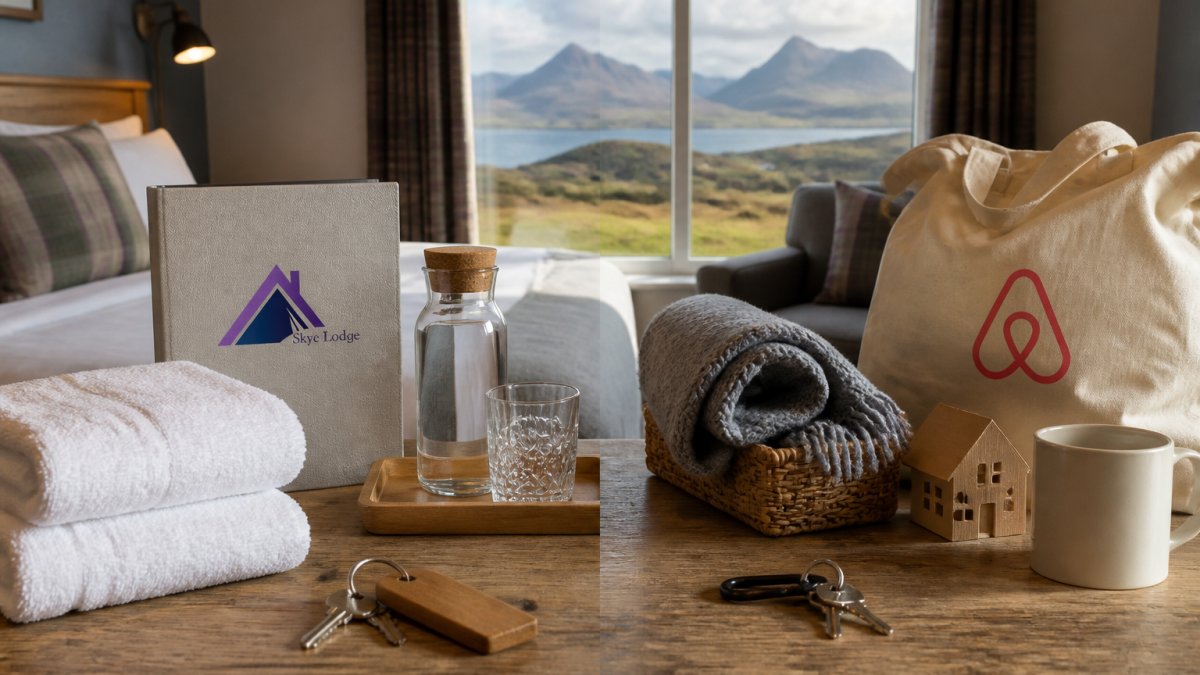
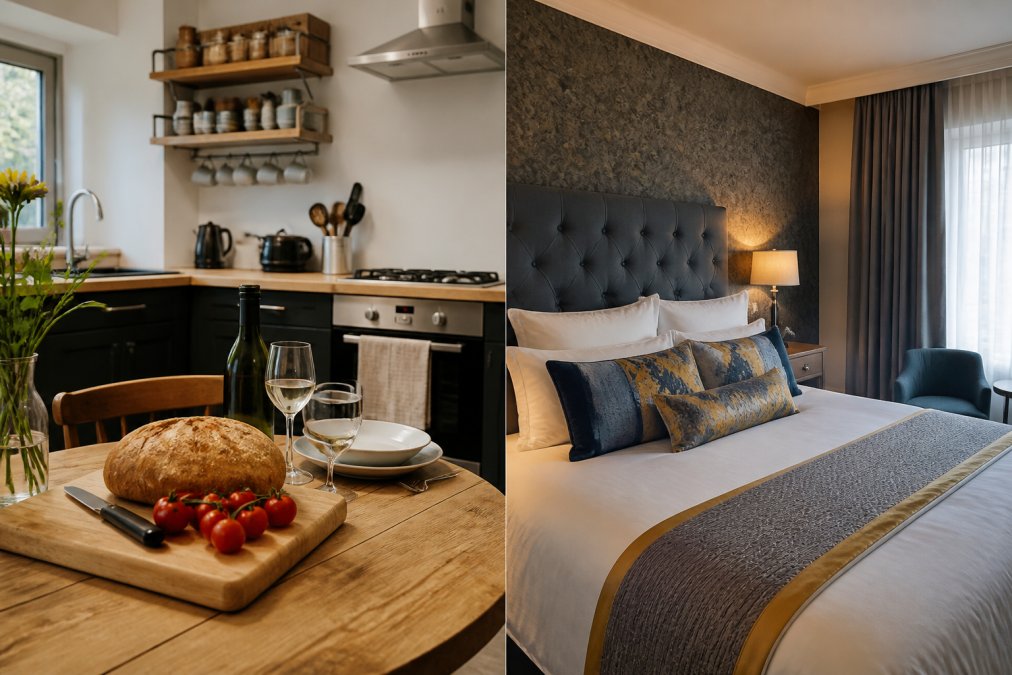
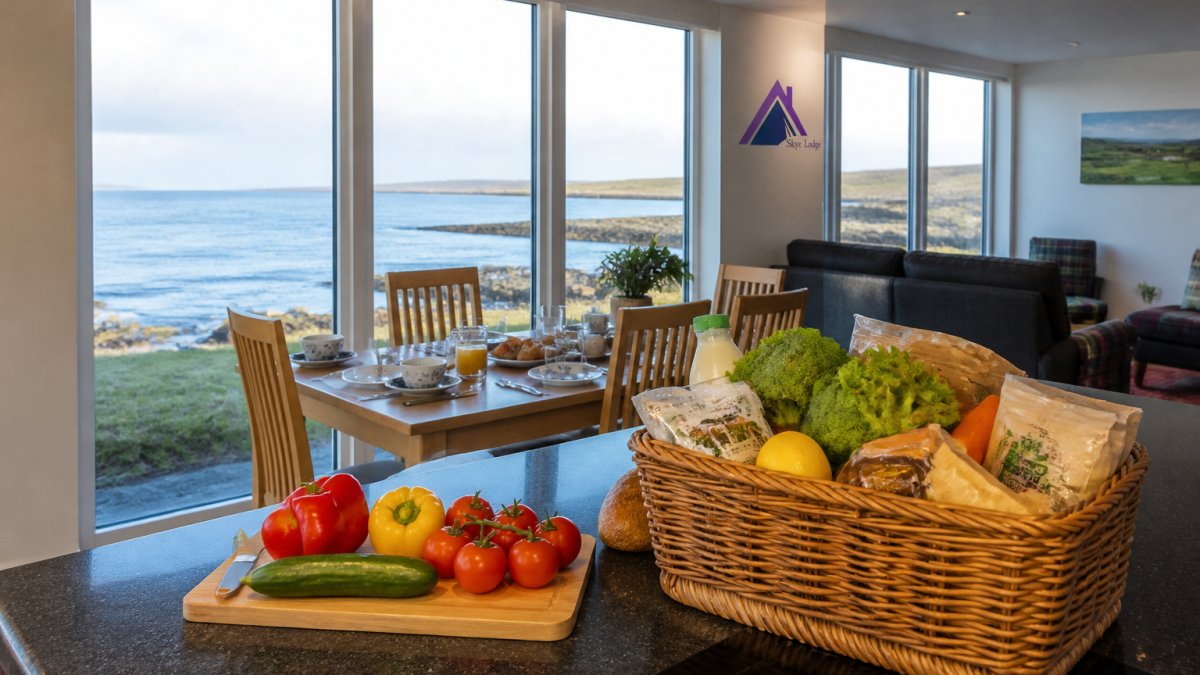
 comparison
Is Self-Catering More Sustainable Than Hotel Stays?
Table of Contents
- The Self-Catering vs Hotel Environmental Impact Debate
- Energy and Water: Where Hotel Stays Use More
- What Makes Sustainable Holiday Accommodation Actually Green
- Reducing Food Waste on Holiday: Self-Catering vs Hotel Breakfasts
- Sustainable Travel Tips for a Lower-Impact Trip
- When a Hotel Can Be the Greener Choice
- Conclusion: Choosing the Right Sustainable Holiday Accommodation
- Frequently Asked Questions
Last Updated: October 16, 2026
The Self-Catering vs Hotel Environmental Impact Debate
The question of whether is self-catering more sustainable than hotel stays has no single answer, because the greener option depends on how the property is run, not simply on whether it has a shared dining room. Self-catering cuts energy use when you control heating room by room, but a well-managed hotel with local sourcing can match or beat it.
At Skye Lodge, our hospitality rests on a simple principle: look after the place that looks after you. That means local ingredients, careful use of heat and water, and helping guests plan a slower trip.
Below, we break down where each option uses more, and when a hotel wins.
Energy and Water: Where Hotel Stays Use More
Hotels heat and light communal areas whether or not anyone is using them. Lobbies, corridors, dining rooms and bars run on fixed schedules, and that baseline load rarely drops when occupancy falls.
Self-catering shifts that control to you. You heat the rooms you occupy and switch off the rest.
Water follows a similar pattern. Hotels run daily housekeeping, laundry for every bed change, and commercial kitchens. A self-catering cottage typically washes linen between guests, not daily.
That said, a large hotel with modern heat recovery and metered utilities can outperform an old, draughty cottage with poor insulation. The building matters more than the label.
What Makes Sustainable Holiday Accommodation Actually Green
Sustainable holiday accommodation is a property that reduces energy and water use, sources food and goods locally, and manages waste deliberately, rather than one that simply displays an eco label.
Three things separate genuine effort from marketing.
- Local sourcing and provenance. Food and goods that travel short distances cut transport emissions and support the local economy.
- Waste, water and energy policies. Refillable toiletries, filtered water instead of bottled, food waste separated for composting, and heating that responds to occupancy.
- Building fabric. Insulation, glazing and draught-proofing decide how much energy any property needs in the first place.
Local sourcing and provenance
A breakfast made with eggs, dairy, smoked fish and preserves from nearby producers carries far fewer food miles than one built on imported goods. It also keeps money in the local economy, which matters on an island where supply chains are long.
At Skye Lodge, our gourmet breakfasts use premium ingredients sourced locally, and we point guests towards the island's crafters and artisans through Skye-Art. Provenance is not a slogan here; it is how the kitchen is run.
Waste, water and energy policies
The policies that matter are unglamorous. Do you refill water bottles or hand out plastic ones? Is linen changed daily or on request? Is food waste separated?
Ask these questions before booking. A property that can answer them clearly is usually the one actually doing the work.
Reducing Food Waste on Holiday: Self-Catering vs Hotel Breakfasts
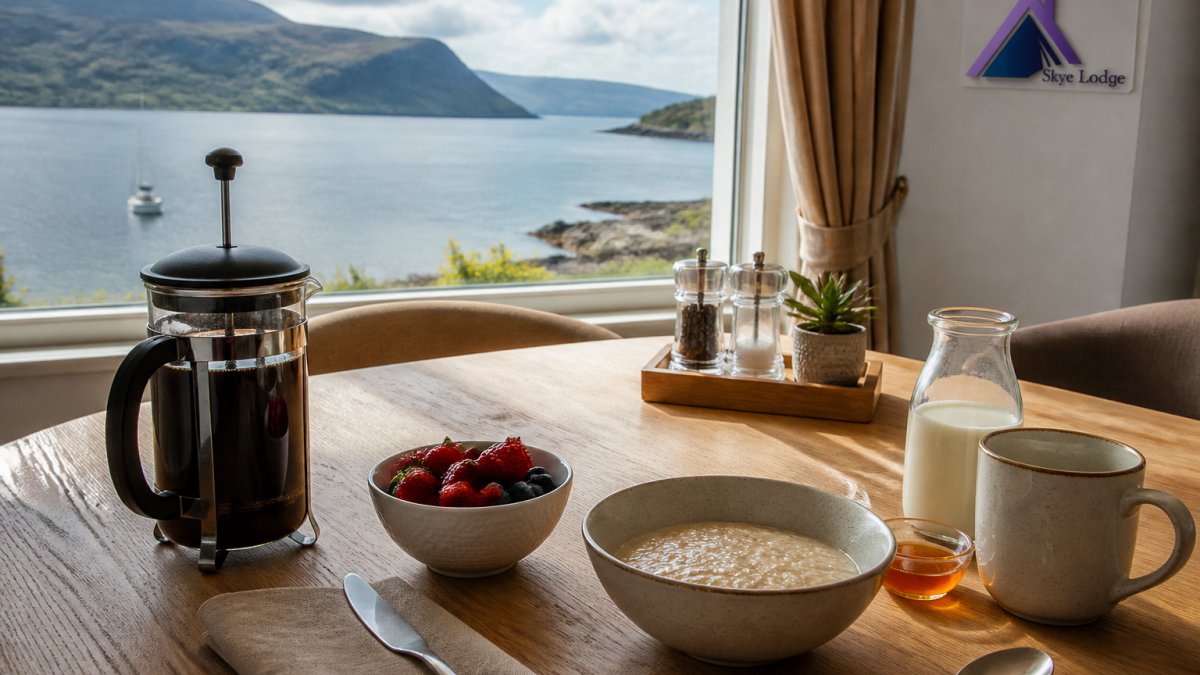
Reducing food waste on holiday is easier in self-catering, where you buy only what you will cook. Hotel buffets are the weak point: food is prepared in bulk and unused portions are often discarded.
Self-catering gives you portion control. You shop for the days ahead and cook what you need. The trade-off is that a self-catering fridge can end up with leftovers if you overbuy at the start of the week.
Hotels can reduce waste by cooking to order rather than laying out a buffet. A freshly prepared breakfast, plated to order, wastes far less than a tray of food sitting under a lamp.
Sustainable Travel Tips for a Lower-Impact Trip
Sustainable travel tips work best when they are specific to where you are. On an island, the biggest wins come from slowing down and travelling shorter distances.
- Stay longer in one place. Fewer moves mean less driving and less energy spent on cleaning between guests.
- Book restaurants ahead. Planning avoids a wasted drive to a full dining room. Our local favourites, including the oldest pub on Skye and two well-known dining rooms, all sit within fifteen minutes of the lodge.
- Add twenty minutes to every hour of driving. Highland roads are slow, and a realistic schedule means less idling and fewer rushed detours.
- Eat and shop locally. Money spent with island producers and crafters stays on the island.
- Reuse and refill. Carry a bottle and a bag rather than buying bottled water and plastic bags daily.
For a fuller plan, see our suggested three-night, five-day itinerary, which is built around seeing less and enjoying more.
When a Hotel Can Be the Greener Choice
A hotel can be the greener choice when it is purpose-built, well insulated and fully occupied, because shared heating and services spread the load across many guests.
Consider a small guesthouse with a handful of rooms, all booked, heated by one efficient system, with breakfast cooked to order and food sourced from nearby farms. Per guest, that can use less energy than a half-empty self-catering house heating every room.
Hotels also win when you would otherwise drive long distances. A base with dining on site removes several car journeys across a week.
The honest answer to is self-catering more sustainable than hotel stays is that it depends on occupancy, building quality and management. A full, well-run hotel beats an empty, poorly insulated cottage every time.
Conclusion: Choosing the Right Sustainable Holiday Accommodation
Choosing the right sustainable holiday accommodation comes down to three questions: how the building is heated, where the food comes from, and how waste is handled. Get clear answers to those and you can compare any two properties on fair terms.
We built Skye Lodge around those answers. Our rooms have handmade beds and ensuite facilities, our breakfasts are freshly prepared from locally sourced ingredients, and the lodge works for individuals or exclusive group bookings of four to ten.
You can read what guests say in our reviews on Google, on Freetobook, and on Tripadvisor. Hospitality is what makes this work, and it is the part we care about most.
Frequently Asked Questions
Is self-catering more sustainable than staying in a hotel?
It depends on how you run the trip. Self-catering gives you control over heating, laundry and food, so a short break with minimal driving can come out ahead. A hotel with high occupancy, shared heating and a short local food chain can beat a poorly managed cottage. The deciding factors are energy per guest, how often towels and bedding are washed, and how much food is thrown away.
Do hotels use more energy than self-catering accommodation?
Usually yes, per guest, because hotels run communal spaces, laundry and catering at scale. That said, a well-filled hotel spreads its energy across many rooms, while a half-empty self-catering property still heats the whole building. Occupancy matters as much as the building type, so ask how many guests share the space before assuming one option wins outright.
Does cooking for yourself make a holiday more sustainable?
Cooking for yourself cuts waste when you shop to a plan and use what you buy. A hotel breakfast buffet, by contrast, often prepares more than guests eat. The gain disappears if you over-buy at the start of the week or drive to a large supermarket instead of using a local shop. Buy little and often, and choose seasonal produce grown nearby.
Can a hotel stay be more sustainable than self-catering?
Yes. A hotel that sources food locally, washes linen only on request and runs on a green tariff can have a lower footprint than a draughty cottage with the heating on all day. The building, its energy supply and its waste policy matter more than the label. Ask direct questions about sourcing and laundry before you book either option.
Planning a lower-impact trip takes a little more thought, and a well-run base makes it far easier. Skye Lodge offers handmade beds, ensuite rooms, and freshly prepared breakfasts made with locally sourced ingredients, with the westerly coastline and loch views on the doorstep. Get started with Skye Lodge and build a slower, greener island stay.