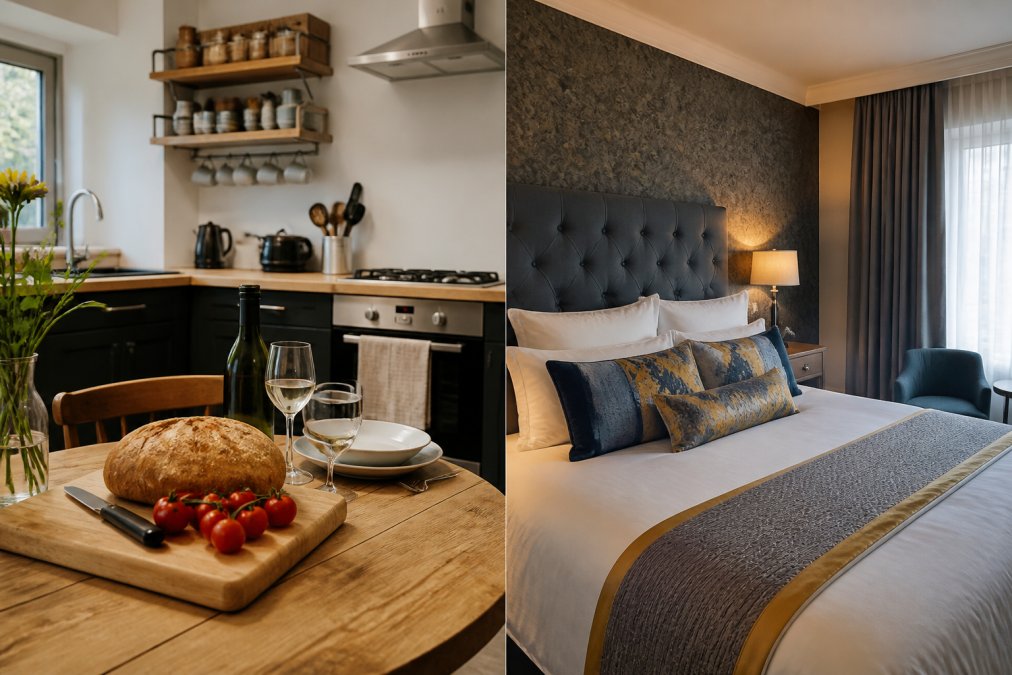
 comparison
Self-Catering vs Boutique Hotels: Key Benefits
Table of Contents
- Luxury Self-Catering vs Boutique Hotels: How They Compare
- Self-Catering Holiday Advantages: Space, Freedom and Value
- The Benefits of Boutique Hotel Stays: Service and Atmosphere
- Cost, Dining and Practical Considerations
- Remote Work, Sustainability and Accessibility
- Which Option Suits Your Travel Style?
- Conclusion: Weighing the Benefits of Self-Catering vs Boutique Hotels
- Frequently Asked Questions
Last Updated: September 12, 2026
Luxury Self-Catering vs Boutique Hotels: How They Compare
Choosing between a self-catering property and a boutique hotel shapes how a trip actually feels, not just where you sleep. Self-catering gives you space, privacy and control over your own schedule, while a boutique hotel delivers service, atmosphere and someone else handling the details. This guide from Skye Lodge examines the benefits of self-catering vs boutique hotels so you can match the format to your travel party, your budget and how you like to spend your days.
The comparison matters more than most travellers expect. A short-term rental and a small independent hotel can sit at similar price points yet deliver completely different holidays, which is why VisitScotland's accommodation guidance recommends matching the property type to your itinerary before you book.
Self-Catering Holiday Advantages: Space, Freedom and Value
The clearest self-catering holiday advantages are space, flexibility and cost control. A holiday let typically gives you a full kitchen, separate living areas and multiple bedrooms, which suits families and groups far better than a single hotel room.
Self-catering accommodation is a property rented as a whole, where guests manage their own meals, laundry and daily routine. That independence is the point. You eat when you want, spread out across real rooms, and avoid the nightly rhythm of restaurant bookings and fixed meal times.
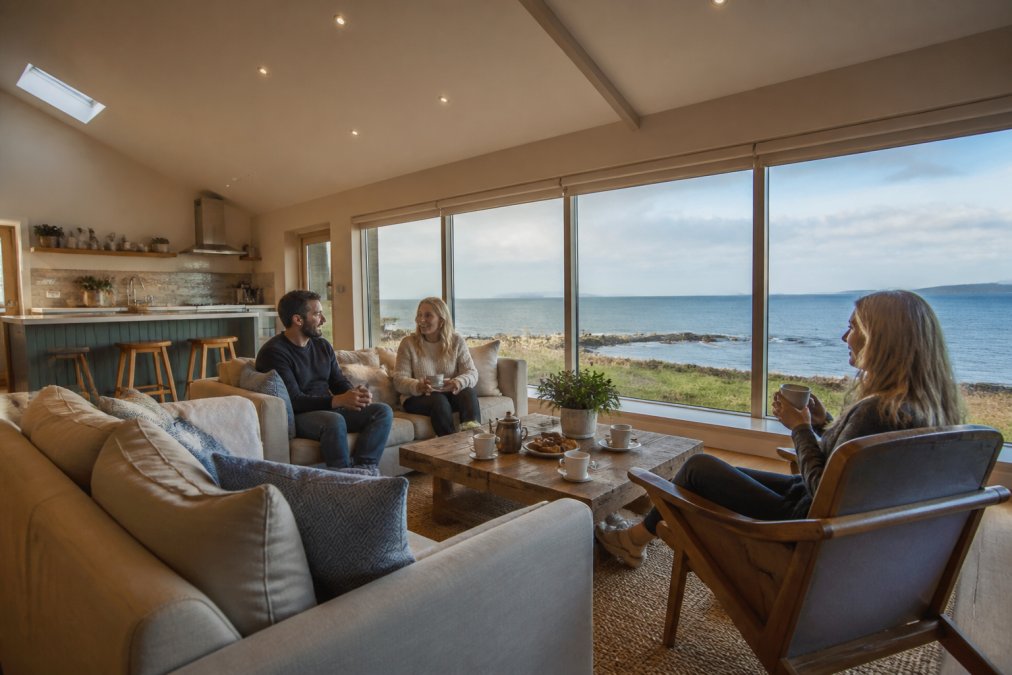
For budgeting, self-catering often wins on longer stays. Preparing some meals yourself reduces the daily spend that hotel dining adds up to, and group travel splits the cost across more people. The trade-off is the work: someone still has to shop, cook and tidy.
The Benefits of Boutique Hotel Stays: Service and Atmosphere
The benefits of boutique hotel stays come down to service and atmosphere. A boutique property is a small, independently run hotel with a distinct character, and that scale is what makes personalised hospitality possible.
Concierge service is where boutique hotels pull ahead. Staff who know the area can book restaurants, advise on travel logistics and adjust plans when weather or availability changes. Housekeeping, breakfast and check-in procedures are handled for you, which matters on a short break when you would rather not spend an evening cooking.
The AA's hotel and hospitality standards set out how graded properties are assessed on service and facilities, which is a useful benchmark when comparing independent hotels.
Cost, Dining and Practical Considerations
The cost comparison is less about nightly rates than about how each format spreads its charges. A boutique hotel prices per room per night and bundles service, breakfast and often a bar or restaurant into that figure. A self-catering property prices per property per night, so the same weekly rate is divided by however many people sleep under its roof. That single structural difference explains most of the value gap.
A worked pattern helps. Take a group of six staying seven nights. A boutique hotel needs three twin or double rooms, each charged nightly, plus breakfast for six every morning and at least a few evening meals on site. A holiday let of the same standard charges one weekly rate for the whole property, and the group then chooses how much of its food budget goes to the kitchen versus restaurants. The saving is not automatic, it comes from cooking some meals in, not all of them, but the ceiling on spend is far lower because the accommodation cost is fixed and shared.
Where self-catering quietly loses is on short stays. Many holiday lets impose a minimum stay of three to seven nights in peak season, and some add a cleaning or linen charge that a hotel folds into the room rate. A two-night break for a couple can therefore cost more in a self-catering property than in a boutique hotel once those extras are counted. Boutique hotels also absorb the cost of daily housekeeping, fresh towels and toiletries, which a self-catering guest either replaces from a local shop or does without.
Dining is the biggest practical difference, and it cuts both ways. A holiday let means meal times are entirely yours, dietary requirements are easier to manage when you control the kitchen, and a slow breakfast on a wet morning costs nothing extra. A boutique hotel removes the planning burden but ties you to its menu, its service hours or the local restaurant trade, which is why booking tables in advance is sensible in popular areas, particularly in the summer months when Highland and coastal restaurants fill quickly. A useful middle path is to book a boutique hotel for the first and last nights of a trip and self-catering for the middle, so you get service when you are arriving and leaving and space when you are settled.
| Factor | Self-Catering | Boutique Hotel |
|---|---|---|
| Space and privacy | Whole property, multiple rooms | Single room, shared areas |
| Meal times | Fully flexible, self-managed | Set service or restaurant bookings |
| Best for | Families, groups, longer stays | Couples, short breaks |
| Service level | Self-managed, some concierge | Housekeeping, concierge, breakfast |
| Cost pattern | Lower per head for groups | Higher nightly, service included |
| Minimum stay | Often 3-7 nights in peak season | Usually none |
| Extras to watch | Cleaning, linen, energy charges | Parking, breakfast supplements |
VisitScotland's accommodation guidance is a useful starting point for understanding how different property types are classified and what a rate is expected to include.
Remote Work, Sustainability and Accessibility
Most comparisons stop at space and service. The three areas below are where the choice actually gets decided for a growing share of travellers, and where the two formats diverge most sharply.
Remote work and the digital nomad test
Self-catering generally wins for anyone working while away, but only if the property is chosen carefully. The deciding factors are upload speed as well as download speed, whether the connection is wired or shared, and whether there is a door that closes on a call. A holiday let with a dedicated room and a desk beats a boutique hotel room where the only workspace is the end of the bed.
Boutique hotels counter with reliability and support. A hotel with a business-grade connection and staff on site can fix a dropped line the same day; a self-catering guest with a failed router is often waiting on an owner who is off-island. Ask both the same three questions before booking: what is the measured upload and download speed, is there a backup connection such as a mobile hotspot, and is there a desk and chair suitable for a full working day rather than a dressing table stool. In rural areas, mobile coverage varies street by street, so a property that advertises 'good Wi-Fi' should be able to quote a speed figure.
Sustainability and environmental impact
This is the angle most comparisons miss entirely, and the honest answer is that it depends on occupancy and behaviour rather than on the format itself. A whole property heated and lit for two guests uses more energy per person than a single occupied hotel room. Fill the same property with six guests and the per-person figure drops below the hotel's, because the fixed energy load is shared.
Food is where self-catering can genuinely pull ahead. Cooking from locally bought ingredients cuts the food waste and single-use packaging that hotel breakfasts and room service generate, and shopping at a local shop or market keeps spend in the area. The counterweight is laundry: hotels run full loads of towels and linen daily, which is efficient at scale, while a self-catering property may wash a half-load for a small party. Guests who reuse towels, run full loads and switch off heating in unused rooms close most of that gap.
Boutique hotels with a small room count often run leaner than large hotels because there are fewer corridors, lifts and communal spaces to heat. The practical move is to ask any property, hotel or let, how it heats the building, whether it uses renewable electricity, and whether it has a towel and linen reuse policy. A property that cannot answer is not necessarily a poor choice, but it is not a green one either.
Accessibility and mobility requirements
This is the area where the two formats differ most, and where self-catering carries the greater risk. Hotels are usually built or adapted to a recognised standard, with step-free entrances, grab rails, accessible bathrooms and staff trained to assist. Self-catering varies enormously, because many properties are converted cottages, lodges or farm buildings where steps, narrow doorways, low beams and gravel paths are part of the character.
Before booking a self-catering property, ask for specifics rather than relying on photographs: the number of steps to the entrance and between floors, door widths, whether the bathroom has a walk-in shower or a bath with a shower over it, whether the bedroom and bathroom are on the same level, and the surface of any path from parking to the door. VisitEngland's accessibility guidance for accommodation providers sets out the access information a property should be able to provide, which makes it a useful checklist for the questions to ask.
Boutique hotels are not automatically accessible either. Small independent properties are often converted older buildings, and a 'boutique' label says nothing about step-free access. The same questions apply, with one advantage: hotel staff are usually on site to help, whereas a self-catering guest may arrive to an empty property and a key safe.
Pet-friendliness
Pet policies often tip the decision before any of the above is considered. Self-catering properties with enclosed outdoor space are usually the easier choice for dogs, because the animal is not left alone in a shared building and there is no risk of disturbing other guests. Boutique hotels vary widely: some welcome dogs in specific rooms for a nightly supplement, some allow them in public areas but not bedrooms, and some refuse entirely. Ask about the supplement, whether pets can be left unattended, and whether there is anywhere on site to exercise a dog off the lead.
Which Option Suits Your Travel Style?
Match the format to the trip, not the other way around. Self-catering wins for families, groups of friends and stays of three nights or more. Boutique hotels win for couples, short breaks and anyone who wants the planning handled.
If you want both, a serviced lodge can bridge the gap. Skye Lodge sits on the westerly coastline near Dunvegan Castle, Neist Point and the Cuillin mountains, offering handmade beds, ensuite rooms and a freshly prepared gourmet breakfast made with locally sourced ingredients. Owners Claire and Douglas host individuals or exclusive group bookings for 4 to 10 guests, and the local knowledge that comes with it is the part most guests mention first.
Conclusion: Weighing the Benefits of Self-Catering vs Boutique Hotels
The benefits of self-catering vs boutique hotels rarely split cleanly. Self-catering gives you space, privacy and control; a boutique stay gives you service, atmosphere and time back. Pick the one that fits your party size and pace, and the rest of the trip tends to fall into place.
Weighing space and freedom against service and atmosphere is the real decision, and it is easier to make when one property offers both. Skye Lodge combines the privacy of a peaceful retreat with the hospitality of a small, owner-run lodge: handmade beds, ensuite rooms, gourmet breakfasts built around local ingredients, and a quiet loch-side setting near Dunvegan Castle and the Cuillin mountains. Make a reservation with Skye Lodge and let Claire and Douglas help you plan days that suit the island's pace rather than fight it.
Frequently Asked Questions
What are the benefits of staying at a boutique hotel?
Boutique hotels deliver personalised service, distinctive design, and a strong sense of place. You get daily housekeeping, a concierge who knows the area, and often a gourmet breakfast made with local ingredients. The intimate scale means staff remember your name and preferences. For travellers who value high-touch hospitality and don't want to lift a finger, a boutique stay removes planning stress and adds a layer of indulgence that self-catering can't match.
Is self-catering cheaper than boutique hotels?
It depends on how you use it. Self-catering usually has a higher upfront nightly rate for the whole property, but that cost is shared across your travel party. When you divide by the number of guests and factor in savings from cooking some meals, the per-person cost often comes out lower than a boutique hotel, especially for groups of four or more. For couples who eat out every night, the gap narrows. Always compare total trip spend, not just the room rate.
Which accommodation type is better for a romantic getaway?
Both can work, but they offer different kinds of romance. Boutique hotels provide turndown service, a restaurant downstairs, and a sense of occasion. Self-catering gives you privacy, a secluded environment, and the freedom to set your own schedule, whether that's a late breakfast or a candlelit dinner you cook together. For couples who want uninterrupted time and a home-away-from-home feel, a luxury self-catering property often wins.
What should I consider when choosing between a holiday let and a boutique hotel?
Start with your travel party size and the length of your stay. Groups of four or more usually benefit from the space and shared cost of a holiday let. Then think about service: do you want concierge support and daily housekeeping, or do you prefer to come and go as you please? Check practical details like parking, accessibility, and whether you need pet-friendly or remote-work facilities. Finally, look at location and what's nearby, from restaurants to local attractions.