 Listicle
7 Hidden Waterfalls on the Isle of Skye Worth Exploring
Last Updated: October 24, 2026
Quick Summary
Hidden waterfalls Isle of Skye offer cascades tucked into gorges and pools framed by moss-covered rocks, where fewer visitors venture. Seven waterfalls worth seeking out include Rha Waterfalls near Uig, Lealt Falls with coastal views, and quieter cascades around Dunvegan, each rewarding exploration with solitude and natural beauty.
- Rha Waterfalls features a 20-minute woodland walk to a plunge pool surrounded by towering cliffs near Uig Wood.
- Lealt Falls combines a waterfall with coastal scenery overlooking the Sound of Raasay, a 15-minute walk from Staffin.
- Water flow depends more on rainfall in the preceding 48 to 72 hours than on the calendar month.
- Autumn (September to October) offers reliable water flow, declining midges, and fewer crowds than peak summer.
- Waterproof hiking boots with aggressive grip are essential due to mud, loose stone, and slick wet rock.
Table of Contents
- Why Hidden Waterfalls on the Isle of Skye Deserve Your Time
- Rha Waterfalls Skye: A Secluded Gem Near Uig Wood
- Lealt Falls Skye: Gorge Views and Coastal Drama
- Waterfalls Near Dunvegan: Local Cascades Worth Seeking
- Best Time to Visit Waterfalls on Skye: Seasonal Flow and Crowds
- Access, Safety, and Practical Logistics for Waterfall Walks
- Plan Your Waterfall Adventure from Skye Lodge
- Frequently Asked Questions
Why Hidden Waterfalls on the Isle of Skye Deserve Your Time
Skye's most visited attractions draw crowds year-round, but the island's real magic lies in hidden waterfalls Isle of Skye, places fewer people know about. Hidden waterfalls on the Isle of Skye offer exactly that: cascades tucked into gorges, pools framed by moss-covered rocks, and viewpoints where you might be alone with the sound of falling water.
At Skye Lodge, we help guests explore beyond the postcard views, offering local knowledge on which falls reward the effort and when seasonal flow makes them worth the journey. This guide covers seven waterfalls worth seeking out, plus the access, timing and safety details that separate a rewarding walk from a frustrating one.
Whether you're planning a morning walk or a full day of exploration, discovering hidden waterfalls Isle of Skye will show you a side of the island most visitors miss.
Rha Waterfalls Skye: A Secluded Gem Near Uig Wood
Rha Waterfalls sits in one of the quieter corners of the island, near Uig on the northwest coast.
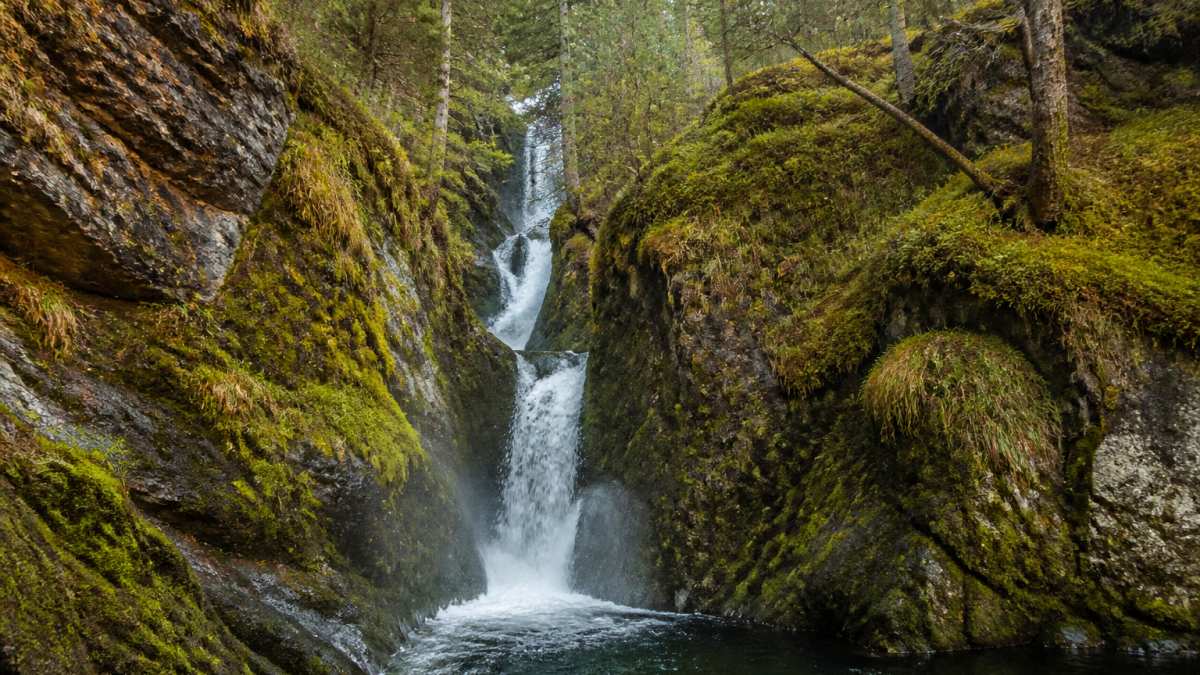
From the car park near Uig Wood, the path descends gently through woodland for about 20 minutes before opening onto the gorge.
What makes Rha Waterfalls worth the visit is the combination of seclusion and drama. The plunge pool is deep enough that some visitors swim on warm days, though the water stays cold year-round.
One practical note: the path can be slippery after rain, and there are no barriers near the cliff edges. Learn about nearby walking trails with similar terrain and safety considerations before attempting waterfall hikes.
Lealt Falls Skye: Gorge Views and Coastal Drama
Lealt Falls stands apart because it combines a waterfall with coastal scenery. The falls drop into a gorge that opens onto the Sound of Raasay, giving you views of both the cascade and the sea beyond. On clear days, you can see across the water to Raasay itself.
The walk to Lealt Falls is short, about 15 minutes from the car park near Staffin, making it popular with families and those with limited time.
Visit after rainfall, when the water volume is higher and the falls are more dramatic; in dry periods the flow diminishes noticeably. Spring and autumn offer the most reliable water levels combined with manageable weather.
Lealt Falls works well as part of a broader day out. The nearby Old Man of Storr is within 20 minutes' drive, and Portree is about 30 minutes south.
Waterfalls Near Dunvegan: Local Cascades Worth Seeking
The area around Dunvegan holds several smaller waterfalls that rarely appear in mainstream guides. They lack the drama of the famous cascades but reward explorers with solitude and intimate settings, and the gentler terrain makes these walks accessible to a wider range of visitors.
Several of these waterfalls are accessible via short walks from minor roads, but paths can be unmarked and access details change seasonally.
The advantage of exploring waterfalls near Dunvegan is that you're never far from dining options or accommodation. The Stein Inn, one of the oldest pubs on Skye, sits within 15 minutes, and several restaurants are nearby, so you can walk in the morning, rest at your accommodation, and enjoy dinner without a long drive.
If you're basing yourself at Skye Lodge, we can advise on current access conditions and seasonal flow for the local falls, and the proximity to restaurants and attractions makes Dunvegan an excellent hub for a multi-day stay.
Best Time to Visit Waterfalls on Skye: Seasonal Flow and Crowds
Waterfall volume on Skye is driven less by the calendar than by the preceding 48 to 72 hours of weather.
How the seasons actually behave
- Late autumn to early spring (November to March): Catchments are usually saturated, so even moderate rain produces strong flow and the falls look their most powerful. The trade-off is short daylight, icy paths and wind-driven rain; carry a head torch and microspikes in cold snaps and plan around a four-to-six-hour window of usable light.
- Spring (April to May): Snowmelt plus spring rainfall keeps flows reliable and daylight expands rapidly, making this the most forgiving window for combining several falls in one day. Expect the first visitor uptick around Easter and the early May bank holiday.
- Early summer (June): Flows remain good, daylight is at its longest, and the midge season begins in earnest. Calm, damp evenings are the worst; breezy days and exposed gorge mouths are far more comfortable.
- Late summer (July to August): The driest period on average, so smaller falls can disappoint. This is also peak visitor season, which affects parking at the busier trailheads far more than it affects the quieter falls.
- Autumn (September to October): Flows recover as Atlantic systems return, midges decline sharply after the first cold nights, and crowds thin. Many regular walkers regard this as the sweet spot for the quieter falls.
Reading the forecast like a local
A single dry day does not mean low water; check rainfall totals for the preceding two to three days rather than just the day's outlook. Persistent south-westerly airflow brings the wettest conditions to the west and north, affecting falls near Dunvegan and Uig differently from those near Staffin, and a gorge sheltered on a calm day can funnel gusts after a frontal passage.
If you are staying with us, ask at breakfast about the previous few days' rainfall and the forecast wind direction. We monitor local conditions and can suggest which falls are likely to be running well and which are better saved for another day.
Crowds and quieter visiting times
The famous falls, the Fairy Pools, Mealt Falls and Lealt Falls, see concentrated footfall between roughly 10am and 4pm in peak season, with tour traffic peaking mid-morning. The quieter falls in this guide rarely see more than a handful of parties even in August.
A note on winter access
Winter visits suit experienced walkers with proper kit. Ice on exposed rock and boardwalk sections is the main hazard, and some minor access roads are not gritted. Check conditions locally before setting out, and treat any forecast of severe gales as a reason to choose a low-level walk instead.
Water flow on Skye depends more on recent rainfall than the calendar, but each season brings different conditions and visitor patterns.
| Season | Water Flow | Daylight & Weather | Visitor Crowds |
|---|---|---|---|
| Late autumn to early spring (Nov-Mar) | Strong, most powerful | Short daylight, icy paths, wind-driven rain | Minimal |
| Spring (Apr-May) | Reliable from snowmelt and rain | Expanding daylight, forgiving conditions | Uptick around Easter and early May |
| Early summer (June) | Good | Longest daylight, midge season begins | Moderate |
| Late summer (Jul-Aug) | Driest period, smaller falls disappoint | Long daylight | Peak visitor season |
| Autumn (Sep-Oct) | Recover as Atlantic systems return | Good daylight, midges decline | Crowds thin, regarded as sweet spot |
Access, Safety, and Practical Logistics for Waterfall Walks
Most waterfall walks on Skye are short, but they are not uniform. Reading each one in the same format, trailhead, distance, terrain, time and hazards, makes it far easier to choose a walk that suits your fitness, footwear and available time.
A consistent way to read each walk
For every fall, note the following before leaving your base:
- Trailhead: the nearest car park or recognised access point, and whether the final approach is on a single-track road with passing places.
- Distance and time: round-trip distance and a realistic walking time that accounts for photo stops and rough ground.
- Terrain: whether the path is a constructed surface, a worn earth path, or pathless ground; whether there are steps, boardwalk, or boggy sections.
- Ascent: total elevation gain, since even short walks can involve steep gorge descents.
- Hazards: slippery rock, exposed edges, river crossings, livestock, and tide or weather exposure where relevant.
Footwear and kit
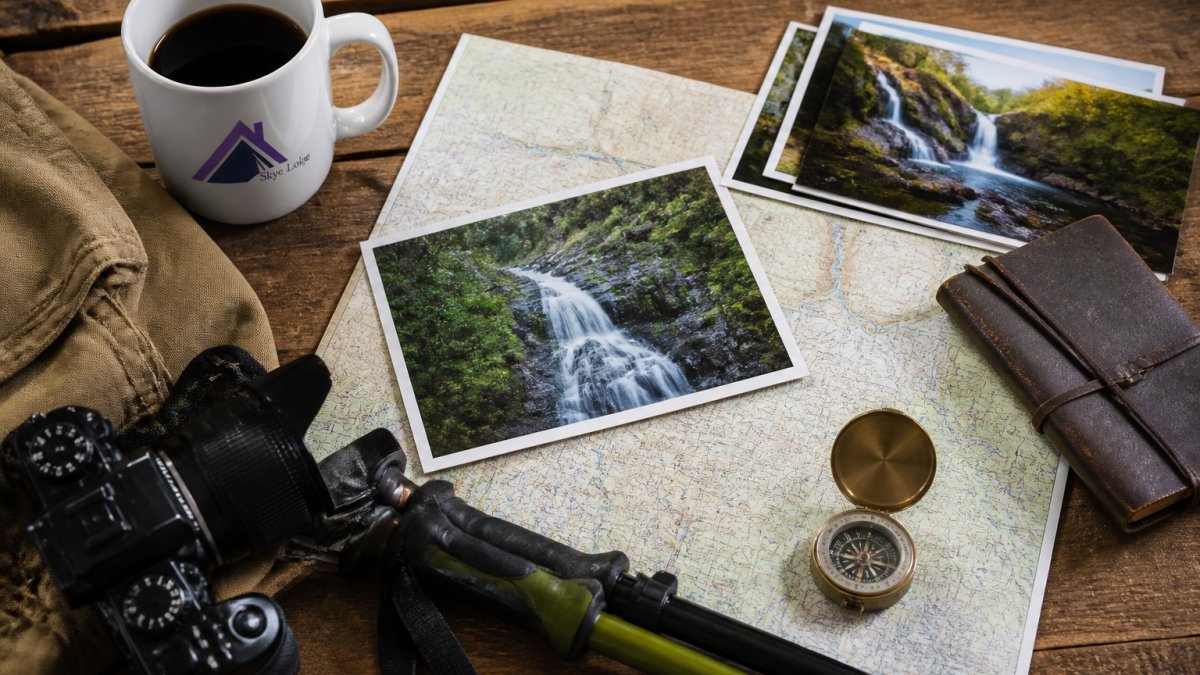
Waterproof hiking boots with aggressive grip are the single most useful item: many paths combine mud, loose stone and wet rock, and rocks around plunge pools are slick even in dry weather.
Water and rock safety
Plunge pools are cold year-round, and cold-water shock can affect even strong swimmers in the first seconds of immersion.
Do not enter the water at any fall after sustained heavy rain. Flow can increase rapidly in small catchments, and the rocks remain slippery long after the rain stops.
Parking, access, and facilities
Parking at popular trailheads fills early in peak season, often before 10am, and some car parks are small with limited turning space. Pay by the displayed method where charges apply, and never block passing places or field entrances.
Responsible access
The Scottish Outdoor Access Code sets out the responsibilities of visitors and landowners.
Combining falls into a route
Plan Your Waterfall Adventure from Skye Lodge
Dunvegan as a hiking base offers practical advantages for waterfall exploration. The area's central location means most falls are within 30 minutes' drive. Accommodation options are available.
Skye Lodge provides a sophisticated base specifically designed for this kind of exploration. Our handmade beds ensure restorative sleep after a day of walking.
We recommend spending at least three nights to properly explore the island's hidden corners. Two nights feels rushed; five days allows you to move slowly, revisit favorite spots, and discover places you didn't plan for. Our 3-night, 5-day itinerary for exploring the Isle of Skye balances famous landmarks with quieter discoveries, including several waterfall walks suited to different fitness levels.
Dining is a crucial part of the experience. Book restaurants in advance, places like the Stein Inn and local options fill quickly during peak season.
For accommodation, view our rooms at Skye Lodge to understand the comfort level and space available.
The hidden waterfalls on the Isle of Skye reward those willing to venture beyond the main attractions, offering solitude, natural beauty and the satisfaction of discovering places most visitors never find.
Start with the falls closest to where you're staying. Build your knowledge gradually. Talk to locals. Return to favorites in different seasons.
Frequently Asked Questions
Where are the hidden waterfalls located on the Isle of Skye?
Hidden waterfalls on the Isle of Skye are scattered across the island. Rha Waterfalls sits near Uig Village in the northwest, while Lealt Falls lies on the eastern coast near Staffin. Allt Daraich is tucked near Sligachan Bridge in the south. Each offers a different landscape: some are tree-lined and secluded, others feature dramatic gorges or coastal views. Local knowledge helps you find the quieter spots that guide books often overlook.
What is the best time to visit waterfalls on Skye?
Autumn and winter bring the strongest water flow after heavy rain, making waterfalls most dramatic and impressive. Spring offers moderate flow and longer daylight hours for exploration. Summer is busier but more predictable for access. After significant rainfall, waterfalls swell dramatically within hours. Check local weather forecasts before setting out, and allow extra travel time on highland roads, add 20 minutes to every hour of journey.
How do you get to Rha Waterfalls on Skye?
Rha Waterfalls is reached via a walk through Uig Wood near Uig Village in the northwest. The route is tree-lined and relatively accessible for walkers with moderate fitness. Parking is available near Uig, and the walk descends through woodland to reach the cascades and pools. The setting is peaceful and less crowded than major attractions. Wear waterproof footwear, as the path can be muddy, especially after rain.
Are hidden waterfalls on Skye accessible year-round?
Most waterfalls are accessible year-round, but conditions vary significantly. Winter and autumn bring higher water levels and muddy paths; spring and summer offer easier footing but lower flow. Heavy rain can make some routes slippery or temporarily impassable. Always check local conditions before setting out, wear appropriate footwear, and be cautious near steep drops or fast-moving water. Some lesser-known falls may lack formal paths, so local advice is valuable.