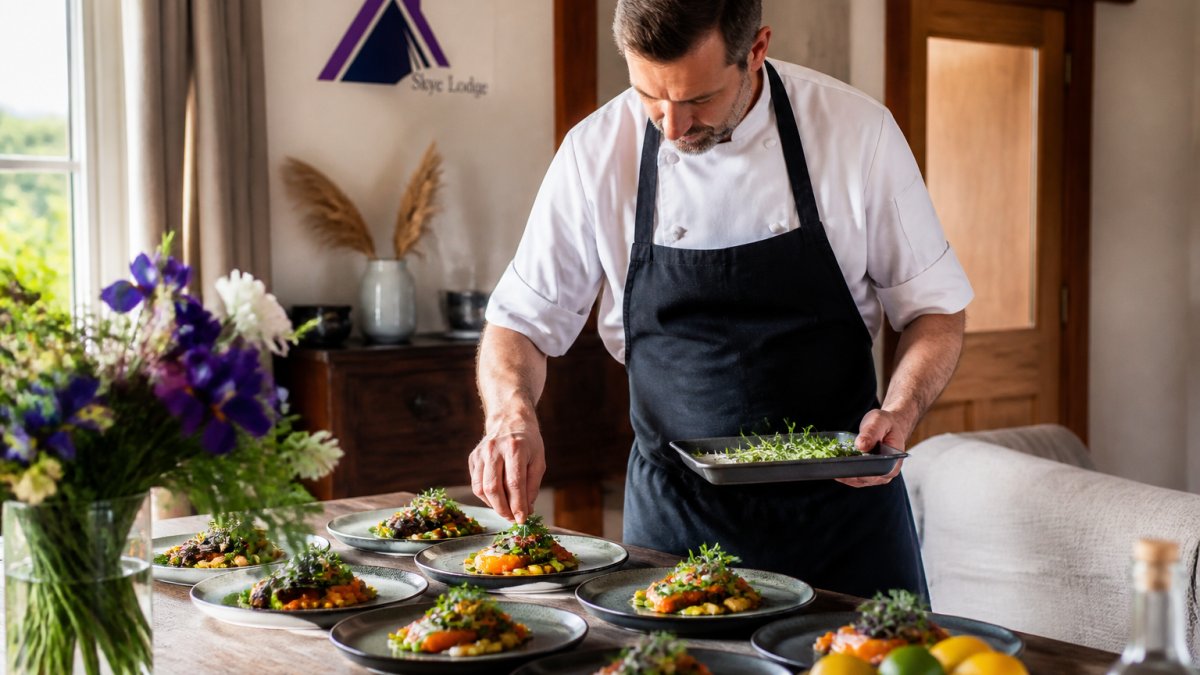
 How-to
How to Book Private Chef Services for Luxury Holiday Rentals
Last Updated: October 29, 2026
Quick Summary
Book a private chef by running five stages: enquiry, menu agreement, deposit, confirmation of timings, and service on the day. Give the chef the property address, guest count, dietary needs and dates upfront, and get a written menu and quote before you commit.
- Confirm the chef has cooked in a domestic kitchen and will bring their own knives and pans.
- Ask for a written quote that itemises ingredients, travel and any staffing separately.
- Confirm allergy protocols and cancellation policy in writing before paying a deposit.
- Check oven size, hob rings, fridge space and worktop area, then tell the chef what is there.
- Agree leftovers and waste removal in advance rather than leaving it to chance.
Table of Contents
- Why a Private Chef Elevates a Luxury Holiday Rental
- How to Choose the Right Private Chef for Self-Catering Accommodation
- The Booking Process: From Enquiry to Meal Service
- What to Expect from a Private Chef for a Holiday Cottage
- Local Dining Options Near Dunvegan: When to Dine Out Instead
- Making the Most of Your Stay with Skye Lodge
- Frequently Asked Questions
Why a Private Chef Elevates a Luxury Holiday Rental
A private chef turns a luxury holiday rental into a fully catered stay, handling menu planning, ingredient sourcing, cooking and washing up so guests spend their evenings at the table rather than in the kitchen. This guide explains how private chef services for luxury holiday rentals work in practice, from the first enquiry to the final cleared plate.
The appeal is simple. Self-catering accommodation gives you space and privacy, but it also hands you the shopping, the cooking and the clearing away. A private chef removes that labour without giving up the privacy that made you book a holiday cottage in the first place. For a special occasion, a family gathering or a group of friends, that shift changes the whole rhythm of the stay.
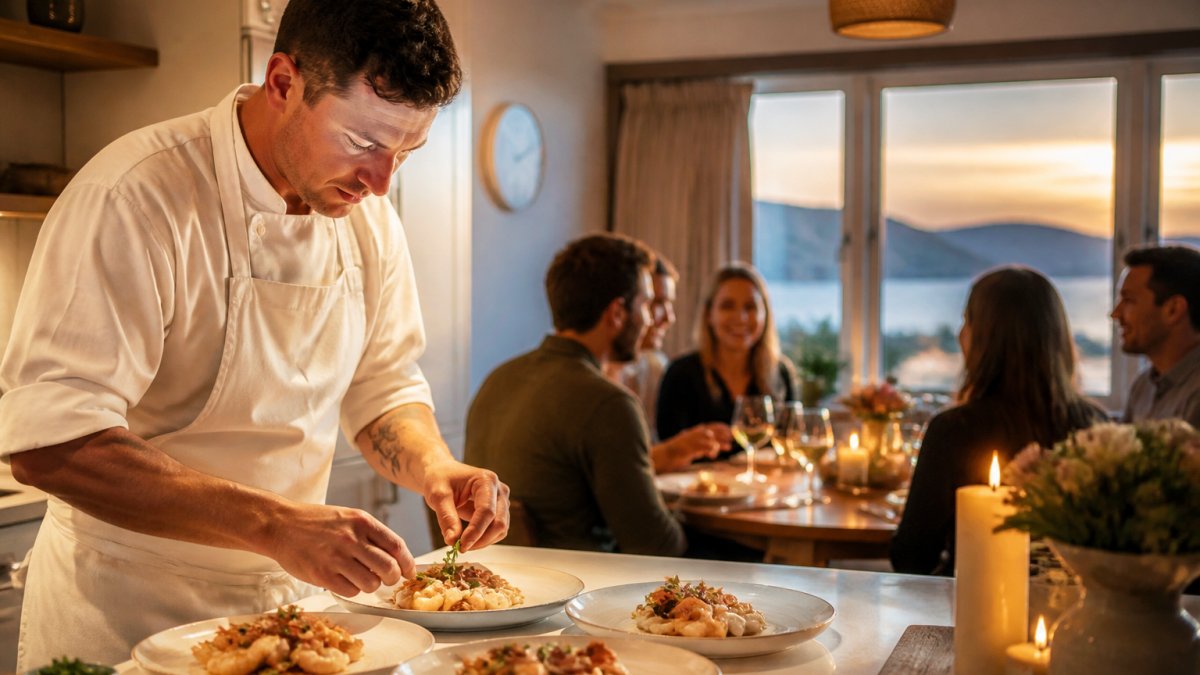
What most guides miss is that the chef is only half the experience. The other half is the property: a kitchen with enough worktop space, a working oven and a clear route to the dining table. Get both right and dinner becomes the highlight of the week.
How to Choose the Right Private Chef for Self-Catering Accommodation
Start with three checks: evidence of local cooking, a written menu and quote before you commit, and clear answers on dietary requirements. Our guide to hiring a private chef for self-catering accommodation covers this ground in more depth. A chef who cooks well but cannot explain their sourcing or their allergy process is a risk you do not need on holiday.
Ask where they buy. A chef who works with local produce and seasonal ingredients will usually name their suppliers without hesitation.
Then look at logistics. Confirm the chef has cooked in a domestic kitchen rather than only a professional one, and that they will bring their own knives, pans and serving dishes where needed.
Questions to Ask Before You Book
- How many guests can you cater for in one sitting?
- Do you cook in the property's kitchen, and what equipment do you expect to find?
- Can you cater for allergies and dietary requirements, and how do you avoid cross-contact?
- Is the quote all-in, including ingredients, travel and clearing away?
- What is your cancellation policy if our plans change?
- Can you provide references from other holiday lets?
Food Standards Agency guidance on food allergies and intolerance
The Booking Process: From Enquiry to Meal Service
The booking process runs in five stages: enquiry, menu agreement, deposit, confirmation of timings, and service on the day. The difference between a smooth booking and a stressful one is in the detail you supply at each stage.
Stage 1: The enquiry. When you first make contact, give the chef the property address, the number of guests, any dietary requirements and the dates you want covered. Be specific about which meals you need: breakfast, lunch, dinner, or a mix. A candlelit dinner for two and a barbecue for eight are different jobs, and the quote should reflect that.
Stage 2: Menu agreement. The chef should send a written menu and a written quote before you commit. Ask what happens if the number of guests changes. A good chef will build a custom menu around local and seasonal ingredients and send it to you in writing before the day.
Stage 3: Deposit and confirmation. Confirm the cancellation policy in writing: how much notice is required, whether any deposit is refundable, and what happens if the property becomes unavailable. Once the deposit is paid, ask for a confirmation email that restates the date, time, menu, guest count, and any agreed dietary arrangements.
Stage 4: Pre-arrival logistics. A week or so before arrival, confirm the chef's arrival time, kitchen access arrangements (key collection, parking, any gate codes), and whether they will shop on the day or beforehand. If you are arriving late, tell the chef, it affects their timing.
Stage 5: Service on the day. On the day, expect the chef to shop, cook, serve and clear away. After the meal, confirm what happens with leftovers and waste removal, it should be agreed in advance, not left to chance.
Menu Planning and Dietary Requirements
Menu planning should start with a conversation, not a template. Tell the chef what you love, what you cannot eat and how adventurous you want to be. A good chef will build a custom menu around local and seasonal ingredients and send it to you in writing before the day.
Treat allergies as a protocol, not a preference. Confirm in writing how the chef handles food allergies, separate preparation and cross-contact, and check that they hold current food hygiene training. If anyone in your group has a serious allergy, say so at the enquiry stage, not on the night. Ask specifically: do you use separate boards and utensils for allergen-free preparation? How do you store ingredients to avoid cross-contact? A chef who answers these questions clearly and without hesitation is the one you want.
Food Standards Agency guidance on food allergies and intolerance
The booking runs in five stages, each with its own details to confirm in writing.
| Stage | What to do | Key detail |
|---|---|---|
| Enquiry | Give address, guest count, dietary needs, dates and meals | Ask if chef has cooked in the property |
| Menu agreement | Get written menu and written quote before committing | Confirm allergy protocols in writing |
| Deposit and confirmation | Confirm cancellation policy in writing, then pay deposit | Ask for email restating date, time, menu, guests |
| Pre-arrival logistics | Confirm arrival time, kitchen access, key collection, parking | Say if arriving late or fridge space is limited |
| Service on the day | Chef shops, cooks, serves and clears away | Agree leftovers and waste removal in advance |
What to Expect from a Private Chef for a Holiday Cottage
Expect a full service: shopping, cooking, table service, clearing away and washing dishes. What you should not expect is a restaurant kitchen. The chef works with what the property provides, so the standard of the meal depends partly on the equipment in the holiday cottage. The best chefs are adaptable, but they are not magicians, a single oven and two hob rings will shape what they can deliver for a group.
A private chef for a holiday cottage typically arrives a few hours before service, shops locally that morning and leaves the kitchen as they found it. Some offer breakfast as well as dinner, which suits guests who want a slow morning without cooking. Ask in advance whether the chef will bring their own knives, pans and serving dishes, or whether they expect the property to supply them. Most bring their own knives and specialist equipment, but they will rely on the property for oven, hob, fridge and worktop space.
What the chef needs from the property. Before you book, check the kitchen and tell the chef what is there. Confirm oven size, hob rings, fridge space and worktop area. A missing roasting tin is easy to plan around; a fridge with no shelf space for a group meal is not. Ask about freezer space if the menu includes anything that needs to be stored frozen.
What the chef does not need. You do not need to stock the kitchen with ingredients unless you have agreed a specific arrangement. The chef will shop. You do not need to provide serving dishes unless the chef has asked. You do not need to be present during preparation, many guests prefer to be out for the day while the chef works.
Kitchen Logistics and Food Safety
Check the kitchen before you book the chef. Confirm oven size, hob rings, fridge space and worktop area, and tell the chef what is there. A missing roasting tin is easy to plan around; a fridge with no shelf space for a group meal is not.
Food safety is the chef's responsibility, and it should be visible in how they work: chilled storage, separate boards for raw and ready-to-eat food, and safe reheating. Ask how they handle leftovers, and confirm who is responsible for waste removal. If the property has a small fridge, ask the chef how they plan to manage cold storage for the menu they have proposed, a good chef will have a plan, not a shrug.
If you are staying at Skye Lodge, our rooms have handmade beds and en-suite bathrooms, and breakfast is a freshly prepared gourmet meal built on local ingredients. For guests who want a private chef for an evening, we are happy to help you think through the kitchen logistics and timing, just ask when you book.
Local Dining Options Near Dunvegan: When to Dine Out Instead
Dine out when you want a change of scene, a pub atmosphere or a meal you have not had to plan.
The restaurants around Dunvegan are worth building into your week. Book ahead, always, and ask your hosts for local knowledge on what is open and when.
A common mistake is leaving restaurant bookings until arrival. Plan at least one night out and one night in, and you get both sides of a Skye holiday.
Making the Most of Your Stay with Skye Lodge
At Skye Lodge, we help guests plan the whole stay, not just the bed. Our rooms have handmade beds and en-suite bathrooms, breakfast is a freshly prepared gourmet meal built on local ingredients, and owners Claire and Douglas are on hand with local knowledge.
If you would rather eat out, we will help you plan and book ahead. You can explore Skye Lodge and check availability for your dates.
Frequently Asked Questions
What does a private chef do in a holiday rental?
A private chef takes over the kitchen in your holiday rental, handling everything from menu planning and shopping for local produce to cooking, serving, and clearing away.
How do I arrange a private chef for a self-catering stay?
For a private chef for self-catering accommodation, clarify the kitchen facilities available, the number of guests, and any dietary needs upfront. Ask for sample menus and a clear quote covering ingredients, travel, and service. Confirm availability and booking terms in writing before your arrival.
What should I tell a private chef about dietary requirements?
Be specific and clear about any food allergies, intolerances, or preferences for everyone in your group. Mention not just the foods to avoid but also the severity of any allergy, so the chef can manage cross-contamination risks. Discuss whether the kitchen will be exclusive to the chef during service. A good chef will welcome this detail and may suggest alternative dishes that suit everyone.
Can a private chef cook using local ingredients?
Yes, many private chefs build their menus around local and seasonal produce, which is a highlight of dining in the Scottish Highlands. When booking, ask if they source ingredients locally and whether they can incorporate specific regional specialities. This not only supports local suppliers but also gives you a more authentic taste of the area. Confirm any extra costs for speciality sourcing in advance.
Planning a stay on the island takes more than a list of landmarks. It takes someone who knows the roads, the restaurants and the light. Get in touch with Skye Lodge and we will help you build a stay around handmade beds, a gourmet breakfast and days that unfold at the right pace.