 How-to
How to Travel to Skye by Public Transport
Last Updated: November 5, 2026
Quick Summary
To travel to Skye by public transport, combine a train to Kyle of Lochalsh or Mallaig with a connecting bus or ferry onto the island. Trains run from Glasgow, Edinburgh and Inverness, and local buses link Portree, Broadford, Dunvegan, Uig and Kyleakin. Check the current timetable the week before you travel and again the day before.
- The Inverness route is the quickest from the north, with a short scenic train to Kyle of Lochalsh.
- The CalMac ferry links Mallaig to Armadale, and buses meet the ferry on both sides.
- The Skye Bridge at Kyle of Lochalsh carries buses, cars and cyclists in all weather.
- Portree is the main transport hub on the island.
- Pack light, because you will carry your bags between train, bus and ferry.
Table of Contents
- Planning Your Journey to Skye by Public Transport
- Getting to Skye by Train and Bus
- Crossing to the Island: Ferry or Road Bridge
- Understanding the Skye Bus Timetable
- Taking the Dunvegan Bus from Portree
- Visiting Skye Without a Car: Accessing Attractions
- Tips for a Smooth Car-Free Journey to Skye
- Book Your Peaceful Stay at Skye Lodge
- Frequently Asked Questions
Planning Your Journey to Skye by Public Transport
Travel to Skye without a car is easier than most visitors expect. A train, a coach and a local bus can carry you from the mainland to the island in a single day. Guests who arrive by public transport and plan ahead tend to enjoy the journey as much as the destination.
The key is knowing your route before you book. Three main corridors serve the island: from Glasgow, from Edinburgh and from Inverness. Each one uses a different mix of train, coach and ferry or bridge.
Below, we outline the main routes, the timetables to check, and how to reach the quieter corners of the island once you arrive.
Getting to Skye by Train and Bus
Getting to Skye by train and bus generally means combining a rail service with a connecting coach or local bus. The train takes you to the west coast, and a bus covers the final stretch onto the island.
Two rail gateways matter most. Kyle of Lochalsh sits right beside the road bridge. Mallaig, further south, connects by ferry. Which one you use depends on where you start.
Check the ScotRail journey planner before you travel. Seasonal timetables change, and some connections are tight.
The Glasgow Route
From Glasgow, take the train to Mallaig via Fort William. The line passes through some of the finest Highland scenery in the country, so treat the journey as part of the holiday.
At Mallaig, the ferry crosses to Armadale on Skye. From Armadale, a local bus runs north towards Broadford and Portree.
An alternative is the train to Kyle of Lochalsh, then the bus across the road bridge. This route suits anyone heading straight to the north of the island.
The Edinburgh Route
From Edinburgh, travel west to Glasgow first, then pick up the same Mallaig or Kyle of Lochalsh connections. Some services run direct to Fort William, which saves a change.
Allow a full day for this journey. The connections work, but they leave little room for delays.
The Inverness Route
The Inverness route is the quickest from the north. Trains run from Inverness to Kyle of Lochalsh, and the journey is short and scenic.
From Kyle of Lochalsh, a bus crosses the road bridge to Kyleakin and continues to Broadford and Portree. This is the simplest car-free route onto the island.
Crossing to the Island: Ferry or Road Bridge
You have two ways onto Skye: the ferry or the road bridge. The ferry is the slower, more atmospheric option. The bridge is faster and runs in all weather.
The CalMac ferry service links Mallaig to Armadale in the south. It is a short crossing, and buses meet the ferry on both sides. Book ahead in summer, when foot passengers and vehicles share limited space.
The Skye Bridge at Kyle of Lochalsh carries buses, cars and cyclists. For most car-free travellers arriving from Inverness, the bridge is the practical choice.
Here is how the two crossings onto Skye compare for car-free travellers.
| Crossing | Links | Best for | Note |
|---|---|---|---|
| Ferry | Mallaig to Armadale in the south | Slower, more atmospheric option | Buses meet the ferry on both sides; book ahead in summer |
| Road bridge | Kyle of Lochalsh to Kyleakin | Faster and runs in all weather | Carries buses, cars and cyclists; practical from Inverness |
Understanding the Skye Bus Timetable
The Skye bus timetable rewards a little homework. Services are less frequent than on the mainland, and some routes run only on certain days. The island's local network is run by several operators, and the pattern changes between the summer and winter timetables.
Local buses connect the main villages: Portree, Broadford, Dunvegan, Uig and Kyleakin. A few longer services link to the ferry ports and the bridge. Frequency is the thing to check first. Frequency varies by route, and west coast services can be thinner than those on the main corridors. A Sunday arrival needs checking before you book.
Here is how we suggest you plan around the timetable:
- Check the current timetable the week before you travel, and again the day before
- Note the last bus of the day on your route, and treat it as a hard deadline
- Build in a backup plan for missed connections, including a taxi number saved offline
- Buy a day pass if you plan several trips in one day
- Confirm whether your travel date falls in the summer or winter timetable
The Traveline Scotland planner shows live times across all operators. Use it to confirm departures on the day. For the west coast, the Dunvegan service is the one to study closely, because a missed afternoon bus can leave you waiting.
Watch out: timetable apps can lag behind temporary changes, so cross-check against the operator's own notice board on the morning you travel.
Taking the Dunvegan Bus from Portree
The Dunvegan bus from Portree serves anyone staying on the west coast. It runs through the village and on towards the Duirinish peninsula, putting Dunvegan Castle and the surrounding walks within reach.
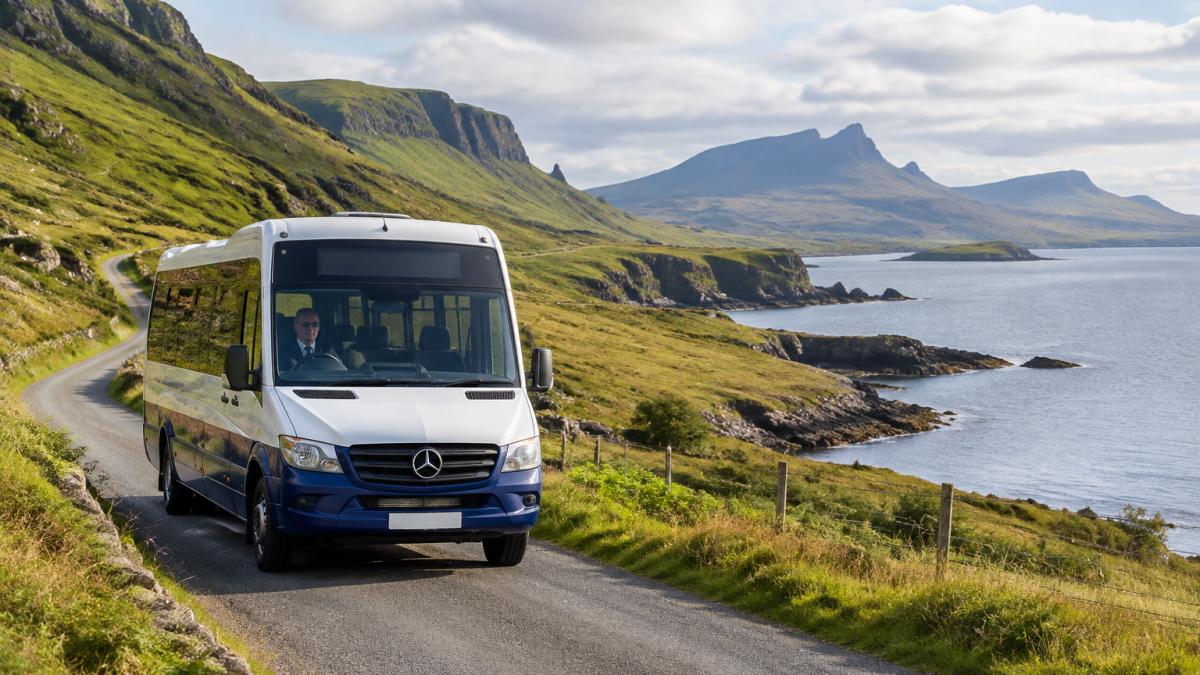
Plan your day around the timetable, as services are limited.
Dunvegan makes a fine base without a car. From the village you can walk to the castle, follow paths around Loch Dunvegan, and find lunch nearby. If you want to know whether the area suits a walking break, read our guide on whether Dunvegan is a good base for hiking.
For dining, our guide to local restaurants near Dunvegan and our full Dunvegan restaurant guide cover the options. Book ahead in summer, as tables fill quickly.
Visiting Skye Without a Car: Accessing Attractions
Visiting Skye without a car is possible, but it asks for patience and planning. The famous sights are spread across the island, and buses do not reach every one of them.
Here is what works well:
- Portree is the main transport hub on the island
- Dunvegan Castle is within walking distance of the village
- Neist Point has limited public transport, so consider a tour or taxi
Guided tours can fill the gaps in public transport.
Tips for a Smooth Car-Free Journey to Skye
A few habits make a car-free trip far easier, and the most useful ones are about contingency rather than packing. Pack light, because you will carry your bags between train, bus and ferry. Our advice on how to pack light for a week in Scotland covers exactly this. If you have mobility needs, ask the operator in advance about step-free access and assistance; accessibility varies between services, so a little notice helps.
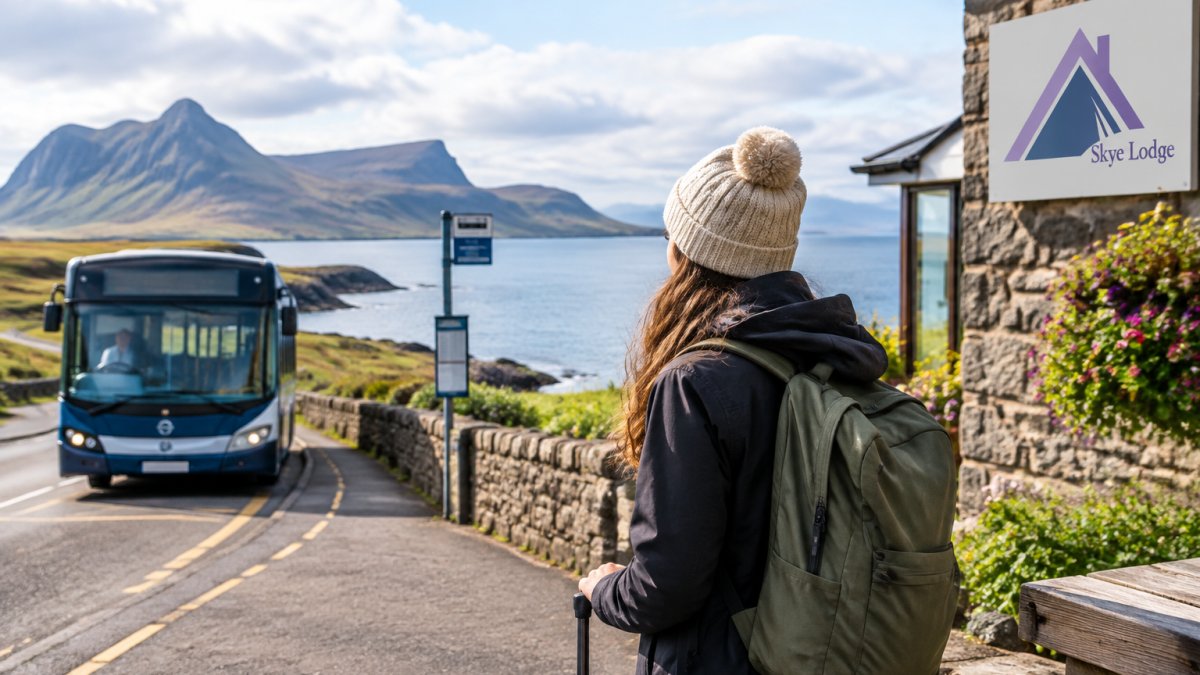
Choosing accommodation near a bus stop can reduce the stress of arriving late with luggage.
Plan for disruption, because it is the part most guides skip. Ferries can be cancelled by wind and swell, and a cancelled sailing changes your whole day. Keep a backup route in mind: if the Mallaig to Armadale ferry is off, the Kyle of Lochalsh bridge route is the usual fallback, though it adds time. If a coach is delayed and you miss a connection, the next service may be hours away, so carry a charged phone, a saved taxi number and enough flexibility in your plans to absorb a wait.
Watch out: Highland roads slow every journey. Adding 20 minutes to every hour of travel is a helpful allowance, and it can reduce the risk of missing a connection. Check the weather before you set out, and check the ferry operator's service status on the morning of travel rather than the night before.
Book Your Peaceful Stay at Skye Lodge
A car-free trip works best when your base is calm, central and welcoming. At Skye Lodge, owners Claire and Douglas offer handmade beds, en-suite rooms and a gourmet breakfast made with locally sourced ingredients.
We are happy to help with local knowledge and planning questions. You can view our rooms at Skye Lodge and plan your stay around the island's quieter corners.
Frequently Asked Questions
Can you travel around Skye by public transport?
Yes, you can travel around Skye by public transport, but it requires planning. A network of local buses connects the main towns and villages, including Portree, Dunvegan, and Kyleakin. However, services are limited, especially on Sundays and in winter. To make the most of visiting Skye without a car, use the Skye bus timetable to plan your days carefully and be prepared for longer journey times.
How do you get to Skye by train and bus?
The most common route for getting to Skye by train and bus is to take a train to Kyle of Lochalsh, then a local bus across the road bridge to Kyleakin on the island. From there, you can connect to buses heading to Portree and other destinations. Another scenic option is the train to Mallaig, followed by a ferry to Armadale. Both routes offer beautiful views but require you to check connection times in advance.
Is there a direct bus to the Isle of Skye?
Long-distance coach services to the Isle of Skye run from some larger cities, so check current options before you travel. While direct, these journeys are long, so it's wise to pre-book your ticket and pack essentials for the trip. The coach is a convenient option for those who prefer not to manage multiple connections.
How reliable are buses on Skye?
Buses on Skye generally run to schedule, but reliability can be affected by weather and road conditions, particularly on single-track roads. Service frequency varies by route, and Sunday service can be limited. Always check the up-to-date timetable before you travel and have a backup plan in case of disruption.
The challenge with public transport on Skye is not the journey. It is making the days between journeys feel unhurried. Let Skye Lodge take care of the rest, with handmade beds, en-suite comfort and breakfasts built on local produce. Get started with Skye Lodge and turn your car-free arrival into the start of a restful island stay.