 How-to
How to Pack Light for a Week in Scotland
Table of Contents
- Why Packing Light Works for a Scottish Week
- Scotland Packing List for a Week: Clothing by Category
- What to Pack for Scotland in July
- How to Pack for Scotland in October
- Using the 5-4-3-2-1 Packing Rule
- Laundry, Rewearing and Luggage Limits
- Booking Your Skye Stay and Packing Your Bag Before You Go
- Frequently Asked Questions
Last Updated: November 1, 2026
Why Packing Light Works for a Scottish Week
Scotland's weather can change in the space of an hour. Learning how to pack light for a week in Scotland is the best way to handle that.
Packing light works because a small, well-chosen set of clothes covers most days on the island. The secret is not owning less. It is choosing pieces that layer well, dry fast, and work for both a walk and a dinner out.
The core rules for packing light in Scotland:
- Pack for layers, not for single heavy coats
- Choose items that work for at least two activities
- Plan for one outfit per day, plus spares for wet days
- Leave room in the bag for a few local purchases
Scotland Packing List for a Week: Clothing by Category
A good week's list covers the main clothing types you will use every day. Keep the number of items small and mix them so that most things match.
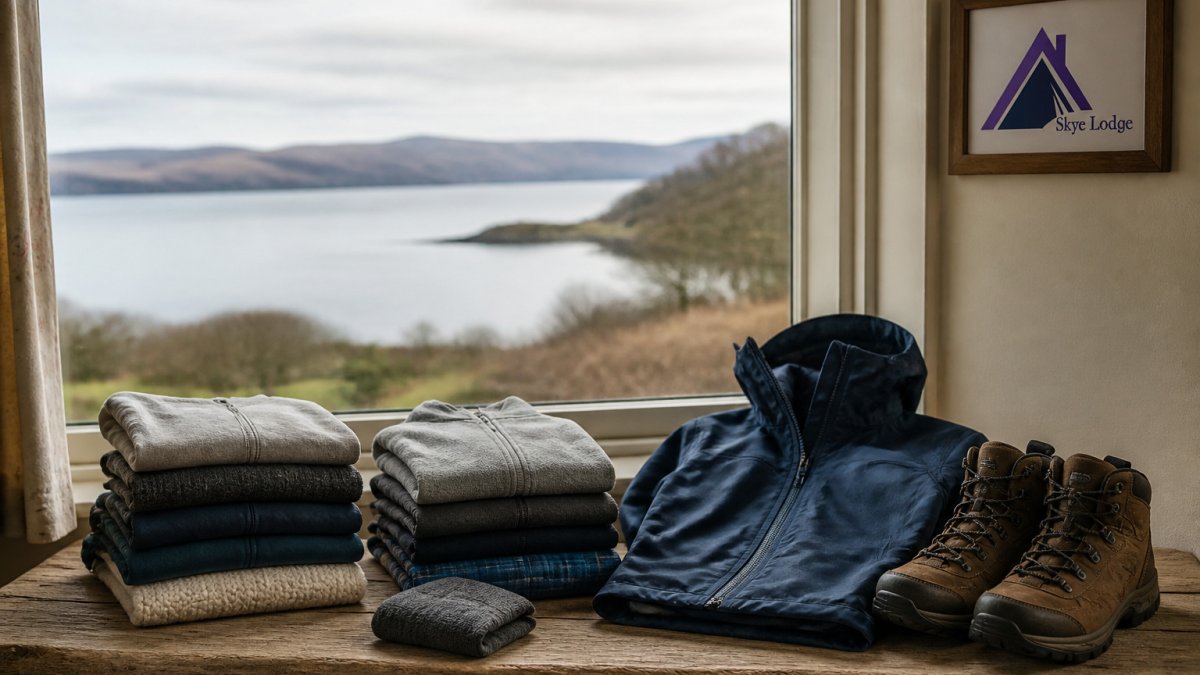
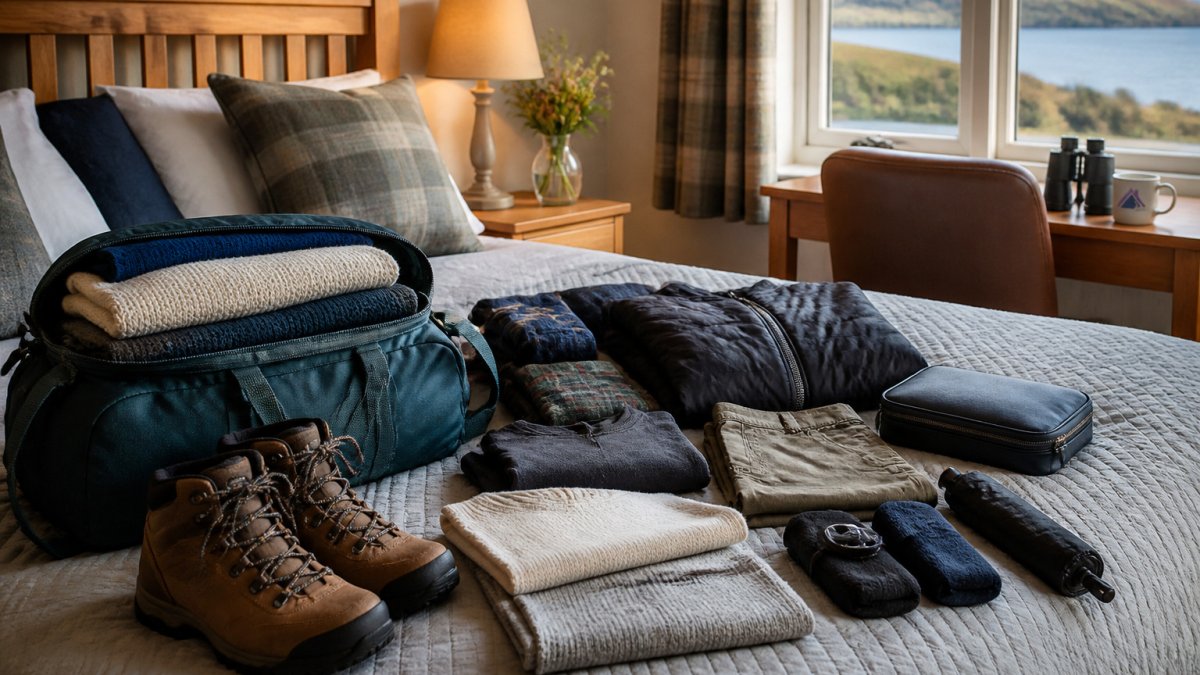
Here is a simple list for a seven-day trip:
- Outer layers: 1 waterproof jacket, 1 lightweight windproof layer
- Mid layers: 2 fleeces or lightweight wool sweaters
- Tops: 4 T-shirts or base layers, 1 smarter top for dinner
- Bottoms: 2 walking trousers, 1 pair of leggings or casual trousers
- Footwear: 1 pair of walking boots, 1 pair of comfortable shoes
- Underwear and socks: 7 pairs of underwear, 4 pairs of wool socks
Waterproof and windproof outer layers
Your rain jacket is the most important item you will pack. Choose one that is fully waterproof, not just water-resistant, with a hood that fits over a hat. A thin windproof layer under it adds warmth on cold, breezy coastal walks without adding much bulk.
Watch out: a cheap poncho will not keep you dry on a windy headland, so leave it at home.
Layers, walking shoes and socks
Thin layers beat one thick jumper. A wool base layer, a fleece, and a waterproof shell can cover most of the weather you will meet. Pack walking boots with good grip, since many paths near Loch Dunvegan are wet and muddy. Bring two pairs of wool socks so you always have a dry pair.
What to Pack for Scotland in July
Summer in the Highlands is mild, with long daylight hours. Do not let that fool you into packing only summer clothes. Evenings can turn cool and damp quickly, and the wind off the sea can make it feel colder than the thermometer says.
For July, focus on:
- Short-sleeved tops for daytime
- One warm fleece for evenings
- Your waterproof jacket, always within reach
- Sun protection for long, bright evenings
- Midge repellent, since midges are most active in summer
How to Pack for Scotland in October
October brings shorter days, cooler air, and a higher chance of rain. This is the time to lean on warm layers rather than bulky coats.
For October, focus on:
- A thermal base layer for walks
- A warm mid layer such as a wool jumper
- A waterproof jacket with a good hood
- Waterproof boots that handle wet ground
- A hat and gloves for windy days
Using the 5-4-3-2-1 Packing Rule
The 5-4-3-2-1 rule is a simple way to set limits before you open a bag. It works like this:
- 5 tops
- 4 bottoms
- 3 pairs of shoes (including the boots you wear)
- 2 outer layers
- 1 dressy outfit for a nice dinner
It is a useful starting point, but on Skye the numbers need adjusting. A walking day around Loch Dunvegan and an evening out in a village restaurant ask different things of the same five tops. The version below is a quantified one-week capsule wardrobe for a guest house stay.
The one-week capsule wardrobe, item by item
| Category | Items | Why this number |
|---|---|---|
| Base layers and tops | 4 short-sleeve or long-sleeve merino or synthetic tops, 1 smarter top | Four covers walking days with one spare for a wet change; the smart top handles dinner |
| Mid layers | 2 fleeces or lightweight wool sweaters | One worn, one drying or resting |
| Outer layers | 1 fully waterproof shell with hood, 1 thin windproof layer | The shell handles rain; the windproof adds warmth on coastal headlands |
| Bottoms | 2 walking trousers, 1 pair leggings or casual trousers | Two walking pairs allow one to dry while you wear the other |
| Footwear | 1 pair walking boots, 1 pair comfortable shoes | Boots for paths, shoes for the guest house and dinner |
| Socks | 4 pairs wool socks | Wool stays warm when damp and dries overnight |
| Underwear | 5 pairs | Fewer than seven because you will wash midweek |
| Sleepwear | 1 light set | Guest house rooms are warm; keep it thin |
| Swimwear | 1 set | Useful for a dip or a spa town stop, and it dries fast |
That is roughly 22 items of clothing, which fits a carry-on case and a small daypack. The trick is that every top matches every bottom, so you are not packing outfits, you are packing a system.
Adjusting the counts for your trip
- Walking-heavy week: add one base layer and one pair of wool socks; drop the dressy outfit if you will not eat out.
- Mixed walking and sightseeing: keep the smart top and comfortable shoes; they earn their space on evenings and indoor days.
- Driving-focused week: you can drop one walking trouser and add a casual pair, since you will spend more time in the car than on paths.
- Cooler months: swap one short-sleeve top for a long-sleeve thermal base layer rather than adding a bulky coat.
A printable checklist
- 4 base layers or tops, 1 smart top
- 2 mid layers (fleece or wool sweater)
- 1 waterproof shell, 1 windproof layer
- 2 walking trousers, 1 leggings or casual trousers
- 1 walking boots, 1 comfortable shoes
- 4 wool socks, 5 underwear, 1 sleepwear, 1 swimwear
- Hat, gloves, and a warm buff for windy days
The 5-4-3-2-1 rule gives you the shape; this capsule gives you the actual list. Set the limits first, then pack to them, and you will have room left for a local purchase or two.
Laundry, Rewearing and Luggage Limits
You do not need seven days of clean clothes. The capsule wardrobe above is designed to be washed once midweek, which is why it carries five pairs of underwear rather than seven. The practical question is how to wash and dry without losing a day of your trip.
Sink washing that actually works
- Use the right soap. A small bottle of travel wash or a few drops of gentle shampoo works in cool water. Avoid bar soap, which leaves residue on technical fabrics.
- Wash at the end of the day, not the morning. Wool and synthetic tops need time to dry overnight.
- Roll, do not wring. Lay the item flat on a towel, roll the towel tightly, and press to squeeze out water. Wringing stretches wool and breaks down waterproof coatings.
- Hang where air moves. A bathroom with the door ajar and a window cracked dries faster than a closed room. Avoid hanging damp items against a wall.
A merino or synthetic base layer washed this way is often dry by morning. Cotton is the exception: it holds water and dries slowly, which is one reason to leave cotton T-shirts at home.
Rewearing without the smell
- Wool is your friend. Merino tops and wool socks can often be worn two or three times between washes because the fibre resists odour.
- Air items nightly. Hang worn but not dirty clothes on a chair or hook rather than stuffing them back in the bag.
- Separate dirty from damp. Use a small stuff sack for laundry and a separate bag for anything still wet, so clean clothes stay dry.
- Rotate, do not repeat. Wear the same top every other day rather than every day, giving each item a rest.
Packing methods and luggage volume
How you pack matters as much as what you pack. The main methods trade off speed against space:
- Rolling: best for soft items such as tops, leggings, and sleepwear. Rolling compresses air out and reduces creasing. It is the fastest method for a small bag.
- Folding: best for structured items such as trousers and the smart top. Fold along the crease and place flat at the bottom of the bag.
- Packing cubes: best for keeping categories separate, so you can find a base layer without unpacking everything. They add a little bulk but save time at each stop.
- Stuff sacks: best for socks, underwear, and laundry. They compress tightly and keep dirty items contained.
A practical setup for a week is one carry-on case plus a small daypack. Pack the heaviest items, such as boots and the waterproof shell, at the bottom and near the back of the case, closest to your hips when carrying. Keep chargers, medication, and a light layer in the daypack so you are not opening the main bag on a single-track road or in a car park.
What not to pack
A short avoid list prevents most overpacking:
- A second heavy coat. One waterproof shell plus a windproof layer covers more weather than two bulky jackets.
- Cotton jeans. They are heavy, slow to dry, and cold when damp.
- More than two pairs of shoes. Boots and comfortable shoes are enough; a third pair rarely gets worn.
- A large towel. A microfibre travel towel is enough for a dip.
- Formal wear. Skye is relaxed; the smart top in your capsule is sufficient for dinner.
Booking Your Skye Stay and Packing Your Bag Before You Go
Once you know what to pack, it helps to plan where you will sleep. At Skye Lodge, we offer handmade beds, en-suite rooms, and a gourmet breakfast made with locally sourced ingredients. Booking early is wise, especially in summer and autumn, when rooms fill up.
Before you travel, read through our driving tips for Highland roads so you know what to expect on single-track routes, and check our guide on how to pack light for a week in Scotland so your bag matches the trip. If you are still working out how to reach the island, our travel to Skye guide covers routes and planning tips. For more ideas on what to bring and how to prepare, visit the Skye Lodge blog.
Packing light for Scotland is about making smart choices, not doing without. Get your layers right, keep the list short, and you will have more room for the views.
Frequently Asked Questions
How cold is it in October in Scotland?
October in Scotland is cool and changeable rather than severely cold. Evenings are noticeably cooler, and wind off the water can make it feel colder. Rain showers are frequent, so a warm mid-layer and a proper waterproof jacket matter more than heavy winter clothing. Pack for several conditions in one day rather than one fixed temperature.
What is the 5-4-3-2-1 rule for packing?
The 5-4-3-2-1 rule is a simple way to build a packing list for a short trip. You pack five tops, four bottoms, three pairs of shoes, two layers or outerwear pieces and one set of toiletries or accessories. For a week in Scotland, the rule keeps you honest about volume. Adjust the numbers slightly for hiking days, but treat them as a ceiling so your bag stays manageable on single-track roads and narrow village stops.
What should I pack for Scotland in July?
July is the warmest and driest part of the Scottish summer, but it is still changeable. Pack light breathable tops, one or two warmer layers for cool evenings, a waterproof jacket that packs small, and comfortable walking shoes. Midge repellent is useful in calm, damp weather near lochs and coastal paths. Shorts and a light dress suit the warmer days, while trousers are better for walks.
Do I need waterproof walking gear for Skye?
Yes, if you plan to walk outdoors. Rain can arrive quickly on the Isle of Skye, and winds along the westerly coast can make a light shower feel much heavier. A waterproof outer layer, a windproof layer and waterproof or water-resistant boots cover most situations. Waterproof trousers are optional but useful for longer walks such as the routes around Loch Dunvegan.