 blog
Best Sunset Viewpoints on the Isle of Skye
Last Updated: November 2, 2026
Quick Summary
Neist Point is the classic Skye sunset viewpoint, a westerly headland where the sun sinks toward the Outer Hebrides beside a white lighthouse. Arrive at least an hour before sunset and allow 20 to 30 minutes to walk down. Near Dunvegan, the Loch Dunvegan shoreline offers open westerly views with easy roadside access.
- Skye sits at the edge of the Outer Hebrides, so the sun drops over open sea rather than hills.
- The path from the Neist Point car park is steep in places and slippery after rain.
- Midwinter sunset arrives in the mid-afternoon, making the drive back the critical part of the evening.
- Pull into a passing place on your left to let oncoming traffic through, and never park in one.
- Book local restaurants before you arrive on Skye, not on the night.
Table of Contents
- Why the Isle of Skye Delivers Some of Scotland's Finest Sunsets
- Neist Point Sunset: The Westerly Tip at Its Most Dramatic
- Sunset Viewpoints Near Dunvegan Within Easy Reach of the Lodge
- Isle of Skye Sunset Times and How the Seasons Change the Light
- Skye Sunset Driving Tips for Single-Track Roads and Remote Locations
- Photography at Golden Hour and Twilight: Gear, Settings and Composition
- After the Sun Goes Down: Getting Back Safely and Planning Dinner
- Planning Your Sunset Evening from Skye Lodge
- Frequently Asked Questions
Why the Isle of Skye Delivers Some of Scotland's Finest Sunsets
The best sunset viewpoints on the Isle of Skye share one thing: a clear westerly horizon. Skye sits at the edge of the Outer Hebrides, so the sun drops over open sea rather than hills. That gives long, clean light and colour that lingers well past the moment of sunset.
We are Claire and Douglas, and we run Skye Lodge on the westerly coastline near Dunvegan. Guests ask us the same question most evenings: where should we go for sunset tonight? The answer depends on cloud, wind and how far you want to drive.
Below, we set out the viewpoints we recommend, how to reach them, and what to expect in each season. We also cover the practical side most guides skip: single-track driving, the drive back in the dark, and booking dinner before you set off.
Neist Point Sunset: The Westerly Tip at Its Most Dramatic
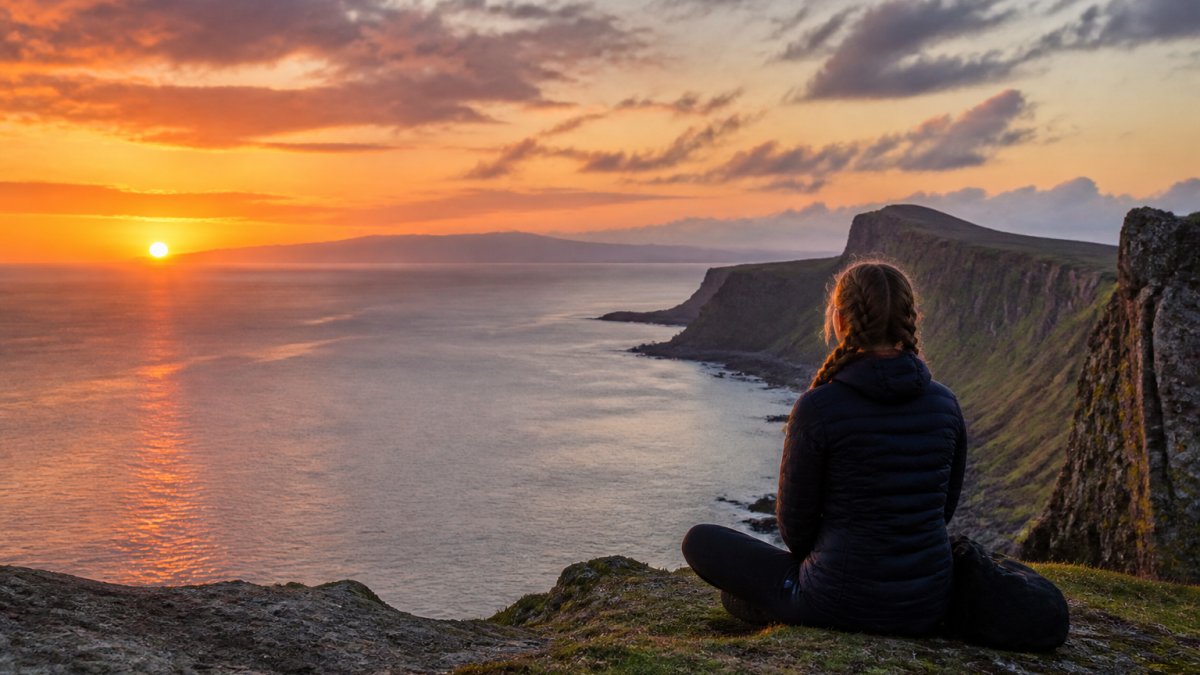
Neist Point is the most westerly headland on Skye and the classic place to watch the sun go down. A white lighthouse sits below the cliff, and on a clear evening the sun sinks toward the Outer Hebrides. The light turns the sea gold long before the sun actually sets.
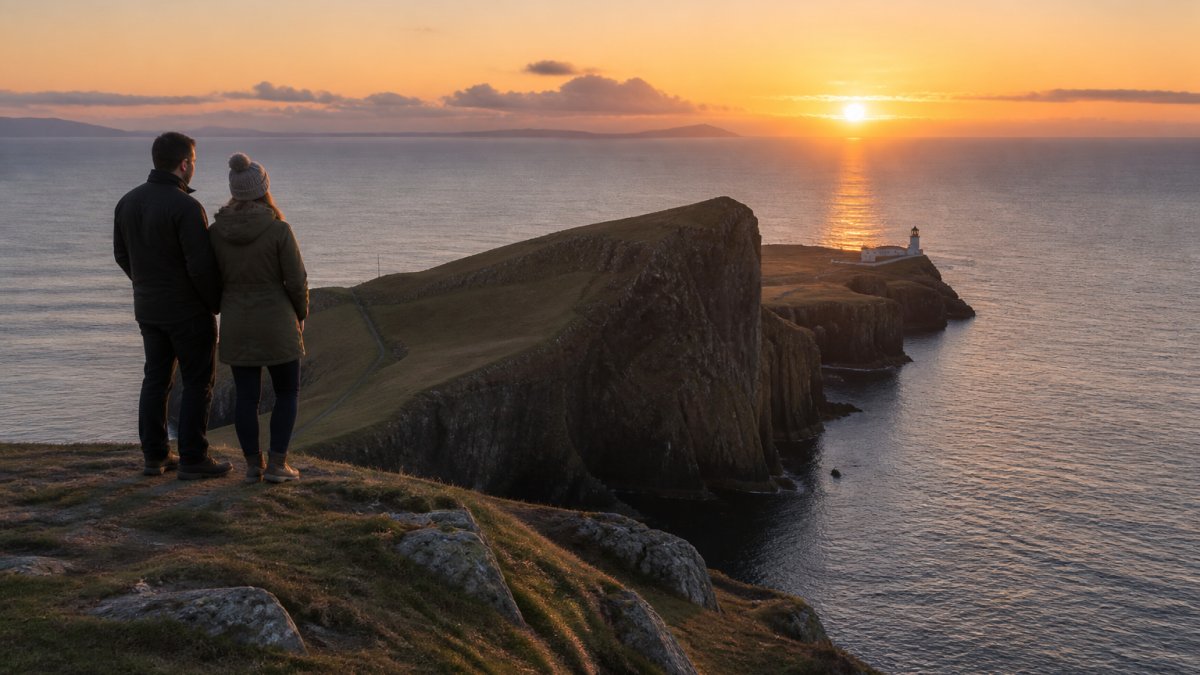
Arrive at least an hour before sunset.
Reaching the Lighthouse and Cliff-Top Vantage Points
The car park sits at the end of a single-track road. From there, a path leads downhill toward the lighthouse. It is steep in places and can be slippery after rain.
- Allow 20 to 30 minutes to walk down at an easy pace.
- Wear proper shoes; the path is uneven and exposed.
- Stay back from the cliff edge, especially in wind.
- Bring a torch for the walk back up after dark.
If you want to plan a longer photography visit, our guide on how long to spend at Neist Point Lighthouse covers timing and the best spots in detail.
Sunset Viewpoints Near Dunvegan Within Easy Reach of the Lodge
Not every sunset needs a long drive. Several quiet spots near Dunvegan give you open westerly views with far fewer people. These are the ones we point guests toward when they want a short evening out.
- Loch Dunvegan shoreline: open water to the west and easy roadside access.
- The road toward Claigan: quiet single-track lanes with loch views.
- Dunvegan Castle grounds area: a scenic backdrop with the loch beyond.
- Hills above the village: a short climb for a wide, high-altitude view.
For a gentle evening, the shoreline is hard to beat. Park safely, walk a few minutes from the road, and watch the light change over the water. It is also the easiest option if you would rather not drive far after dark.
Isle of Skye Sunset Times and How the Seasons Change the Light
Sunset times on Skye swing by several hours across the year, and that range shapes every evening plan. The table below gives approximate sunset times for the middle of each month. Treat them as a rough planning guide and check an exact sunset time for your date before you set out.
| Month (mid-month) | Approx. sunset | Twilight character |
|---|---|---|
| January | 16:15 | Short twilight; dark by 17:15 |
| February | 17:15 | Noticeably lighter evenings |
| March | 18:30 | Balanced golden hour |
| April | 20:15 | Long, soft light |
| May | 21:45 | Late sunset; twilight past 23:00 |
| June | 22:30 | Sky never fully dark; nautical twilight all night |
| July | 22:15 | Long twilights; best light after 21:00 |
| August | 21:00 | Warm light, earlier nights |
| September | 19:30 | Golden hour at a civilised hour |
| October | 18:00 | Rapidly shortening days |
| November | 16:15 | Early dusk; plan dinner before sunset |
| December | 15:45 | Dark by 16:45; stargazing conditions |
In midsummer the sky stays light for a long time after sunset, which is wonderful for photographers. In midwinter, sunset arrives in the mid-afternoon and darkness falls quickly, which makes the drive back the critical part of the evening.
Spring and autumn are often a good balance for evening outings. Golden hour tends to land at a reasonable hour, and you are less likely to be driving home in pitch darkness. If you want long twilight for photography, late spring and summer are the time to aim for.
Daylight hours shift noticeably from week to week, so check the sunset time for your exact date rather than relying on the month.
For a longer photography visit, our guide on how long to spend at Neist Point Lighthouse covers timing and the best spots in detail.
Skye Sunset Driving Tips for Single-Track Roads and Remote Locations
Most sunset viewpoints sit at the end of single-track roads. These lanes are narrow, with passing places, blind corners and sheep that pay no attention to traffic. Driving them in daylight is one thing. Driving back in the dark, after the light has gone, is another. This is the part most guides skip, and it is where a good evening can go wrong.
Our advice is simple: allow extra time on highland roads, adding a buffer for passing places, photo stops and the occasional tractor. After sunset, allow a little more.
A few points that make a real difference on the way out:
- Pull into a passing place on your left to let oncoming traffic through.
- Do not park in a passing place; it blocks the road for everyone.
- Fill up with fuel before you head out; remote stations close early.
- Download your route before you leave, as signal is patchy.
And on the way back, once the light has gone:
- Use full headlights as soon as dusk falls, not just dipped beams.
- Keep your speed down; passing places are harder to judge in the dark.
- Watch for sheep and deer on the road, especially on unlit stretches.
- If a car follows closely, pull into a passing place and let it pass rather than speeding up.
- Give yourself more time than you think you need; the lanes are slower at night.
A common pattern is that guests underestimate the return drive. The road to Neist Point, for example, is single-track for its final stretch, and the car park sits at the end of it. Leaving the viewpoint in the dark means a slow, careful drive back to the main road, then a further drive to the lodge. Build that into your evening.
For a fuller set of local driving tips, read our guide to driving Isle of Skye scenic routes before you set off.
Photography at Golden Hour and Twilight: Gear, Settings and Composition
Golden hour on Skye is generous, and twilight often outlasts it. The low sun gives warm light and long shadows, and the sea picks up colour well after the sun has gone.
You do not need much gear to make the most of it:
- A tripod for twilight and long exposure shots.
- A wide lens for coastal scenery and big skies.
- A longer focal length for compressing the lighthouse against the sun.
- A lens cloth; sea spray is constant.
- Warm, windproof layers, even in summer.
For settings, start with a low ISO and a small aperture for sharp landscape photography. For a deeper guide to capturing Skye's golden hour and twilight, see our beginner's guide to photographing the Isle of Skye. Use a slower shutter speed on a tripod as the light fades. Look for foreground interest, such as rocks or a fence line, to give the frame depth.
After the Sun Goes Down: Getting Back Safely and Planning Dinner
The drive back is where a good evening can go wrong. Darkness falls fast, the lanes are unlit, and the passing places are harder to judge. Take your time, keep your speed down, and use full headlights once the light has gone.
Dinner needs planning too. Local restaurants book up, especially in season, and turning up without a table is a gamble. We tell guests to book before they arrive on Skye, not on the night.
A few options within about 15 minutes of the lodge include the Stein Inn, Edinbane Lodge and The Three Chimneys. For more places to eat near Dunvegan, see our guide to the best local restaurants near Dunvegan Village.
If you need help with local knowledge or restaurant bookings, ask us.
Planning Your Sunset Evening from Skye Lodge
A good sunset evening starts with a plan made earlier in the day. Check the forecast, pick your viewpoint, book dinner, and leave with time to spare. Then let the light do the rest.
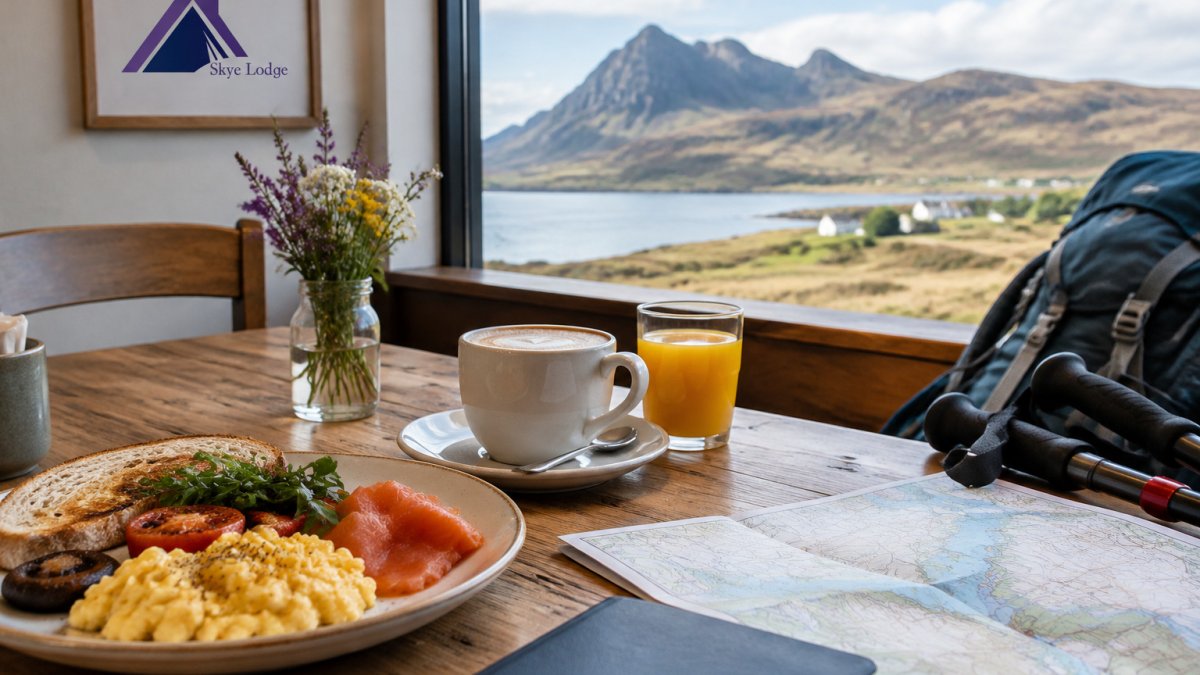
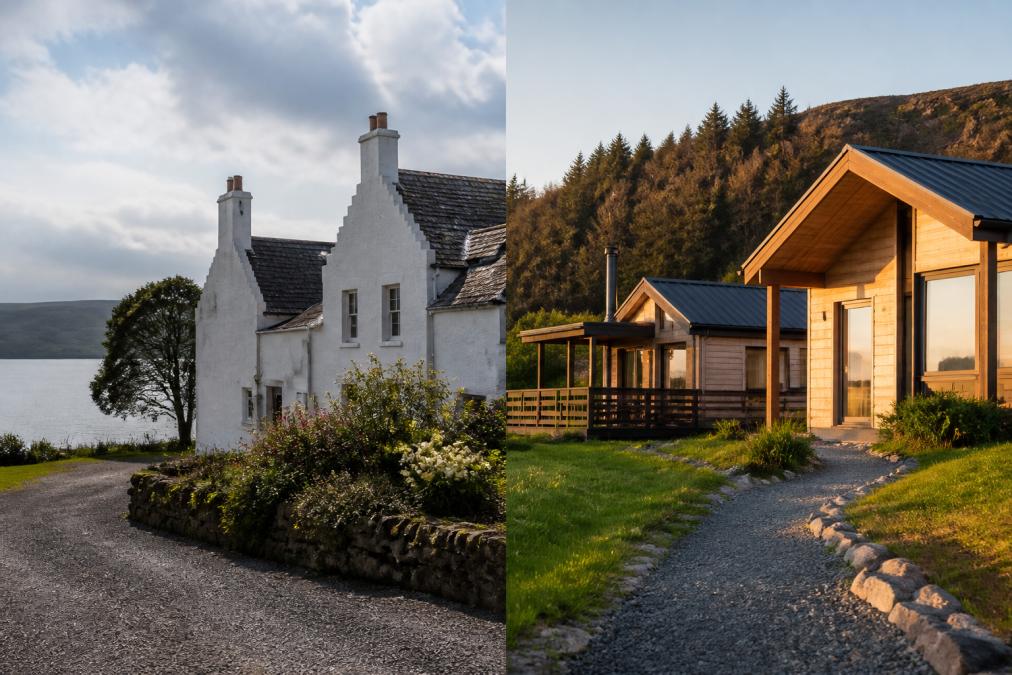
We are happy to help you shape that plan. Guests at Skye Lodge sleep in handmade beds and wake to a gourmet breakfast made with locally sourced ingredients. The lodge sits on the westerly coastline, close to Neist Point and Dunvegan Castle.
If you would like a base for evenings like these, you can check availability at Skye Lodge and plan your stay with us.
Frequently Asked Questions
Where is the best place to watch the sunset on Skye?
Neist Point is the classic choice because it sits on the westerly tip and looks straight out toward the Outer Hebrides, giving you an unobstructed horizon. Closer to Dunvegan, the loch-side and shoreline spots around the peninsula offer quieter alternatives with far less walking. The best pick depends on cloud cover and how much time you have. Check the weather forecast and cloud cover before setting out, and give yourself at least an hour on site before the sun goes down.
What time does the sun set on Skye?
Isle of Skye sunset times shift dramatically across the year. Midsummer evenings stay light until very late, while midwinter sunsets arrive in the late afternoon. Daylight hours change noticeably from week to week, so check a reliable sunset table for your exact dates rather than relying on memory. Build in extra time for the drive, and remember that twilight after sunset can last a long while in summer, which is often the most photogenic part of the evening.
Can you see the sunset from Dunvegan without a long walk?
Yes. Several sunset viewpoints near Dunvegan are reachable by car or with only a short stroll, which suits guests who prefer not to hike after dark. Loch-side spots and shoreline pull-ins on the westerly side give clear views over the water. Ask at the lodge for the current best option on the day, since cloud cover and wind can change which spot works best. Bring a torch and wear shoes with grip even for short walks.
Are Skye sunset viewpoints accessible by car?
Many are, but the final approach often involves single-track roads with passing places, and some car parks fill quickly in peak season. Add roughly 20 minutes to every hour of estimated travel on highland roads, and check parking availability before you commit to a popular spot. Neist Point has a car park but the walk to the lighthouse is steep in places. For a shorter evening, choose a loch-side viewpoint closer to Dunvegan and save the longer drives for a clear, settled forecast.
The light on Skye rewards those who slow down and plan ahead. Tell us the kind of evening you have in mind, and we will help you find the right viewpoint and the right table. Get started with Skye Lodge and build a sunset evening you will remember.