 Listicle
Solo Travel Packing List for Independent Trips
Last Updated: November 7, 2026
Quick Summary
A solo travel packing list for independent trips works best when you build it around decisions, not categories. Start with a finishable checklist: one carry-on case or 40-litre backpack, five tops, two pairs of trousers, a light waterproof jacket, walking shoes plus flip flops, and a cross-body day bag. If an item does not earn a place on the list, it stays home.
- Pack five tops, two pairs of trousers and seven sets of underwear and socks for a week, with one midweek laundry wash.
- Choose two base colours that match everything, such as navy and grey or black and olive.
- Pack two pairs of shoes: one walking shoe with grip and one casual pair.
- Decant toiletries into containers under 100ml each and add sunscreen and lip balm even outside summer.
- Back up documents to cloud storage, enable two-factor authentication and share your itinerary with someone at home.
Table of Contents
- Start with a Solo Travel Packing Checklist
- Packing Light for Solo Travel: What to Leave Behind
- Versatile Clothing and Outfit Planning for One Bag
- Shoes, Toiletries and Personal Care Essentials
- Electronics, Chargers and Digital Security Basics
- Solo Travel Safety Essentials and a Practical Day Bag
- What to Pack for a Week-Long Trip: Realistic Quantities
- Book Your Skye Lodge Stay and Pack with Confidence
- Frequently Asked Questions
Start with a Solo Travel Packing Checklist
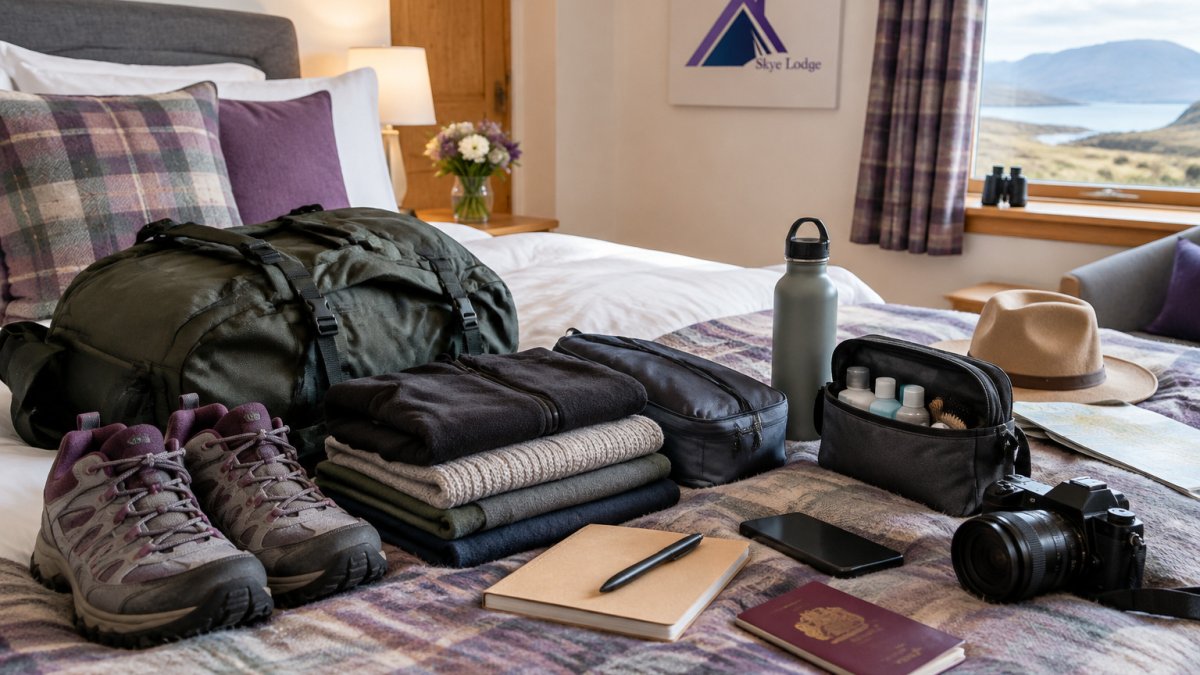
A solo travel packing list for independent trips works best when you build it around decisions, not categories. Guests often arrive with more bags than they need, and a single-track road is easier with less luggage in the boot. The fix is simple: start with a checklist you can actually finish.
Here is a core list for anyone travelling alone:
- One carry-on case or 40-litre backpack
- Five tops, two pairs of trousers, one pair of shorts
- Light waterproof jacket with a hood
- Walking shoes plus one pair of flip flops
- Toiletries bag kept under 100ml per container
- Phone, charger, power bank, plug adapter
- Passport, booking confirmations, travel insurance details
- Small first-aid kit and any prescription medication
- Cross-body day bag for daily outings
Everything else is optional. If an item does not earn a place on this list, it stays home. That single rule will save you more weight than any packing gadget.
Packing Light for Solo Travel: What to Leave Behind
Leaving things behind is the harder half of packing light for solo travel. Most overpacking comes from fear, not need: the spare shoes "just in case" and the second jumper.
What most guides miss is that nobody notices what you did not bring. They notice whether you can move easily, find things quickly and carry your own bag up a flight of stairs.
A skip list:
- Bulky towels
- Full-size shampoo and conditioner
- More than one "nice" outfit
- A laptop if a phone covers your needs
- Travel iron, travel kettle, travel pillow
For a Scotland-specific view on trimming your bag further, our guide on how to pack light for a week in Scotland walks through what to cut and why.
Versatile Clothing and Outfit Planning for One Bag
Outfit planning beats folding technique every time. Build a small capsule where every top works with every pair of trousers, and you can dress for a castle visit, a beach walk and dinner without a second bag. The goal is not a perfect wardrobe but a set of pieces that layer, dry quickly and forgive a change in the weather.
Start with a simple decision framework based on what you will actually do. For a typical independent trip mixing walking, sightseeing and meals out, most travellers find three distinct outfits plus one warm layer covers a week. If your trip is mostly outdoor activity, shift the ratio toward quick-dry base layers and waterproofs.
A simple approach:
- Choose two base colours that match everything, navy and grey, or black and olive, work well for mixed activities.
- Add one light waterproof shell with a hood that layers over any combination; on the island, a shell is more useful than a heavy coat because it packs small and handles wind-driven rain.
- Pack tops that dry overnight, merino wool or synthetic blends dry faster than cotton and resist odour, which matters when you are rewearing items between washes.
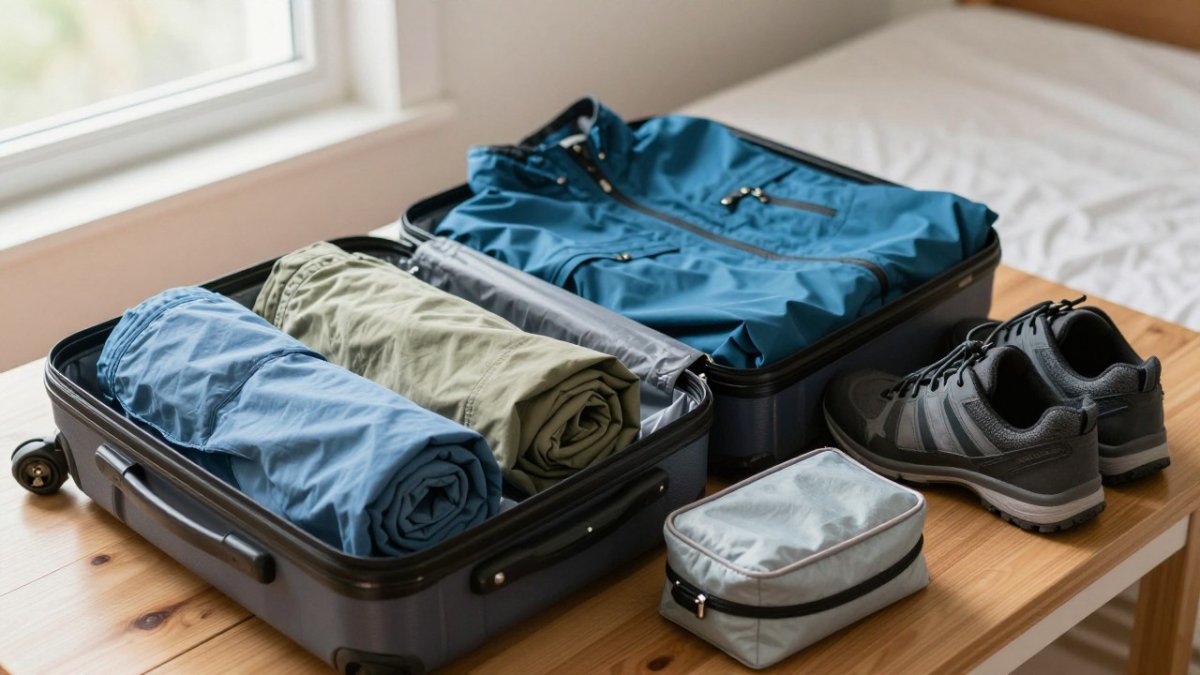
- Roll clothes rather than fold them to save space and reduce creasing, and use packing cubes to separate clean from worn.
Layers matter more than warmth here. Island weather shifts through the day, so a base layer, a mid layer and a waterproof shell handle more conditions than one heavy coat. A common pattern is to wear the base layer and mid layer for walking, add the shell when the wind picks up, and remove the mid layer for indoor visits.
Concrete quantities for a week-long trip: five tops (mix of short and long sleeve), two pairs of trousers (one walking, one casual), one pair of shorts in summer, seven sets of underwear and socks, one mid layer (fleece or light jumper), one waterproof shell, one pair of walking shoes and one casual pair. That is enough for a week with one midweek laundry wash. For a two-week trip, add two more tops and one more pair of trousers rather than doubling everything.
If you want a fuller clothing list to check your choices against, see what to pack for a slow travel trip to Scotland.
Shoes, Toiletries and Personal Care Essentials
Two pairs of shoes is a sensible number for most independent trips: one walking shoe with grip and one casual pair.
Toiletries follow one rule: decant everything. A small bottle of shampoo, conditioner, soap, toothbrush, toothpaste and skincare covers a week. Add sunscreen and lip balm even outside summer, because coastal wind and long daylight hours dry skin faster than most visitors expect.
A first-aid kit does not need to be elaborate. Plasters, blister pads, pain relief, antihistamine and any prescription medication, kept in your day bag rather than your case. If you take regular medication, carry it in original packaging with a copy of your prescription, and keep a few days' supply on you rather than in checked luggage.
Electronics, Chargers and Digital Security Basics
Electronics are where light packers quietly gain weight. A phone, one charger, a power bank and a plug adapter cover almost everything. Leave the tablet, the second camera and the spare cables at home unless the trip genuinely needs them.
Digital preparation is worth attention before you travel, such as backing up key documents and sharing your itinerary with someone at home.
A travel wallet that holds your passport, cards and a small amount of cash keeps essentials in one place and out of easy reach of pickpockets. A luggage scale helps too, since airline cabin rules vary and weighing at home avoids a repacking session at the gate.
Solo Travel Safety Essentials and a Practical Day Bag
Personal safety for solo travellers comes down to preparation, not anxiety. A cross-body bag worn at the front, a phone that stays charged and an itinerary someone else knows about cover most situations. What most guides miss is that digital preparation is now as important as physical safety, especially on an island where mobile signal is patchy in places.
Your day bag should hold:
- Waterproof layer
- Water bottle and a snack
- Phone, power bank and charger
- Sunscreen and lip balm
- First-aid basics and medication
- Printed map or downloaded offline maps
Digital security deserves more attention than it usually gets. Before you travel, back up your passport, insurance and booking confirmations to cloud storage, and keep offline copies in your phone's files. Enable two-factor authentication on email and banking, and share your itinerary with someone at home. Save your accommodation's address and phone number offline so you can find them without signal.
Mobile signal can be patchy in places, so download maps before you set off. Tell your host where you are heading and when you expect to return. If you are weighing up how much support to arrange in advance, our piece on finding tailored travel for solo travellers explains what to look for.
A luggage scale helps too, since airline cabin rules vary and weighing at home avoids a repacking session at the gate. For solo travellers, the combination of a lightweight day bag, offline maps and a shared itinerary is more effective than any single safety gadget.
What to Pack for a Week-Long Trip: Realistic Quantities
Realistic quantities beat optimistic ones. For a week, five tops, two pairs of trousers, one pair of shorts, seven sets of underwear and socks, and one light jacket is enough. Plan to do one small laundry wash midweek rather than packing fourteen of everything.
Trip length changes the maths:
| Trip Length | Tops | Trousers | Underwear | Laundry Needed |
|---|---|---|---|---|
| 3-4 days | 3-4 | 1-2 | 4 | No |
| 1 week | 5 | 2 | 7 | One wash |
| 2 weeks | 6-7 | 2-3 | 8-10 | Twice weekly |
For a week on the island, match your kit to the journey itself. Our guide on travelling to the Isle of Skye with routes and trip planning tips helps you align what you carry with how you will actually move around.
Book Your Skye Lodge Stay and Pack with Confidence
Packing well is only half the trip. The other half is having somewhere calm to unpack, and that is where we come in. Skye Lodge sits on the westerly coastline near Dunvegan, with handmade beds, en-suite rooms and loch views, plus a freshly prepared breakfast using locally sourced ingredients each morning. Owners Claire and Douglas are on hand with local knowledge, from restaurant bookings to the quieter corners of the island. Guests mention our hospitality in reviews on Google, Freetobook and TripAdvisor. You can check availability and book your stay at Skye Lodge before you finalise your packing list.
Pack for the trip you will actually take, not the one you imagine. If your bag still feels heavy, cut one outfit and one gadget, then spend the saved space on a decent waterproof layer. Get started with Skye Lodge and arrive to a handmade bed, a loch view and a breakfast worth waking for.
Frequently Asked Questions
What should I pack for a solo trip?
Start with a solo travel packing checklist built around versatile clothing, one pair of walking shoes, a light jacket and layers, then add toiletries, chargers, a first-aid kit and copies of your travel documents. Pack by activity rather than by habit, so every item earns its place. For a week away, three to five tops and two to three pairs of trousers are usually enough. Keep a small day bag for essentials you carry daily, and leave the just-in-case items at the bottom of your luggage.
How do I pack light for independent travel?
Packing light for solo travel starts with choosing a carry-on-sized bag and sticking to it. Roll clothes rather than folding them, use packing cubes to compress and organise, and plan outfits around two or three colours so everything mixes. Wear your bulkiest shoes and jacket on travel days. A luggage scale helps you stay within airline limits before you leave. Wash small items in the sink on longer trips, and accept that laundry is easier than carrying a second bag.
What are the essential solo travel safety essentials?
Solo travel safety essentials include a cross-body bag worn in front, a small first-aid kit, a portable power bank, and digital copies of your passport, insurance and bookings stored securely online. Share your itinerary with someone at home and keep a written list of emergency contacts. A doorstop or travel lock adds peace of mind in budget rooms. Avoid advertising your room number or travel plans to strangers, and keep cash and cards in separate places rather than together.
How many outfits should I pack for a week-long trip?
For a week-long trip, pack three to five tops, two to three pairs of trousers or shorts, one light jacket and enough underwear and socks for the full week. That combination creates at least seven distinct outfits through layering and mixing. Add one smarter top for evenings and one pair of walking shoes plus flip-flops. If you plan to wash a few items midweek, you can reduce the clothing count further and still dress well for every occasion.
What should I keep in my day bag when travelling solo?
Your day bag should hold only what you need for the day: a water bottle, sunscreen, lip balm, a light layer, your phone and a portable charger, plus a small amount of cash and one card. Keep a copy of your accommodation address and a charged phone for maps. A cross-body bag worn close to your body is harder to snatch than a backpack. Leave your passport and spare cards locked in your room unless you need them that day.