 How-to
How Do You Prepare Dogs for an Island Holiday?
Last Updated: October 31, 2026
Quick Summary
To prepare dogs for an island holiday, confirm your accommodation and ferry operator accept dogs in writing, then book a vet appointment at least a month before travel to check vaccinations, parasite treatment and microchip details. Build travel tolerance with short drives in the weeks before you go, and pack your dog's usual food, bedding, medication and a pet first-aid kit.
- Book a vet appointment at least a month before travel so there is time to act on any findings.
- Build travel tolerance with ten-minute drives in weeks one and two, then longer runs.
- Check your ferry operator's pet rules, as some sailings require dogs to stay in the car.
- Check tide times before walking a beach and head back before the tide turns.
- Bring your dog's usual food, since changing food on arrival commonly causes illness.
Table of Contents
- Start With a Dog Holiday Checklist Before You Book Anything
- Preparing a Dog for a Long Car Journey to the Ferry
- Ferry Crossings and Island Entry Rules for Dogs
- Keeping Dogs Safe on Coastal Walks and Beaches
- Choosing Dog-Friendly Accommodation That Actually Works
- Packing, Feeding and Keeping Routines on Track
- Planning Your Dog-Friendly Stay on the Isle of Skye
- Frequently Asked Questions
Start With a Dog Holiday Checklist Before You Book Anything
A dog holiday checklist is the difference between a calm island break and a stressful one. At Skye Lodge, we have welcomed many guests travelling with dogs, and the pattern is always the same: the people who prepare early enjoy the trip, and the people who don't spend their break worrying.
The first step is not packing. It is confirming that every part of your trip actually accepts a dog.
- Confirm your accommodation takes dogs, in writing
- Check the ferry operator's pet rules for your route
- Book a vet appointment at least a month before travel
Health, paperwork and the details that trip people up
The most common mistake is leaving the vet visit too late. Book it a few weeks before you travel so there is time to act on anything the vet finds.
Ask your vet to confirm that vaccinations are up to date and that parasite prevention is current. For travel within the UK, the UK Government guidance on travelling with pets is the place to confirm what applies to your journey, including any rules for the route you plan to take.
Identification matters too. Your dog should wear a collar tag with your mobile number, and the microchip database should hold your current address and contact details. If your dog slips a lead on an unfamiliar beach, that tag is what brings them back.
What to confirm with your accommodation before paying a deposit
Ask direct questions before you pay anything. "Dog-friendly" means different things to different places.
Confirm whether dogs are allowed in the room alone, whether there is a charge, and whether there are resident animals on site. Ask where your dog can be walked safely and whether there is somewhere to hose off muddy paws after a beach day.
Here is the pre-booking checklist we suggest working through before you commit to anything.
| Checklist item | What to confirm |
|---|---|
| Accommodation | Takes dogs, confirmed in writing |
| Ferry operator | Pet rules for your route |
| Vet appointment | Booked at least a month before travel |
| Microchip | Details are current |
| Parasite treatment | Ask vet about timing |
| Drive north | Plan rest stops |
| Packing | Food, water, bowls, bedding, pet first-aid kit |
| Local vet | Save the number near your destination |
Preparing a Dog for a Long Car Journey to the Ferry
A dog that travels well makes the whole trip easier. The good news is that travel tolerance is built, not born. Start with short drives a few weeks before you go and gradually increase the distance.
Here is the routine we suggest:
- Weeks 1-2: Ten-minute drives to somewhere pleasant, ending with a walk
- Week 3: Twenty to thirty minute drives, including some faster roads
- Week 4: A longer run that mimics part of your real journey
Secure your dog in a crate or with a properly fitted harness, and never let them travel loose in the car.
Building up travel tolerance in the weeks before you go
A common mistake is assuming a dog that loves the car will love a five-hour drive. Distance is different from familiarity.
Plan rest breaks every couple of hours, and build extra time into your schedule for Highland roads. Bring water and a bowl, and offer small drinks at each stop.
If your dog is prone to motion sickness, speak to your vet before you travel rather than after.
Ferry Crossings and Island Entry Rules for Dogs
Ferry travel with a dog is straightforward once you know the rules, but the rules vary by operator and route. Check your specific crossing before you book, because some sailings require dogs to stay in the car while others allow them on deck.
For the practical side of getting here, our guide to travelling to the Isle of Skye covers routes, timings and trip planning.
What to confirm before you book the crossing
- Whether your dog stays in the vehicle or can come with you
- Whether you need to book your dog onto the crossing, and whether there is a limit on dogs per sailing
- Where your dog can relieve themselves at the port, and whether there is a designated area
Boarding day: a routine that works
Arrive with time to spare. A dog that has been cooped up in a car for hours needs a proper walk and a toilet break before boarding, not a rushed one at the barrier.
Keep your dog's lead, water, bowl, poo bags and any medication with you rather than in the boot.
If your dog is allowed on deck, keep them on a short lead at all times.
If your dog is prone to motion sickness, speak to your vet before you travel. A calm, secure dog in a crate or well-fitted harness is a much easier passenger on a rough crossing, and a familiar blanket helps more than you would expect.
Island entry rules and paperwork
For travel within the UK, the UK Government guidance on travelling with pets is the place to confirm what applies to your journey, including any rules for the route you plan to take.
Bring your dog's vaccination record and microchip details with you, not just a photo on your phone. If you are asked to show them at a port or by an accommodation provider, a paper copy is quicker and less likely to fail on a flat battery.
Arriving on the island
Once you are off the ferry, resist the urge to drive straight to your accommodation. Find somewhere safe to stop, give your dog a proper walk and a drink, and let them settle before the final leg. A dog that has been in a car and then on a boat will thank you for it, and you will arrive at your guest house with a calmer animal.
Keeping Dogs Safe on Coastal Walks and Beaches
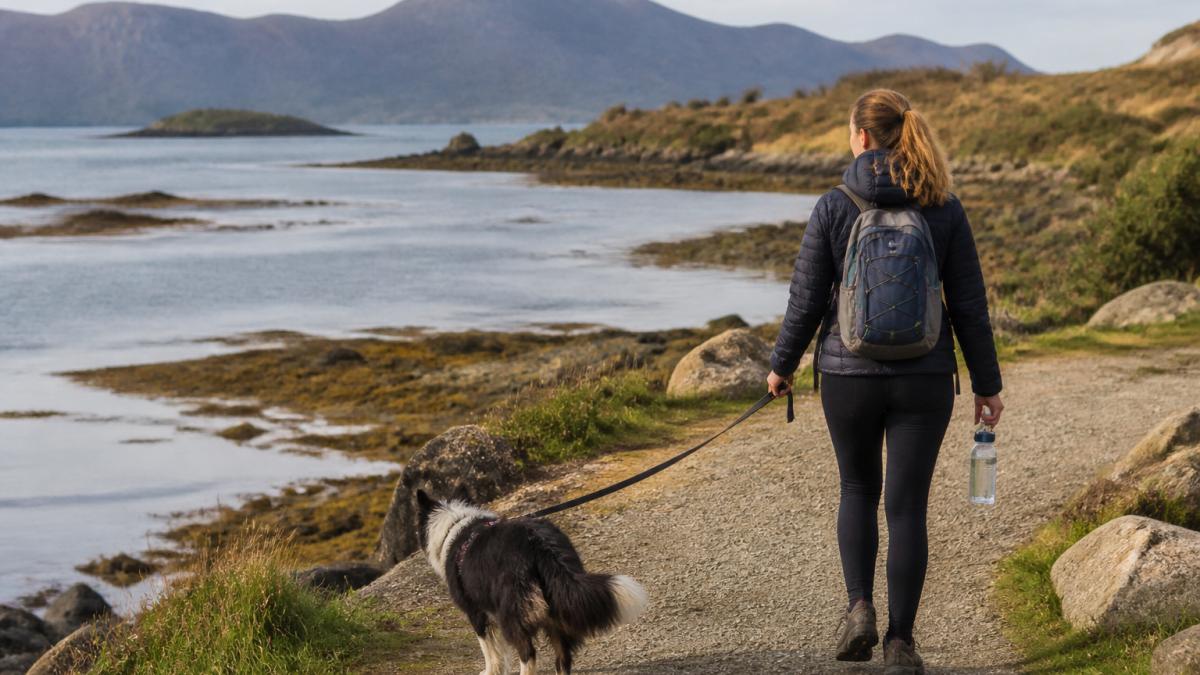
Coastal walks are the highlight of an island holiday, and they carry specific risks. The main ones are cliffs, tides, livestock, saltwater and the weather turning quickly.
Tides, currents and the beach day
Check tide times before you walk a beach, not when you arrive. A beach that is wide at low water can be cut off within an hour or two, and the fastest route back is often the one you came by.
Never let your dog drink from rock pools or the sea. Saltwater can make dogs ill, and the salt concentration in a rock pool rises as the water evaporates.
Cliffs, livestock and leads
Keep your dog on a lead near cliff edges and around sheep and cattle. Sheep worrying is a serious matter, and even a dog with excellent recall can be triggered by a moving flock.
Beaches vary in their rules. Some welcome dogs all year, others restrict access in summer.
If you plan to walk a popular trail, our guide to walking the Old Man of Storr with your dog covers the specifics in more detail.
Heat, sun and paw protection
Island weather is changeable, but a bright day on an exposed beach can still be hot. Walk early or late rather than in the middle of the day, and check the ground with the back of your hand before you ask your dog to walk on sand or tarmac, if it is too hot for your hand, it is too hot for paws.
If your dog shows signs of heatstroke, excessive panting, confusion, vomiting or collapse, move them to shade, cool them with water on the paws, ears and belly, and contact a vet immediately. Do not plunge them into cold water.
Planning for the unexpected
Before you set off on any coastal walk, save the number of a vet near your destination and note the nearest car park or access point. Mobile signal is patchy on parts of the coast, so tell someone where you are going and when you expect to be back.
Our slow travel packing guide for Scotland covers the kit that makes a coastal day easier, from towels to a pet first-aid kit.
Choosing Dog-Friendly Accommodation That Actually Works
Dog-friendly accommodation is not a single category. Some places tolerate dogs, and some are genuinely set up for them. The difference shows in the details, so ask about them before you book.
Ask these questions before you book:
- Is there a charge for the dog, and what does it cover?
- Can the dog be left alone in the room?
- Is there a safe, enclosed space for a late-night toilet break?
If you want to see what is available on the island, our list of luxury pet-friendly cottages on Skye is a useful starting point. For a stay that includes breakfast, see our pet-friendly accommodation with breakfast.
Packing, Feeding and Keeping Routines on Track
Dogs cope with new places far better when their routine stays the same.
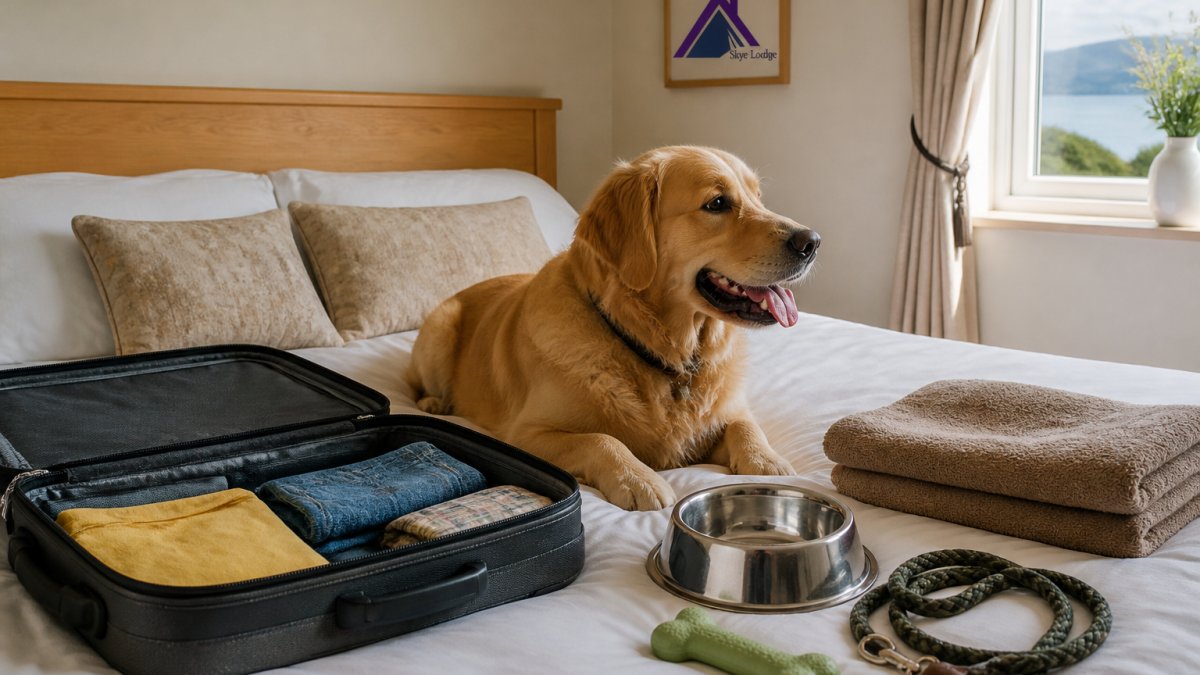
Your packing list should cover:
- Enough food for the whole trip, plus a little extra
- A familiar water bowl and a travel bowl
- Their usual bedding or blanket
Our slow travel packing guide for Scotland is a good companion list for the rest of your kit.
Watch out: changing your dog's food on arrival is one of the most common causes of a poorly dog on holiday. Bring their usual food and keep treats familiar.
Planning Your Dog-Friendly Stay on the Isle of Skye
An island holiday with a dog works best when you plan around the dog, not against it. Build in shorter days, plenty of rest stops, and a comfortable base to return to.
That is what we have tried to create at Skye Lodge.
We also recommend slowing down. A rushed tour of the island suits nobody, least of all a dog in the back of the car.
Frequently Asked Questions
What should I pack for my dog on an island holiday?
Pack enough of your dog's usual food for the whole trip plus a spare day, a collapsible water bowl, bottled water for the journey, a familiar blanket or bed, a towel for wet and sandy walks, poo bags, any medication, and a copy of vaccination records. Add a long line for beach walks and a pet first-aid kit. Familiar items matter more than new toys because they help your dog settle in unfamiliar accommodation.
How do I keep my dog calm in unfamiliar accommodation?
Bring their own bedding and a worn item carrying a familiar scent, keep feeding and walk times as close to home as possible, and give them a quiet corner to retreat to on arrival. Avoid leaving them alone in a strange room on the first day. A long walk before check-in burns off nervous energy. Ask your host about quiet rooms away from busy areas.
Do I need to rinse my dog after a beach walk?
Yes. Salt water and sand dry on the coat and can irritate skin, and swallowing salt water can cause sickness. Rinse with fresh water after any swim, dry the ears carefully, and check paws for cuts from shells or rocks. Keep fresh drinking water available so they are not tempted to drink seawater, and
What should I do if my dog gets lost while travelling?
Make sure the microchip details and the phone number on the ID tag are current before you leave home. If your dog goes missing, contact nearby veterinary practices and the local council straight away. Keep a recent photo on your phone. On an island, report it quickly because word travels fast and locals can help search familiar ground.
Preparing a dog for an island holiday takes a little planning, but most of it is done before you leave home. If you want a base where your dog is genuinely welcome and your mornings start with a proper breakfast, we would love to host you. Get started with Skye Lodge and make your reservation for a calm, well-planned stay on the island.